
Hollywood Teens and Other Actors Safer with Mental Health Coordinators on Set
Licensed mental health professionals may have a new role in Tinseltown. Plus, what’s the deal with men and hugs? And more.

May 9, 2024
By Courtney Wise
Greetings, MindSite News Readers. In today’s Daily, mothers of severely mentally ill adults find support in one another that seems unavailable anywhere else. Writer John DeVore encourages fathers and other men to hug more. And a Memphis fifth-grader teams up with Ruby Bridges to rid the world of gun violence. Plus, a new career opportunity for mental health professionals in Hollywood.
Wanted: Hollywood intimacy coordinators with an extra skill in mental health care

Credit: MonkeyBusiness Images/Shutterstock
Actors may look like they are enjoying their (simulated) intimate scenes onscreen, but that’s often not the case – and producers now often use “intimacy coordinators” to help guide them through it. April Pearson was 17 when she was cast in the teen drama Skins “before an intimacy coordinator was even a thing.” She says she and several other cast members were uncomfortable in their sex scenes.
Licensed therapist Amanda Edwards can relate. Soon after starting work as an intimacy coordinator in the performing arts, she realized the scope of her role didn’t go far enough. Intimacy coordinators, she told Indie Wire, are meant to support performers in handling nudity and simulated sex scenes. But besides helping productions portray intimacy onscreen responsibly, she soon noticed that she “was doing mental health crisis mitigation for not only the cast members who were performing the thing, but also for the crew members who had to watch the thing happen over and over and over again.” Equipped with the expertise to lend such support, Edwards expanded her work and changed her job title to “mental health coordinator.” Now she provides essential emotional support and crisis intervention in various productions.
“Intimacy coordination is nudity, simulated sex, and acts that feel intimate to performers. And yes, that may include some emotionally charged material, absolutely,” Edwards explained. “But the work of mental health coordination goes far beyond just the consent and boundary practice of the performers,” she said. The content itself is heavy enough; Edwards has navigated sets telling stories involving torture, child abuse, addiction, suicide attempts, and sexual assault – all of which have the potential to undermine the mental health of performers and crew through repeated takes. As a mental health coordinator, Edwards monitors the mental well-being of all people on set, including minors, understanding that even fictional trauma can resurrect very real, personal traumas.
In an interview with Vanity Fair, Oscar-winner Anne Hathaway said that having a mental health coordinator on the set of a forthcoming film Mother Mary “was a godsend” because “it placed someone there who is making sure – in a moment of vulnerability, when you’re showing something true and sacred to yourself – that you’re not going to be harmed.”
Amid a call for mental health coordinators on more sets, Edwards co-founded the Association of Mental Health Coordinators (AMHC) with Bridget McCarthy in 2021. The association offers a wide range of support to TV, film, and theatre productions including intimacy coordination, conflict resolution support, one-on-one mental health care, and a 10-week path to certification in mental health coordination for existing mental health professionals. Roughly 20 people completed certification in the AMHC’s first round. And “as Actress Alyson Stoner recently said on her ‘Dear Hollywood’ podcast, MHCs should be essential any time a minor is on set.”
When a mother’s love is a mother’s anguish
The challenges of parenting children with serious mental illness do not end after they turn 18. For some, in fact, it becomes even tougher. The years of worry and stress add up, causing fear and anxiety upon hearing the phone ring. “I didn’t know if it was a nurse calling to let me know she had to give him Tylenol or if they were calling to let me know that the sheriff’s office was there and they had to pull out the Tasers. I never knew,” said one mother in a support group observed by the New York Times’ opinion writer Jessica Grose. She spoke with several mothers who expressed feeling anguish over their childrens’ wellbeing and exasperation with the lack of adequate mental health care resources.
The barriers to securing care are frequently inexplicable. Grose cites the accounts of mothers who said that, “even when their children consented to proper mental health treatment and allowed their parents into the process, the treatment they sought could be nearly impossible to obtain.” Even when insurance didn’t refuse to cover their care, health care providers were only available on paper. Leaving people to languish with untreated mental illness sure makes matters like homelessness and addiction more difficult to resolve.
What can be done to support these adults and their long-suffering mothers? Get back to President John F. Kennedy’s vision for a true system of community mental health care first, writes Grose Then, invest in supportive housing. The concerns around how to pay for such a resource could be alleviated by redirecting money set aside to pay armed, poorly trained police to respond to mental health calls.
Most of all though, the mothers say, they need the support of the people in their lives. Each day, they face a general lack of compassion and acknowledgement that they truly do all they can to help their adult children be well. “When it’s mental health or drugs, there’s always somebody who wants to tell you, ‘Just solve it.’ And there’s always an implication that you didn’t do that, you didn’t try hard enough,” one mother said. “We do that enough to ourselves.”
What’s the deal with men and hugs?
There’s a tendency in American culture that, when not actively discouraging emotional vulnerability in (cisgender, heterosexual) men, looks at it askew. One way to examine this is through men’s relationship with hugs. The types of hugs men offer and receive are indicative of the hugging pair’s relationship with one another, John DeVore writes in Fatherly.
“The Mobster,” “The Sasquatch,” and “The Brother,” represent increasing levels of comfort and intimacy between hugging pairs. The Brother is its purest form – the kind of hug two people who genuinely love each other give – long and close, you can feel their heartbeat,” DeVore wrote. It’s the hardest hug to find, and the one he needs the most. But too many men have held fast to the homophobic notion that hugging is a threat to manhood, much to their detriment. DeVore recalls an awkward greeting when he leaned in for a hug just as his friend tried to shake hands. After having a great time together that day, they did finally hug goodbye, “both of us making sure to slap each other on the back a few times as if we were covered in spiders.”
The fact is, hugs are really good for us. Aside from reinforcing social bonds, research suggests that a good hug stimulates the release of oxytocin, dopamine, and serotonin A 2014 Carnegie Mellon study of 400 adults suggests that hugs can relieve sickness and stress. There are psychological benefits, too. Hugs reinforce social bonds and relieve stress. Renowned therapist Virginia Satir says people need four hugs a day for survival, eight for maintenance, and 12 for growth.
On that note, I may need to plan out where my survival portion of hugs will come from once my daughter hits puberty. More importantly, DeVore ultimately encourages men to be more open to (literally) embracing their male friends. We’re built for it, no matter what rules society has written, said Daniel Cook, executive clinical director of Embodied Mind Mental Health. “We all have a desire or need to reach to others for connection and care. I would even say we are biologically wired for it,” Cook added, “We are pack animals, after all.”
In other news…
Inspired by Ruby Bridges’ bravery at just six years of age, Memphis fifth-grader Ben Williams is hoping to secure effective gun control with her (and your) support: After learning about how six-year-old Ruby Bridges endured death threats, maltreatment, and racial slurs as the first Black student to integrate New Orleans schools, he wrote her a letter of thanks. His was just one of hundreds of letters written to Bridges by Grahamwood Elementary School students two years ago. Then, in the third grade, Williams expressed appreciation for his diverse group of friends, made possible because his public school is integrated, Chalkbeat Tennessee reported. He also wrote of a dream for effective gun control to end gun violence. His hope, along with those of 11 other students, are now printed in Dear Ruby: Hear Our Hearts.
“I hope I can help to change gun violence,” Williams’ letter reads. “Even though you can try and change kids’ points of view about gun control, you still need to change adults’ points of view. It’s like some of them do not understand the importance of gun control. If everyone had the courage you had, then maybe my dream would come true.”
ICYMI our stories on student protests and trauma: Check out our stories and newsletter items describing the mental health of campus protestors, including an excerpt from New York magazine, an exclusive interview with a Columbia University student editor and why parents may want to contact the ACLU if their children are arrested in campus protests about the Gaza war.
Burned-out parents are being crushed by pressure to be ‘perfect’ and comparing themselves to others: “There’s no such thing as the perfect parent.” It’s been the tagline for a foster parent recruitment campaign for years. But who’s paying attention? A nationwide survey to measure parental burnout by researchers at The Ohio State University found that 57% of respondents felt burned out. Aside from the pressures they place on themselves, parents navigate perceived judgment from others, trying to find time to play with their children, juggling a relationship with their intimate partner, and keeping a clean house.
“When parents are burned out, they have more depression, anxiety and stress, but their children also do behaviorally and emotionally worse,” Bernadette Melnyk, vice president for health promotion and chief wellness officer at Ohio State, told Science Daily. “So it’s super important to face your true story if you’re burning out as a parent and do something about it for better self-care.”
A ban on cellphones in schools has so far shown success in Norway, the National Desk reports. Might similar bans benefit students in the US? Indiana lawmakers certainly believe so. Earlier this year, they banned cell phones in classrooms – with heavy bipartisan support – arguing it will reduce distractions in the classroom, encourage more in-person interaction and curtail bullying, which is buoyed by social media these days. . The Norwegian government has taken it a step further to flat-out ban cell phones and tablets in the classroom, saying their absence prioritizes students’ learning, development, and overall well-being.
In Norway, school administrators acknowledge the need for students to bring cell phones into the building; they may legitimately need them outside of school hours. But during the day, the phones must be locked away. One study of middle school students found that the ban helped improve girls’ mental health and academic performance.
If you or someone you know is in crisis or experiencing suicidal thoughts, call or text 988 to reach the 988 Suicide & Crisis Lifeline and connect in English or Spanish. If you’re a veteran press 1. If you’re deaf or hard of hearing dial 711, then 988. Services are free and available 24/7.
Recent MindSite News Stories
A Student Journalist on How Her Team Coped with the Stress of Covering a Campus Under Siege

Isabella Ramírez, editor of the Columbia Daily Spectator, describes the stress experienced by her team of student journalists as they covered occupations and police actions – and coped with accusations of being anti-Semitic and anti-Muslim over the past eight months. Continue reading…
As 988’s Second Birthday Approaches, All Eyes on Workforce and Training of Crisis Counselors
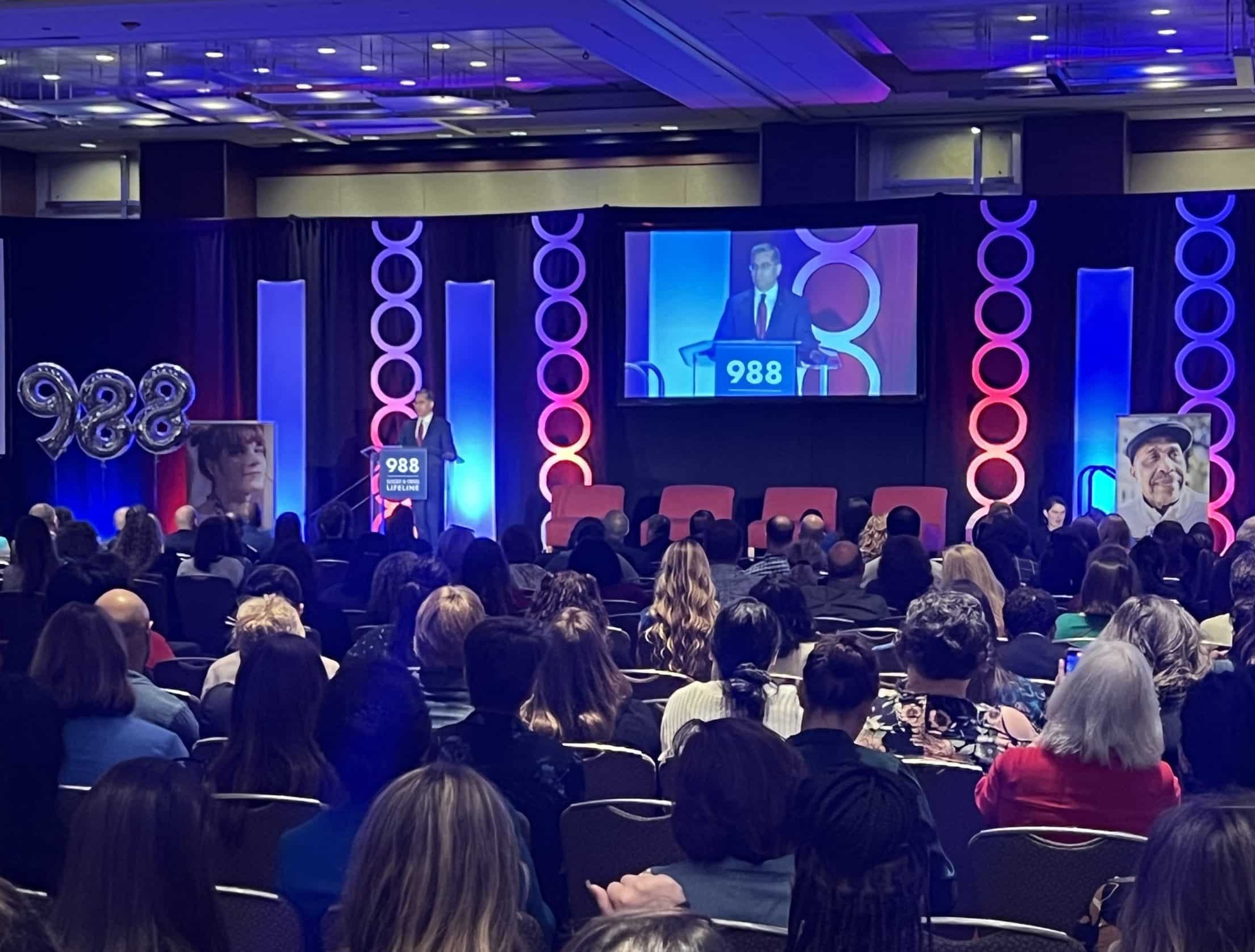
A a national conference on the U.S. mental health crisis response system now taking place in Chicago looks at ways to improve the system amid worries over funding and training. Continue reading…
The ‘Invisible’: More Women Veterans Are Dying of Suicide and VA Still Lacks Resources, Advocates Say
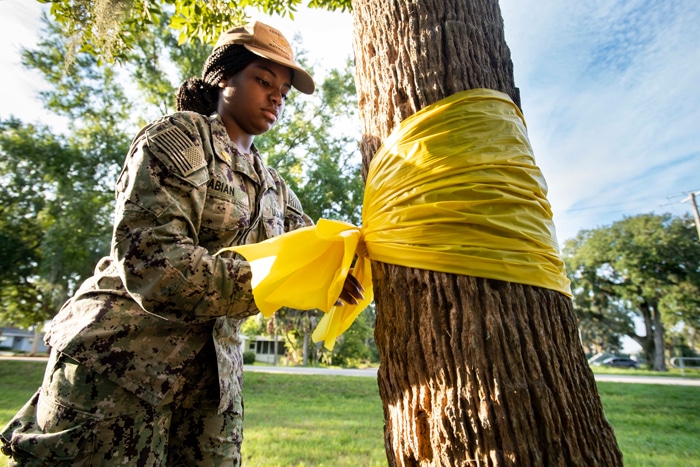
The rate of women veterans dying by suicide nearly doubled from 2001 to 2021, according to a report from the Dept. of Veterans Affairs released in December. Now a new report from Disabled American Veterans warns that this is still a critical problem.
If you’re not subscribed to MindSite News Daily, click here to sign up.
Support our mission to report on the workings and failings of the
mental health system in America and create a sense of national urgency to transform it.
For more frequent updates, follow us on Facebook, Twitter and Instagram:

The name “MindSite News” is used with the express permission of Mindsight Institute, an educational organization offering online learning and in-person workshops in the field of mental health and wellbeing. MindSite News and Mindsight Institute are separate, unaffiliated entities that are aligned in making science accessible and promoting mental health globally.
Copyright © 2021 MindSite News, All rights reserved.
You are receiving this email because you signed up at our website. Thank you for reading MindSite News.
mindsitenews.org

The name “MindSite News” is used with the express permission of Mindsight Institute, an educational organization offering online learning and in-person workshops in the field of mental health and wellbeing. MindSite News and Mindsight Institute are separate, unaffiliated entities that are aligned in making science accessible and promoting mental health globally.


Author

Related Articles

The Lindsey Clancy Murder Trial
Women nationwide watch the Lindsay Clancy trial and see themselves in her story, plus an investigation into hospitals that fail patients with addiction.
Grief and Rehabilitation in a California Prison
This month: a DUI offender’s path to rehabilitation, Lindsay Clancy revisited, Illinois prison protests, a fatal cell fire, and Missouri’s competency crisis.

Meta Pays $17 Billion Settlement for Lawsuit Over Child Harm
Meta will pay up to $17.1 billion and reshape how its platforms operate after 47 states argued that they are harmful and also addictive to children by design.