
Caregiving Expands Who You Are
Caregiving expands who you are, even if it is often lonely and exhausting.


April 16, 2025
By Courtney Wise

Greetings, MindSite News Readers. In today’s Daily, sweeping cuts from the federal government threaten the viability of 988, our national mental health crisis line. Plus, a look at caregiving and its overwhelming demands, and how the totality of its demands can change people forever.
But first, here’s an afternoon delight:
Over the weekend, 300 volunteers in Chelsea, Michigan formed a two-line “book brigade,” helping Serendipity Books owner Michelle Tuplin move 9,100 titles from their old home, blocks away, to her new store, all in less than two hours. They were sorted and alphabetized too, she said. When she placed a call for help, it never occurred she’d get such a large, broad response – with helpers aged from as young as 6 all the way to 91. “I knew in theory that the bookstore has a really central place in the community,” Tuplin told MLive. “People talk about that a lot and talk about what we do for the community… But to see it actually in action and to come out of the bookstore and see all those people lined up was just extraordinary.”
Trump Administration cuts threaten the longevity of 988
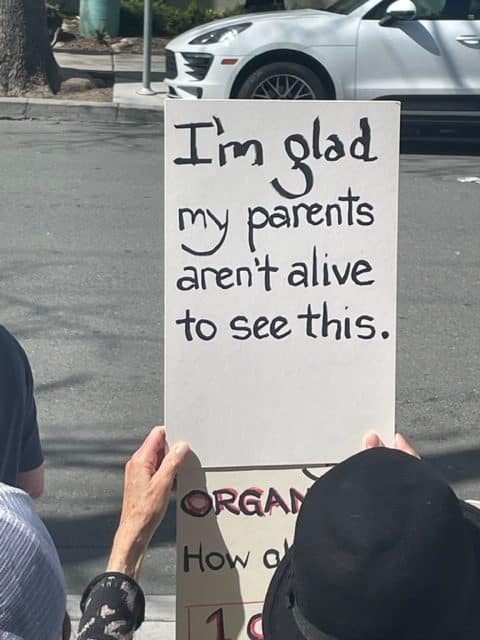
Trump administration on April 5, 2025 that drew thousands of people. Credit:
MindSite News.
Lynette Isbell was stressed. Dealing with a divorce, an empty nest, and the responsibility of caring for her aging parents, she was overwhelmed. Feeling like a burden to friends and family, in April 2022, she dialed a local mental health hotline from her home in Terre Haute, Indiana, to vent. Far from a relief – police would soon arrive at her home, arrest her, and have her committed to a hospital against her will, resulting in more than $12,000 in medical bills. “The whole thing was an absolute, utter, traumatic nightmare,” she told KFF Health News.
The botched response to Isbell’s call for help illuminated the need for a national mental health hotline, set to launch just months after her police encounter. Since July 2022, the 988 line has been open to calls or texts for help from all 50 states. At the time, federal officials characterized 988 “as the linchpin” in a revamped national mental health crisis system. It would relieve police and emergency rooms from responding to mental health needs they’re ill-equipped to treat, and better serve callers, by redirecting calls to trained mental health support. The State of Indiana was similarly excited, seeing it as part of a new, comprehensive system..
Now, Indiana ranks among the top 10 states for 988 answer rates, a sign it is coping well withdemand, according to Laurel Stine, chief advocacy and policy officer with the American Foundation for Suicide Prevention. Moreover, in the first half of last year, police were involved in just 1% of 3,080 cases, and only 10% required a visit to the ER – responses are led by behavioral health professionals.
But now, the Trump Administration’s sweeping cuts to mental health threaten the hotline’s viability. They include cuts to staffing at SAMHSA, which oversees 988, and stoppage of $1 billion in grants that states had relied on to fund their 988 systems. There are also looming concerns about Medicaid cuts. Some 23 states successfully contested and paused their cuts in court, but Indiana isn’t one of them. Following federal cuts effective March 24th, the state is $26 million short of its budget needs.
When Isbell dialed for help in April 2022, it was to a local line that relied almost entirely on volunteers, impeding efforts to standardize responses, said Jay Chaudhary, a former director of Indiana’s Division of Mental Health and Addiction. Chaudhary led the state’s transition to 988, which addressed many of the earlier hotline’s issues. “When somebody makes the really brave step to seek help with mental health care, that system better be ready to catch them,” he said.
Far from it for Isbell – her call was answered by someone who left her frustrated, so she hung up. Once the call ended, the volunteer contacted the Vigo County Sheriff’s Office and told a dispatcher Isbell was “thinking of committing suicide.” Responding officers recorded it in their report. But Isbell contends her words were distorted. She was overwhelmed, but never said she was actively suicidal, because she’s never been actively suicidal.
“It was like a childhood game of telephone,” said Isbell, “only not at all funny.” At the hospital, doctors agreed. “She was not suicidal,” medical records show. They went on to state that her anxiety “is increased and made worse by being in here” and despite her “depressed mood, she does not meet current criteria for involuntary hospitalization.” She was discharged the next day. After insurance and multiple encounters with the hospital, Isbell’s out-of-pocket expenses were reduced to $1,400, which she says she paid to be done with the matter. But the experience still left her humiliated.
Now, with nearly 3 years of evidence that 988 works and prevents incidents like these, state officials and mental health advocates alike worry about 988’s future. The disruption of federal funding is “gravely impactful,” said Zoe Frantz, CEO of the Indiana Council of Community Mental Health Centers. “We have put a lot of time, talent, and treasure — from the state to providers — in trying to build the system,” Frantz said. “We can’t go back.”
Caregivers grapple with profound changes to their identity
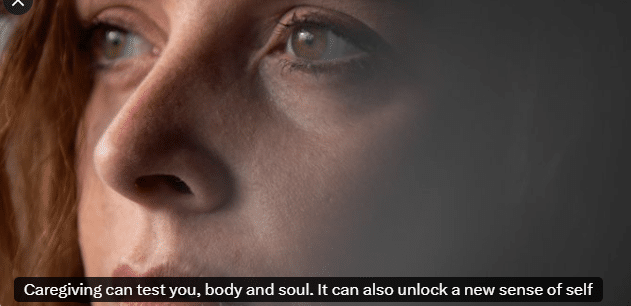
Caregiving changed Amanda Cruz, down to the core. Gregarious and talkative growing up, she sought out employment that enabled her to regularly interact with others, and even learned a second language to be able to speak to more people. But caring for her terminally ill mother changed all that. Largely silenced by cancer and then a stroke, Cruz’s mother had to communicate through a “quiet pool” of words, one that Cruz would have to learn in order to connect and provide good care. “I must pull myself back to put her forward,” she explained to NPR. But the shift was painful, akin to a loss of self, of color in the world. “I was erased from myself,” she said. “I wasn’t my personality. I didn’t do things I liked anymore.”
For many, it’s all a part of caregiving. The responsibility is well known to induce stress or even mood problems, like anxiety and depression. But it can also transform the caregiver into an entirely different person – one even they don’t recognize. Researchers have come up with a framework for the phenomenon: caregiver identity theory. Much like becoming a parent, getting married, or moving abroad, caregiving delivers sweeping changes to a person’s life, who they are and how they see themself. Accepting the change is tough.
“I think it’s a transformation for everybody,” said Donna Thomson, who facilitates several caregiving programs at Ontario’s McMaster University and cares for her adult son. “And it’s permanent. This idea that you’ll go back to the person you were before, that’s never going to happen.”
Embracing the caregiver identity provides relief. Those who adopt the label find the experience more positive, and are more likely to seek out and accept help, research finds. That’s what happened for Carla Velastegui. Now in her thirties, she’s been caregiving for her mother since high school. “I’m not a caregiver! I’m just a daughter,” Velastegui protested, when asked about the role a few years ago. Besides, in her culture, taking care of an ill elder or parent isn’t “caregiving’’; it’s love and duty. But with more thought, she decided to own the term and it’s changed her. “It gave me the confidence to speak up, to ask questions, to advocate for [my mom’s] needs,” she said.
Continuing to express the most enduring parts of yourself can help too, said Allison Applebaum, a psychologist and geriatrician who leads a new center for caregivers in New York City. It’s a reminder that “caregiver” has expanded who you are, rather than erased who you were. That’s Cruz’s experience. Following her mother’s passing, listening, paying close attention and a slower pace are the gifts caregiving gave her. Amidst the pain of loss, they help her listen and pay attention. “I look at people in the gas station, or the grocery store, and I think how pretty they are, how beautiful, their eyes, their hair,” she said. “I want to hear what people are trying to say, so I can hear more deeply.”
In other news…
Salmon exposed to anti-anxiety meds seem to take more risks: Our lifestyle and its byproducts mean that, at any given time, river residents are swimming in a cocktail of medications. Now, there’s evidence to suggest those drugs are changing their behavior. A recent study found that Atlantic salmon exposed to certain anti-anxiety medications during their migration were more likely to make it to the sea than drug-free fish, Alaska Public reports, crossing dams two to three times faster than their non-medicated counterparts, and saving roughly 5 hours.
Scientists believe it may stem from increased boldness, and a more “solitary” mentality, which might harm the fish in the long-run. “On the face of it, it sounds like giving drugs to fish is beneficial,” said Jack Brand, one of the study’s authors. “But any departure from natural behaviour is likely to have potential broad and negative consequences for the population.”
Better wastewater treatment facilities could help prevent chemicals from reaching our waters, as could designing drugs that more easily break down in the environment, said Karen Kidd, an ecotoxicologist unaffiliated with the study. “That’s a critical step moving forward to ensure that what’s going into the environment isn’t causing adverse harm.”
Results of a clinical trial of Therabot, a generative AI chatbot intended to support users with depression, anxiety or an eating disorder, have been deemed “encouraging.” Developed by researchers at Dartmouth College, the bot was observed over 8 weeks and found to help users with the aforementioned conditions reduce their symptoms. Participants with depression saw as much as a 51% reduction, according to the New York Times. Still, experts warn against too much excitement for the results. Therabot’s effectiveness was measured against a control group that underwent no mental health interventions at all.
That’s “reasonable enough,” said Nick Jacobson, the study’s lead author, since most people with mental health conditions aren’t in treatment. But, he added, he does hope future studies will include one-to-one comparisons against human therapists. “The biggest fundamental problem with our system is that there aren’t enough providers,” he said, adding, “We’ve been designing treatments that would fundamentally scale to all people.”
If you or someone you know is in crisis or experiencing suicidal thoughts, call or text 988 to reach the 988 Suicide & Crisis Lifeline and connect in English or Spanish. If you’re a veteran press 1. If you’re deaf or hard of hearing dial 711, then 988. Services are free and available 24/7.
Recent MindSite News Stories
New York City Stands Out for Tracking Psych Med Prescribing to Foster Youth. What Do Numbers Show?

Nearly one in four New York City foster youth is prescribed psychotropic medication, raising concerns about oversight and overmedication. Continue reading…
‘All I Did Was Sleep’: Despite Years of Damning Reports, States Fail to Rein in Psych Meds for Foster Youth
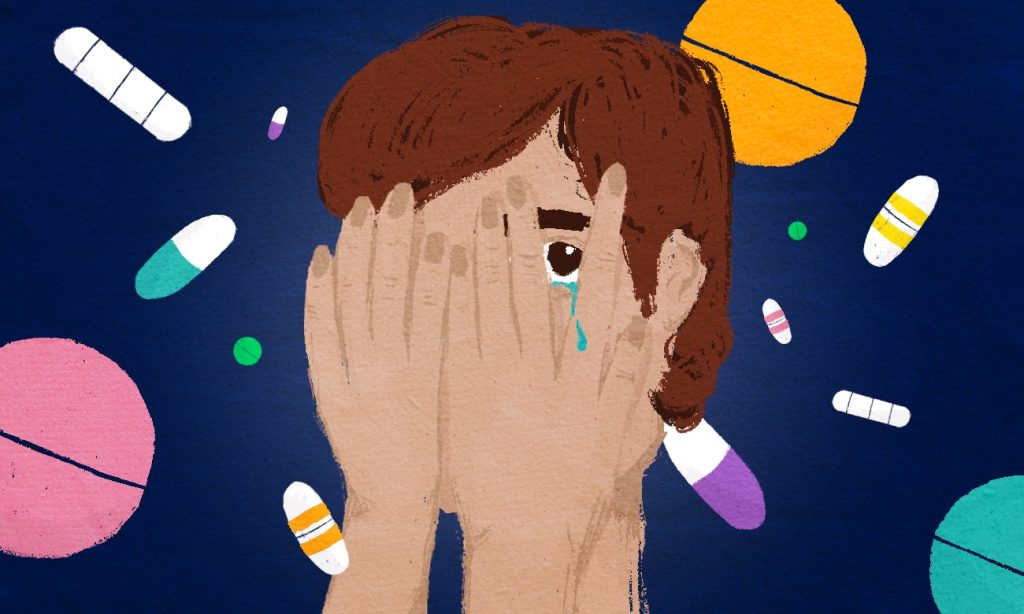
An investigation by The Imprint reveals overmedication and spotty enforcement of federal requirements that child welfare agencies monitor psychiatric prescriptions for foster youth. Continue reading…
A Father Fights Against Mental Health Stigma in Sports

Brian Monday is on a mission to help youth confront the stigma and silence around mental health struggles in sports. Continue reading…
If you’re not subscribed to MindSite News Daily, click here to sign up.
Support our mission to report on the workings and failings of the
mental health system in America and create a sense of national urgency to transform it.
For more frequent updates, follow us on Facebook, Twitter and Instagram:

The name “MindSite News” is used with the express permission of Mindsight Institute, an educational organization offering online learning and in-person workshops in the field of mental health and wellbeing. MindSite News and Mindsight Institute are separate, unaffiliated entities that are aligned in making science accessible and promoting mental health globally.
Copyright © 2021 MindSite News, All rights reserved.
You are receiving this email because you signed up at our website. Thank you for reading MindSite News.
mindsitenews.org

The name “MindSite News” is used with the express permission of Mindsight Institute, an educational organization offering online learning and in-person workshops in the field of mental health and wellbeing. MindSite News and Mindsight Institute are separate, unaffiliated entities that are aligned in making science accessible and promoting mental health globally.


Author

Related Articles

The Lindsey Clancy Murder Trial
Women nationwide watch the Lindsay Clancy trial and see themselves in her story, plus an investigation into hospitals that fail patients with addiction.

Grief and Rehabilitation in a California Prison
This month: a DUI offender’s path to rehabilitation, Lindsay Clancy revisited, Illinois prison protests, a fatal cell fire, and Missouri’s competency crisis.

Meta Pays $17 Billion Settlement for Lawsuit Over Child Harm
Meta will pay up to $17.1 billion and reshape how its platforms operate after 47 states argued that they are harmful and also addictive to children by design.