Safety Controls Added to ChatGPT Following Teen’s Suicide

Hello, Mindsite News readers.
OpenAI is launching new safety features to protect teens using ChatGPT. Resource-deprived neighborhoods carry a higher risk of psychotic disorders. Large, rigorous studies find no evidence that Tylenol use during pregnancy causes autism. More than half of all overdoses in the United States now involve stimulants. Plus: Author Barbara Kingsolver on her safe re-entry place for women recovering from addiction.
But first: A glimpse of hope from Positive News, (hat tip to Reasons to be Cheerful): A feature tells the story of a former neo-Nazi who renounced his past and created a space for others to do so. (See also Laurie Udesky’s article for MindSite News, co-published by USA Today, on former white supremacists who have disavowed hate and are working to free others from its grip.)
OpenAI launches parental safety controls for ChatGPT after a teen’s death
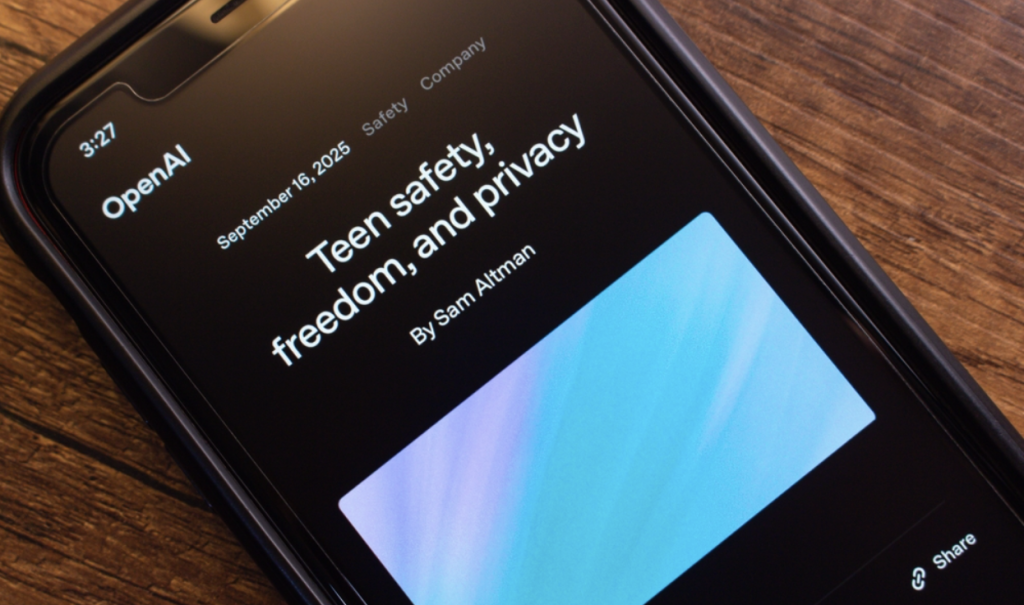
After Southern California teenager Adam Raine died by suicide this spring, his parents filed a lawsuit blaming OpenAI’s “deliberate design choices” for the death, citing numerous instances where ChatGPT provided him with specific advice on how to kill himself.
Now, OpenAI has launched parental controls that parents can use with their teenagers. The update, released worldwide yesterday, enables parents and law enforcement to get notifications if a user between 13 and 18 talks to the chatbot about suicide or self-harm.
The update will also make changes to the content experience for teens using ChatGPT. If a teen user types in a prompt related to self-harm or suicidal ideation, that prompt will be forwarded to a team of human reviewers who decide whether to trigger a potential parental notification – though those are expected to come hours after a concerning conversation has been flagged.
If OpenAI’s teams determine a child is in danger, and parents can’t be reached, they might also contact law enforcement. Parents can also limit hours, voice mode and image tools.
“Once parents and teens connect their accounts, the teen account will automatically get additional content protections including reduced graphic content, viral challenges, sexual, romantic or violent roleplay, and extreme beauty ideals, to help keep their experience age-appropriate,” OpenAI said in a blog post announcing the launch.
The blogpost also said that OpenAI has been working with Common Sense Media, a nonprofit that reviews tech products and advocates for improved child safety, as well as the attorneys general of California and Delaware, and expects to refine and expand on the new controls over time.
“These parental controls are a good starting point for parents in managing their teen’s ChatGPT use,” Robbie Torney, Common Sense Media’s senior director for AI programs, was quoted as saying in the blog post.
In the opinion of this parent of a teenager, this is a welcome change – but one that should have been made long ago.
Psychotic disorders higher in low-income neighborhoods, study suggests
People living in a low-income neighborhood, with poor housing and high crime rates, may face a higher risk of psychotic disorders, according to a recent study from the University of Georgia.
“Psychotic disorders such as schizophrenia can be debilitating, interfering with a person’s mental, physical and social health,” a UGA press release noted. “The new study suggests a person’s risk for developing these conditions could be shaped by their environment.”
In areas with what researchers call poor social determinants of health, the rates of such mental disorders were 79% higher than they were in richer areas. These resource-deprived neighborhoods were also marked by high unemployment, low levels of education and difficulty obtaining services that wealthier Americans take for granted. The study was published in Social Psychiatry and Psychiatric Epidemiology.
“More inequality can give rise to a higher incidence rate of psychosis. Black Americans are about 2.4 times more likely to be diagnosed with schizophrenia in the United States, and recent research has been pointing to structural causes,” said Sydney James, lead author of the study and a doctoral candidate at UGA. “Marginalized communities are more likely to live in deprived areas, so I wanted to see if that explained the higher rates of psychosis.”
Senior author and UGA professor Gregory Strauss suggested that a difficult environment could be “both a cause and a consequence of psychotic disorders,” and that digital therapy could open new doors to treatment “in the environment where it might matter most.”
Trump lambasted by researchers for alleging Tylenol-autism ink

Ned Barnett of the Raleigh News and Observer was calling researchers to get their takes on Trump’s contention that Tylenol (acetaminophen) is linked to autism when he “ran into another condition,” he said. “It’s called: Fear of commenting about things that could offend the president and lead to a loss of federal research funding.”
Interviewing a scientist at the University of North Carolina at Chapel Hill – a leading center for autism research – a scientist told him the university had recently sent out a memo advising the university’s experts not to give interviews about federal actions, “given the current political climate.”
“If you don’t speak up, you feel like you are enabling,” the scientist said. “And if you do speak up, you feel threatened.”
Despite the university’s warning, the scientist went on to describe researchers’ reaction to Trump’s linking Tylenol with autism, in a personal capacity: “We’re dumbfounded. We’re very angry. We are just overwhelmed with shock.”
“The public service announcement by the president is a disservice to the science that is much more complicated,” the scientist added.
European scientists who worked on the largest study ever conducted on the issue also spoke up. “Our study of nearly 2.5 million births in Sweden published in 2024 shows no evidence that acetaminophen use during pregnancy increases a child’s risk of autism,” they wrote in a story for The Conversation.
Nonetheless, the FDA has begun updating its warning labels – even though Tylenol is the safest medication for fevers during pregnancy. If left untreated, fevers in pregnancy can lead to birth defects and central nervous system abnormalities.
The Swedish study reached its decisive conclusion in part by comparing siblings, which allowed them to control for a number of other variables. It concluded there was “no evidence that acetaminophen use during pregnancy increases the risk of autism or ADHD.”
In other news…
The fourth wave of the overdose crisis involves opioid-stimulant overdoses. More than half of all overdose deaths in the United States now involve stimulants according to a study in JAMA published this September. Stimulants were involved in 59% of the more than 309,000 overdose deaths reported from January 2021 to June 2024 – 31.2% involved methamphetamine, 30% involved cocaine. About 40% of overdose deaths involved the simultaneous use of stimulants and opioids. Mixing the two raises the risk of overdose, and what’s worse, opioid-overdose-reversal medication like naloxone cannot counteract harmful effects of stimulants like emotional distress and cardiovascular complications.
What’s urgently needed, the CDC says, is better treatment for stimulant use disorder – especially because there are no overdose reversal medications for stimulants. Among other things, the agency recommends teaching people how to identify the signs of a stimulant overdose, which include psychosis and cardiovascular warning signs; contingency management, which rewards abstinence and other positive behaviors in recovery; and low barriers to care.
Pandemic-era mental health service rules on telehealth were set to expire on September 30, 2025. Relaxed rules approved during the pandemic meant that Medicare could cover a much wider range of telehealth services. Now they are set to expire and the reversion to previous rules would require behavioral health providers to see patients in person six months before online remote treatment, and at least annually thereafter, according to The Washington Post.
The House did pass a bill extending the revised rules, but a divided Senate has not passed the policy, and the House won’t return until October 1. Lobbying on the measure is “at an absolute fever pitch right now,” said Kyle Zebley, the executive director of ATA Action, the advocacy wing of the American Telemedicine Association. More than 300 hospitals, industry groups, insurers, medical groups, and patient organizations declared some form of telehealth lobbying in the first six months of 2025.
Author Barbara Kingsolver invests her royalties to help Appalachian women struggling with addiction. In June, Barbara Kingsolver announced she had started The Higher Ground Women’s Recovery Residence. The program grew out of her novel Demon Copperhead, which focuses on Appalachia’s opioid crisis and won the Pulitzer Prize; Higher Ground was founded using her royalties from the book, which sold millions of copies. The home provides women recovering from drug addiction with support and a base to re-enter everyday life. By August, the home had reached its capacity of seven.
“Here’s what I didn’t expect, Kingsolver told CBS. “The community embraced this with loving arms. I thought maybe people would say, ‘I don’t want this in my backyard,'” she said, but local support “has been just endless. It’s been deep, and loving, and a wonder to see.”
The name “MindSite News” is used with the express permission of Mindsight Institute, an educational organization offering online learning and in-person workshops in the field of mental health and wellbeing. MindSite News and Mindsight Institute are separate, unaffiliated entities that are aligned in making science accessible and promoting mental health globally.

Author

Related Articles

‘When Remembering Feels Unbearable’: Sexual Violence Traumatizing Palestinian Detainees
“My heart felt it might stop while talking to you about it just now. But I remember there are people still in there, so I speak up.”
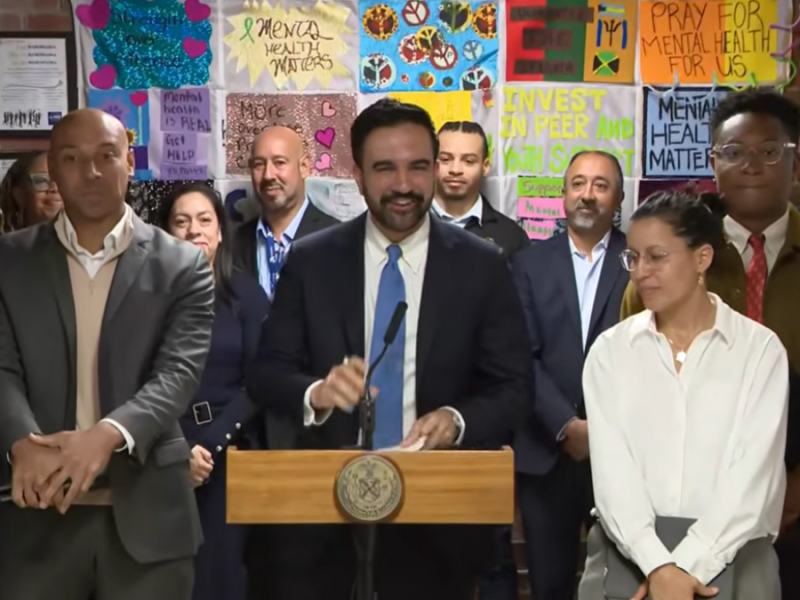
Mamdani Invests $12 Million in ‘Peer Army’ to Support Addiction Recovery
“Every New Yorker deserves access to care, dignity and support, no matter where they are in their recovery journey,” Mamdani said.

Most Americans Think Trump Mentally and Physically Unfit to Be President
59% of Americans think Trump is not mentally sharp enough to lead the country, according to the Washington Post/ABC News/Ipsos poll.
