
Most Young Survivors of Gun Violence Never Get Therapy. California Wants to Change That.
A California bill would require counties to provide free mental health and counseling services to young gun violence survivors up to age 25.
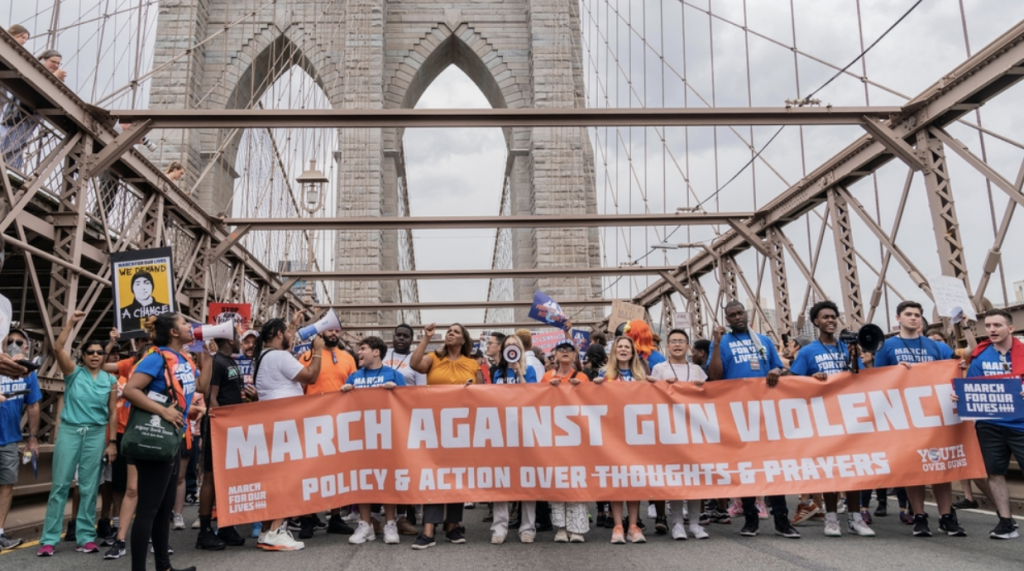
On what should have been an ordinary teenage sleepover with friends, 16-year-old Jazelle Eastman’s life changed in an instant. A boy she’d invited believing he was her friend shot her in the face.
Two years later, she’s still working through the trauma. “PTSD is so real,” she told CalMatters. “I feel like I’m always looking over my shoulder.”
Though the incident remains excruciating for Eastman to discuss, she’s able to do so because a social worker connected her to a counselor during her hospital stay — help she says she never would have sought on her own. “Talking to someone made it a lot better,” she said.
Swift access to counseling made a difference for Eastman, but it’s far from a common experience for most youth survivors of gun violence. Only 37% of children received mental health care within six months after a firearm injury, according to 2023 data from the American Academy of Pediatrics. Others receive no help at all. They languish on waitlists, their families distrust the health system or lack insurance, without which they simply can’t afford care.
Lawmakers in California are determined to change that. Grappling with a staggering 2,000 youth aged 25 and younger impacted by gun violence in California each year since 2016, Democratic Assemblymember Sade Elhawary introduced Assembly Bill 2247. If passed, it would require counties to provide free mental health and counseling services to youth survivors — whether they were shot, witnessed a shooting or lost someone to it — up to age 25, regardless of insurance status. The bill would launch a pilot program in four counties: Alameda, Los Angeles, San Bernardino, and Solano.
Youth Alive!, the Bay Area nonprofit that helped Eastman, models what wraparound care can look like: connecting survivors to counselors before they even leave the hospital and bringing therapy directly into their homes. Their waitlist, however, is always full, underscoring the need for a larger architecture of support. Assembly Bill 2247 passed in the California Assembly this week and is now headed to the Senate, although Elhawary’s office is still working to secure funding to make its goals a reality.
This will be especially helpful to Black and Latino youth, who face the sharpest disparities — both in experiencing harm and accessing follow-up support. According to state data, 78% of California youth killed or hospitalized due to firearm injuries between 2016 and 2024 were Black or Hispanic.
Tinisch Hollins, executive director of Californians for Safety and Justice, an advocacy nonprofit sponsoring the bill, said too many families have been forced to “give up on the process” when navigating an inaccessible system.
The name “MindSite News” is used with the express permission of Mindsight Institute, an educational organization offering online learning and in-person workshops in the field of mental health and wellbeing. MindSite News and Mindsight Institute are separate, unaffiliated entities that are aligned in making science accessible and promoting mental health globally.

Author

Related Articles

Are We Reaching People in Crisis — or Just Counting the Ones Who Call?
Billions were spent on the 988 lifeline, but fewer than 1 in 5 people in crisis use it. Here is what research reveals about the gap in mental health care.

You Cannot Make Football Safe for a Child’s Brain, but You Can Make It Safer
Football cannot be made completely safe for a child’s brain, but smart choices can lower the risk. Discover how flag leagues and reduced contact protect youth.
Discharged to Die: Doctors and Hospitals Across the U.S. Fail to Treat Patients With Addiction
An investigation into hospitals turning away patients with severe addiction, and the stigma inside U.S. medicine that leaves most people untreated.