
A Three-Year-Old Tries to Cope Without his Beloved Papi
When a parent is taken away by ICE, a child’s world implodes. The long-term consequences include depression, anxiety and post-traumatic stress disorder.
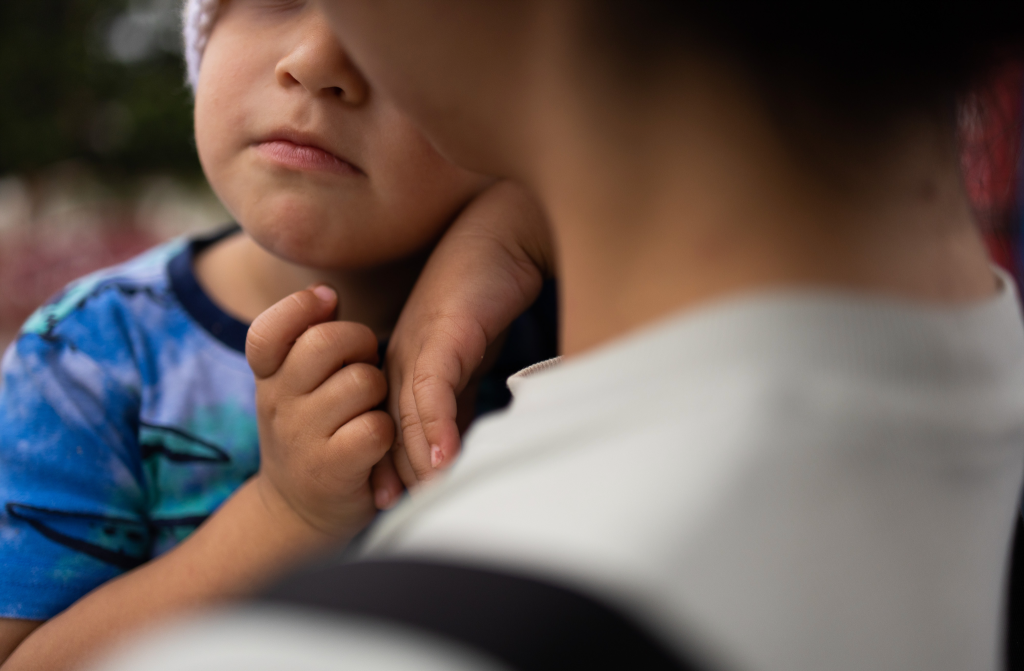
Text by Cora Cervantes. Photos by Julie Leopo for MindSite News/CatchLight
This is the first part of When ICE Ruptures Families, a three-part series reported by MindSite News and produced in partnership with CatchLight as part of its three-year Mental Health Visual Reporting Initiative.
Haz clic aquí para leer este artículo en español en el sitio de palabra.
When the father of pre-schooler Carlos Carino* was taken into custody in Los Angeles last September by ICE agents and brought to a detention center in California’s Central Valley, the changes in Carlos were immediately evident.
He refused to participate in circle time at preschool. He cried frequently in school and at home. And he started calling everyone ‘Papi,’ – Daddy in English, but also a term of endearment for children in Latin American countries.
Names in this story indicated by * have been changed to protect the identities of the people described. A fact-checker and an editor have worked with the reporter on this story to verify the information about each person whose identity was withheld.
For six months, the family navigated the separation as they fought in court for the release of Carlos’s father, Miguel Carino*. They had reason for hope – or so they believed.
Carlos is like one of every five children in California – they live in mixed-status families in which at least one member is undocumented; across the country, there are some 4.7 million mixed-status households. As these families cope with aggressive immigration enforcement, a parent’s detention can launch them into multiple layers of trauma, buffeted by events they can’t control.
The consequences are severe: A report by six psychiatrists in Psychiatric News noted that prolonged separation between children and their immigrant parents “can undermine attachment security and increase children’s vulnerability to anxiety, depression, and behavioral problems.”
Carlos’ father had been living in Los Angeles for nearly 25 years, owned a small construction business in his neighborhood of East Los Angeles and employed other workers. Jazmin, his wife of five years, is a U.S. citizen, and Miguel had applied for an “adjustment of status” based on his marriage. Then he was detained during what his attorneys assumed would be a routine check-in with U.S. Citizenship and Immigration Enforcement (USCIS).
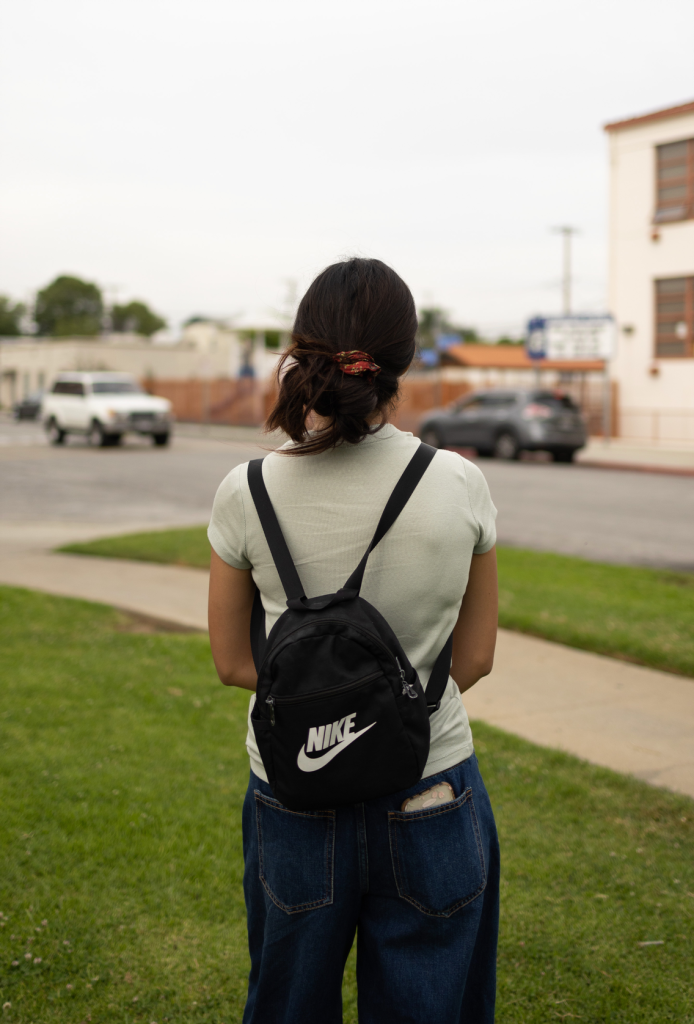
Jazmin, 24, tried to keep the family connected while taking on extra house-cleaning shifts. She and Carlos started making the five-hour round-trip to the Central Valley twice a month. But the visits were painful, and they distressed Carlitos.
“We couldn’t hold hands, we couldn’t get up from our seats,” Jazmin recalled. “When it was time to say good-bye, my son didn’t want to let go of him.”
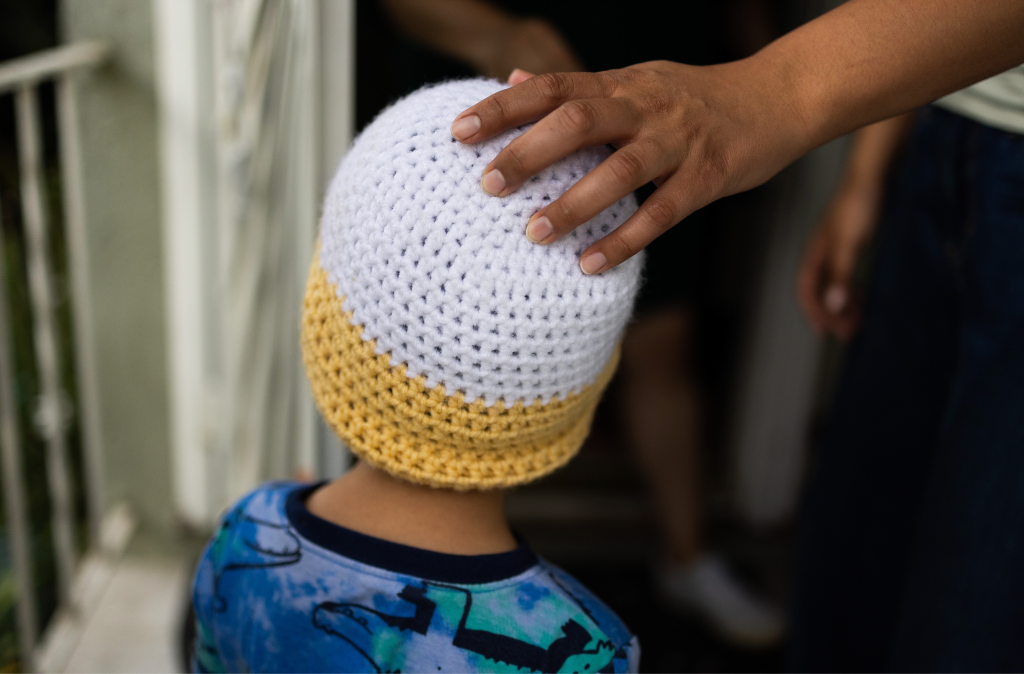
But after a while, even these constrained visits seemed to help Carlos. One morning, he arrived at his pre-school wearing a hand-knit beanie that his father had made for him.
“He kept it on all day and was happier than he had been,” recalled Ana Soto*, an early education assistant at the preschool. He wore the beanie daily, as if he were wearing a piece of his father.
“One day, I called for him: ‘Papi, come over here,'” Soto said. “He looked at me and said, ‘I am not Papi, I am Carlos.’” To Soto, that signaled a greater sense of security.
But in March, faced with the prospect of his likely deportation and exhausted by the brutal conditions at the detention center, Miguel decided to self-deport to Tijuana, Mexico. Jazmin tried to cope, taking Carlos to visit him in Tijuana. Then, in April, Miguel moved further south to Mexico City so he could seek work to support himself. Mexico City is far away, and the family does not have the resources to fly there. Carlos hasn’t seen his father in person for three months and it’s unclear when he will see him again. Now the family must try to stay connected through video and phone calls, and Carlo’s confidence and ease are fading again.
When a parent is taken away, a child’s world collapses. Being forcibly separated from family members can cause emotional deregulation and ratchet up their insecurities, says Tatiana Londoño, an assistant professor of social welfare at UCLA’s Luskin School of Public Affairs. Her work explores the ways that Latino immigrants navigate and adapt to detention, deportation and family separation.
Separation is not merely stressful for young children — it is toxic.
–Clinician commentary, New England Journal of Medicine
“Even a small separation from parents, no matter how short, can have a rupture on that child’s developmental well-being,” Londoño says. “We are leaving a long-term, potentially multi-generational impact on these families.”
Children learn that a parent – the person they most rely on – “is no longer my secure base,” Londoño says. “They learn that no one is safe for them. They might have issues in future relationships, or they might not be able to discern a healthy relationship from an unhealthy relationship.”
Studies show that exposure to harsh immigration enforcement and separation from a primary caregiver is a form of “toxic stress“ that increases future risks of physical and mental illness. Such risks are heightened when they occur on top of “prior exposure to violence, poverty, and family loss in countries of origin,” according to the Psychiatric News report.
A 2022 study in the Journal of Policy Analysis and Management looked at the ways that the children of immigrants living near Morristown, Tennessee, were affected over the year following a massive immigration raid in that community. The researchers found “a substantial spike in absences from school in the month of the raid and significant increases in exclusionary disciplinary actions and in diagnoses of substance use disorder, depression, self-harm, suicide attempts or ideation, and sexual abuse.”
Another study, published in 2020 in the Journal of Traumatic Stress, looked at 458 migrant children and adolescents who were seen in mental health clinics and found that 43% of them were diagnosed with PTSD and 24% with depression. Of those, almost half of the children — 49% — said they were experiencing three or more problematic behaviors ranging from academic problems and skipping or acting out in school to substance use, having suicidal thoughts or attempts, or being physically aggressive towards others.
In a commentary published in March in the New England Journal of Medicine, a team of clinicians and researchers made this point:
“For physicians, mental health clinicians, and public health professionals, the evidence is unequivocal: separating parents and caregivers from young children causes preventable, policy-driven trauma with long-term consequences for child health and development. Separation is not merely stressful for young children — it is toxic.”
Compounding the problem is that at the very moment ICE raids are creating trauma, the Trump administration is also cutting food assistance and other services that help support families in distress. Londoño and other advocates are urging the state of California to help fill the gap by increasing funding to organizations working to meet immigrant families’ basic needs so parents can be “emotionally available to their children.”
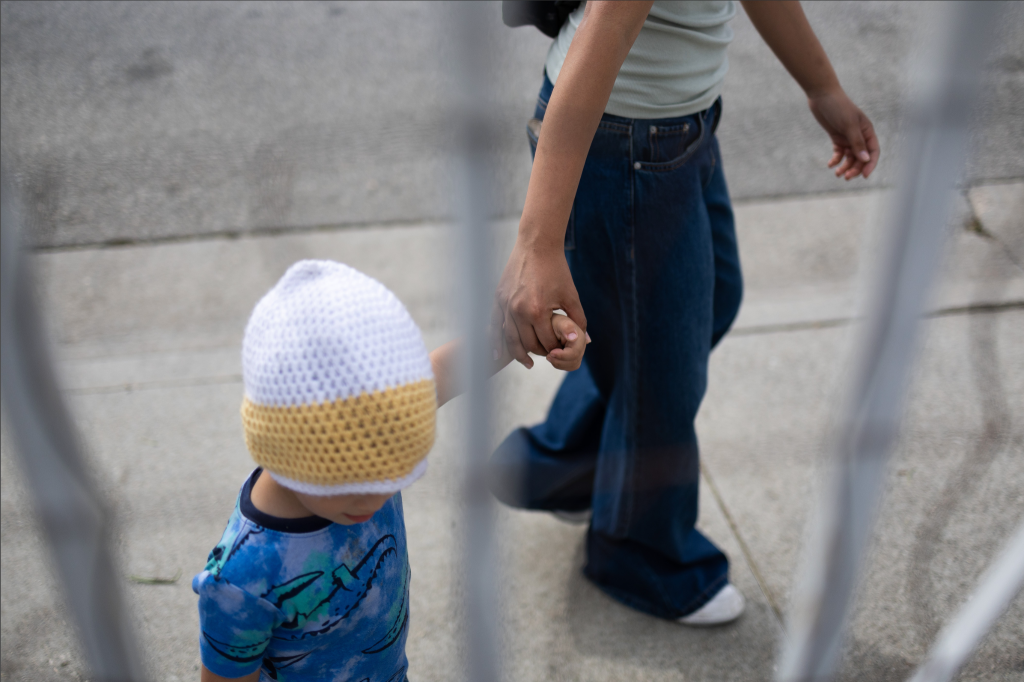
She also knows her family is far from alone. She has seen families from as far away as Florida waiting to visit their spouses in the lobby of Central Valley Annex, the massive detention center run for ICE by GEO Group, the private prison company.
We are leaving a long-term, potentially multi-generational impact on these families.
–Tatiana Londoño, assistant professor at UCLA’s Luskin School of Public Affairs
“I recall a woman with six children, including one child with autism and a newborn,” Jazmin said. “I saw newborns from out of state visiting and being held by their fathers for the very first time.”
Carino hopes she may one day be able to bring her husband back to the United States and reunite her family. For now, though, she is focused on economic survival – and easing the emotional impact on Carlos, who turned 3 in May.
His preschool threw a party for him and the family celebrated via a video call with Miguel in Mexico City. To his mother, it was bittersweet: It was Carlitos’ first birthday without his Papi.
The name “MindSite News” is used with the express permission of Mindsight Institute, an educational organization offering online learning and in-person workshops in the field of mental health and wellbeing. MindSite News and Mindsight Institute are separate, unaffiliated entities that are aligned in making science accessible and promoting mental health globally.


Authors


Related Articles
‘I Can’t Focus on My Schoolwork’: A High School Student Agonizes That Her Parents Will Be Seized While She’s in Class
As Trump and the Supreme Court dismantle the system that protected millions of immigrant families who fled danger, children wonder: Will we be next?
‘Remembering Is a Form of Protest’: Japanese Prison Camp Survivor Satsuki Ina on the Trauma of Detention
Satsuki Ina on Japanese American imprisonment, the legacy of cultural trauma,
and speaking out against detention centers.