
The Lindsey Clancy Murder Trial
Women nationwide watch the Lindsay Clancy trial and see themselves in her story, plus an investigation into hospitals that fail patients with addiction.

Greetings, MindSite News readers.
In today’s Daily, as many across the nation wait with bated breath for the jury’s decision in the murder trial of Lindsey Clancy, reporters spoke to some of the women who traveled to witness the proceedings. Plus, the deadly cost of stigma and bias in the nation’s addiction-treatment system.
But first, robots that are good for the planet: A Dutch nonprofit has deployed autonomous, plastic-eating interceptors to clean up the earth’s polluted oceans and remove 90% of floating plastic waste by 2040.
Scores of women witness the trial of Lindsey Clancy, many believing “she could be one of us.”

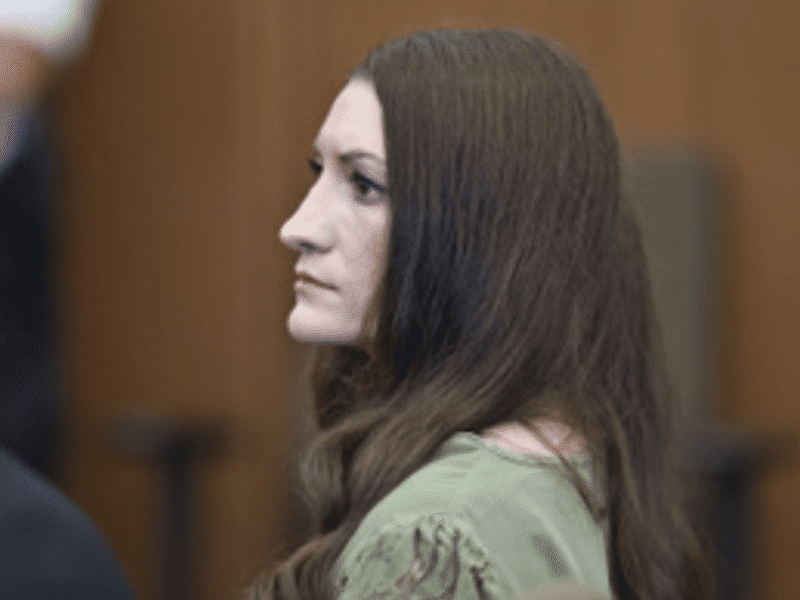
Is the much-publicized trial of Lindsay Clancy really about the deficiencies within our nation’s system of mental health and how they tragically failed one family, or is it, as a prosecutor said, about an entitled woman who no longer wanted the help she needed and killed her children “because she was done playing the game”? The answer to that question depends on your perspective. For weeks now, scores of women from across the country — as far away as Texas, Ohio and Virginia — have made the trek to a Plymouth, Massachusetts courthouse to see what a jury decides.
Three years ago, Clancy, a former labor-and-delivery nurse, strangled her three young children to death in their Boston-area home before swallowing prescription pills, slashing her wrists and neck and jumping headfirst out of a bedroom window. She survived, though now paralyzed from the waist down, and awaits a verdict on what’s to become of her life following what she and her lawyers say was a horrifying period of psychosis.
In the period of time before the killings, Clancy had reached out for help again and again — visiting her psychiatrist 14 times, trying 13 different medications, calling a suicide crisis line, turning to the emergency room, attempting to enroll in an inpatient program and even telling her husband that she feared hurting their children.
Many of the women who traveled to the courthouse empathized with Clancy, recalling their own severe declines in mental health after giving birth, at times struggling to pinpoint what separated their outcomes from hers. “She could be any one of us,” retired teacher Dottie Kiley said. Allowing reporter Stephanie McCrummen to listen in for The Atlantic, she remembered wanting to end her life while on antidepressants. “I had suicidal thoughts, clear as a bell,” Kiley said. “So bad I called the police and told them, and they had a cop come down and sit with me. It was a small town, and they had time to do that.”
As the women stood in line for an hour or more to enter the courtroom, their stories continued. The exhaustion and anxiety Marta Quijano, another spectator, experienced while raising her firstborn were so great that she still looks back in astonishment. “I remember one time—she was a cranky baby—and I remember not so much shaking her but going like this,” Quijano said, demonstrating how she squeezed her daughter’s shoulders and screamed. “They are called intrusive thoughts because your brain says something, and you don’t recognize it.”
Ashlyn Rizzo, who’d attended the trial for two weeks straight at that point, recalled emptying her 401(k) to run away from her newborn. “I had delusions. I couldn’t tell wake from sleep. I didn’t confide to anyone. I wrote a note,” she said. Then, a psychiatrist got her into the same program in Rhode Island that had turned Clancy away one month before the killings. “Saved my life,” Rizzo said.
After weeks of testimony in the trial, the jury remains deadlocked on whether Clancy is criminally responsible for the deaths of her children or not guilty by reason of insanity. Depending on the specific verdict, one option will yield her life in prison without the possibility of parole; the other, commitment to a Massachusetts mental health facility.
“My God, what does she have to do?” defense attorney Kevin Reddington asked in his closing argument, after walking the jury back through Clancy’s medications, psychiatric visits and even a close look at her journal, with handwriting deteriorated into what he called “chicken scratch,” suggestive of extreme psychological distress. But, “this case is not about the mental health system,” Commonwealth prosecutor Jennifer Sprague countered, pointing out that Clancy — with her family, nanny, job and employer-sponsored health insurance — had more help than most people.
The verdict is not yet in. The women in attendance, who traveled from far away to hear the trial, have left by now. Like Clancy’s husband, they will anxiously await the verdict from their homes, and an answer to this question: Since 1990, 37 out of 42 Massachusetts defendants who entered an insanity plea in a murder case have nonetheless been convicted. Will Lindsay Clancy continue that trend, or change it?
Discharged to die: Doctors and hospitals across the U.S. fail to treat patients with addiction
Despite the availability of safe, effective treatment for substance use disorders, clinicians and care providers often don’t offer help to many people who need care. In the most tragic cases, the failure to treat leads to death. An NPR investigation published last month determined that that was the result for Jean Descamps, a 26-year-old man who died one cold December night in 2023, shortly after emergency room staff at Providence Milwaukie Hospital in Milwaukie, Oregon requested that local police remove him from the emergency room. Much of the ordeal was captured on a police bodycam.
Having arrived earlier that day emaciated, covered in feces and unresponsive, ER staff cleaned him up and administered naloxone. They then decided he needed no further short-term medical care — though they had never run a toxicology test to measure the amount of drugs in his system.
Since Descamps continued to be unresponsive, police pushed back on the ER staff’s proposal, noting he was too sick to spend the night in jail. “He can’t be on his own,” one officer said. “Why is he being released? We have no place to take him.”
“He’s been evaluated medically. There’s no medical problems for him,” ER staff maintained in one of the conversations recorded on a bodycam. “A bus station is fine,” another hospital worker replied. Someone else told officers Descamps was faking the severity of his condition: “It’s not really a medical problem, it’s malingering.”
Officers eventually acquiesced to the hospital’s demand, rolling him into the parking lot and covering him with a blanket. Descamps died soon after.
In a public statement following Descamps’ death, the hospital acknowledged its failure. “In this case, we fell short of our goal of providing safe, reliable, compassionate care to our patient,” it said.
But an analysis of government data, along with interviews with more than a dozen doctors, scientists, federal officials and addiction activists revealed that what happened to Descamps is a common problem. People with serious addiction cycle through U.S. clinics and hospitals only to leave with little or no treatment. The outcomes are often devastating.
A follow-up investigation by the Oregon Health Authority completed in early 2024 found that the hospital was still discharging at-risk patients, including those with severe addiction, without proper protections and that “a similar event could occur” once again.
“I think we should be outraged every single time someone dies from any condition that has treatment available that someone isn’t getting,” said Dr. Judy Chertok, a physician who treats addiction patients and teaches medicine at the University of Pennsylvania. “We would not allow, as a society, people with heart attacks to come to a hospital and not get appropriate treatment. This is as serious as that.”
More than 40 million people live with addiction in the U.S. according to federal data released in July. Though drug overdose deaths have fallen in recent years, alcohol- and drug-use-related disorders still claim more than 250,000 lives annually. Recent history offers a grim projection: alcohol-related deaths have doubled in two decades, and nonfatal fentanyl overdoses keep climbing. Amid all that loss, the same data show that, in 2025, more than 80% of people who needed help got no medical treatment whatsoever for their addiction.
Effective treatments have existed for decades — methadone and buprenorphine among them — yet the legacy of the “War on Drugs” has led many clinicians to view addiction as a moral failing rather than a treatable illness. A 2020 study found only 1 in 5 American physicians “have interest in treating a patient with opioid use disorder.”
Dr. Bobby Mukkamala, who led the American Medical Association until June 2026, named the discomfort plainly: “There’s the emotional response from within that basically makes us say, ‘Yeah, but you know, it’s not something I’m comfortable with.’ That’s the stigma.”
Robert DeForde of the nonprofit Shatterproof, which surveys clinician attitudes and trains providers to treat addiction, was blunter still. “Forty-three percent of healthcare professionals believe medications for opioid use disorder substitute one drug for another. They don’t want these people around them…They don’t think that the drugs that we have that are FDA-approved medications are really going to actually help the patient. That is what I would say is a fatal flaw in our system.”
In other news…
Walmart agrees to pay $50 million to settle federal opioid lawsuit: The payout will settle claims that Walmart pharmacies filled hundreds of thousands of suspicious opioid prescriptions, helping fuel the national addiction crisis, the Justice Department announced last week. A 2020 government lawsuit alleged that the country’s largest retailer failed to detect questionable orders and report them to the Drug Enforcement Administration — reporting only 204 suspicious orders out of an estimated 37.5 million controlled-substance orders over roughly four years — and ignored its own employees’ warnings, in part to protect sales.
Court papers cited pharmacists who filled potentially lethal doses and a Florida case in which Walmart honored more than 3,500 “controlled-substance prescriptions” from a doctor described as “shady,” whose patients slurred their words and showed signs of “narcotic abuse.”
A Walmart spokeswoman said the company was pleased to resolve the case. The settlement requires Walmart to launch a hotline for reporting suspected illegal dispensing and to monitor its pharmacies’ “dispensing patterns.” The deal is the latest move to hold companies accountable for a crisis that killed roughly 806,000 Americans between 1999 and 2023, and follows Walmart’s 2022 agreement to pay $3.1 billion to local governments and tribes in order to settle thousands of other lawsuits.
The name “MindSite News” is used with the express permission of Mindsight Institute, an educational organization offering online learning and in-person workshops in the field of mental health and wellbeing. MindSite News and Mindsight Institute are separate, unaffiliated entities that are aligned in making science accessible and promoting mental health globally.


Author

Related Articles
Exclusive: A Maternal Policy Expert Weighs in on Lindsay Clancy Mistrial
Policy expert Joy Burkhard discusses maternal mental health policy, postpartum psychosis misunderstandings, and new CA mental health parity laws.

$1 Million to Help Heal Minnesota’s Cascade of Trauma
In today’s newsletter, NAMI Minnesota has launched a new grant-giving initiative to help agencies doing crucial work to support mental health.

Chicago Launches its First Psychiatric Street Team
Meet Chicago’s first Street Psychiatrist, a student of the street medicine pioneer Jim Withers. Plus, a look at the American Penal Press Contest.