
Why SNAP Cuts Make It Harder to Buy Healthy Food
SNAP cuts make healthy food harder to afford for families. Plus, a Delhi teen fights menstrual stigma and improves access to period care.

Greetings, MindSite News readers.
In today’s newsletter, researchers explain why some parents with low incomes choose less healthy foods for their children — and how cuts to SNAP only make conditions harder. Plus, why a teenage boy in Delhi launched a program to fight period shame.
But first, check out this delightful friendship meet-cute featuring two of the youngest actors on Broadway.
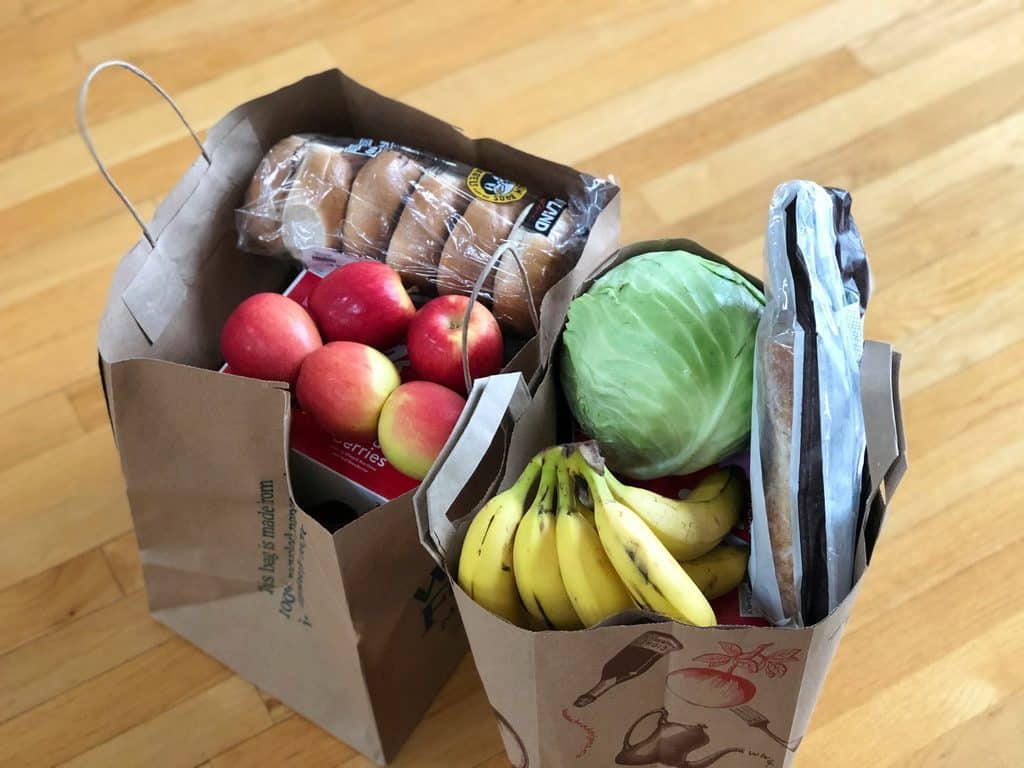
SNAP cuts make it harder for parents to feed their kids healthy food
Many parents who experienced hunger as children promise themselves that their own kids will never go through it. New research, described in an op-ed published by STAT by Priya Fielding-Singh and Darcy Cherlin, researchers at George Washington University’s Global Food Institute, shows that those commitments can shape what ends up on the table, particularly for low-income households. Though children often have to try a new food several times before they accept or even enjoy it, cash-strapped parents can’t afford to let any food go to waste. They are thus prompted to serve the less healthy foods they know their children will eat rather than fresh fruits and veggies which they might not. As one parent put it, she’d rather her child be “happy and fed than sad and hungry.”
Considering the need to make do, that is a reasonable choice for the moment — but one that also works against a child’s long-term physical and mental health. Growing evidence shows that what people eat affects how they feel. Gut bacteria create byproducts that can travel to the brain and influence its function and sugary, ultra-processed foods have been linked to gut bacteria changes associated with mood disorders like anxiety and depression. While most existing research shows association rather than causation, it still suggests that consistently opting for less healthy foods over fresh, nutrient-dense produce bodes poorly for a child’s future mental health, while the deficiencies that such diets produce can also impact their physical development.
Unfortunately, the financial squeeze on families is only getting tighter. Groceries now cost nearly a third more than they did in 2020 and federal changes to policy have unenrolled more than 5 million people in SNAP since summer 2025, affecting an estimated 2 million children. In a national survey published earlier this year, more than half of parents with low incomes said they had cut back on groceries and over two-thirds worried about having to choose between paying bills or buying their kids healthy food. For those parents, every trip to the grocery store means doing math that leaves no room for a rejected serving of broccoli.
Fielding-Singh and Cherlin argue that the fix starts with making sure kids have enough to eat. They want the next Congress to pass a bipartisan bill that reverses the SNAP cuts in Trump’s “big, beautiful bill” and stops shifting the cost of benefits onto states. They also call for protecting the Special Supplemental Nutrition Program for Women, Infants and Children‘s fruit and vegetable benefit and expanding incentives like Double Up Food Bucks, which double SNAP shoppers’ spending power for fresh produce.
Such changes could make it easier for parents to keep presenting their children with the healthy options they need to try more than once. Schools and childcare centers can carry some of the load too, they argue. Initiatives like the U.S. Department of Agriculture’s Fresh Fruit and Vegetable Program and the Farm to School Program let kids try new foods through taste tests and school gardens, so parents don’t shoulder the cost burden of every attempt.
A teenage boy in Delhi asked why period pain didn’t get the same care as his broken toe
Aadvik Jain, among the latest winners of the prestigious Diana Award for young people, was just a kid when he broke his little toe on the edge of his bed. His father, whose office was two hours away, dropped everything to come home and take him to the emergency room. To Jain, that response felt normal, he told NPR. It wasn’t until years later, after watching a close friend suffer through severe menstrual pain that the adults in her life brushed off, that he began to wonder why one kind of pain earned a drop-everything trip to the ER while the other was met with silence.
Three years ago, when Jain and his friend were 10th graders in Delhi, he noticed her break into tears during midterm exams while suffering from period cramps. He helped her get to the school office, where she was given a painkiller and sent home. But the next day, she returned with the same pain, telling Jain that despite having the same experience for several months, her parents had assumed that she was trying to fake her way out of testing. Cultural norms only compounded her struggle: periods are rarely discussed openly in Indian families, especially around men. Jain told his own mother, who asked their teacher to call the girl’s parents and urge them to take her to a doctor. She was ultimately diagnosed with the hormonal disorder known as polyendocrine metabolic ovarian syndrome and later evaluated for endometriosis, which can cause excruciating periods. Since then, treatment and lifestyle changes have reduced her pain a great deal.
The outcome made Jain even more curious about the gendered difference, he said. Considering the response to his broken toe, he wondered: “What if a girl could simply tell her father, “Dad, I’m having really bad cramps, and I can’t go to school today,” and he would say, “Okay, let me get you a heating pad”? But with menstruation being treated as taboo, especially around men, that is often impossible. Worse yet, sometimes, even women “aren’t able to support other women in the way they deserve,” he said.
In 2024, Jain and three classmates, two boys and two girls, formed Team Period for a school competition in which teams of students spend months working on a social cause. When the competition ended, they kept going. Since then, the quartet has provided workshops to Delhi schools, orphanages and low-income neighborhoods, installed a sanitary pad dispenser at their school and surveyed about 4,000 students, parents and community members. Team Period has made a huge difference.
For example, one 12-year-old who persistently disrupted a period workshop because he couldn’t understand the value of attending told Jain that his 9-year-old sister had gotten her first period while the two of them were home alone. She didn’t know what was happening and became very scared, crying and screaming for help in the bathroom. Thanks to the workshop, he was able to help — providing not only the pads needed to protect her clothing but also delivering chocolates and constructing a makeshift heating pad for her comfort.
Now 18, Jain says that although the Diana Award includes no money, the publicity will help his group secure more sponsors and expand their work to other cities. In addition, he’ll begin studying medicine and public health at Italy’s University of Bologna in February.
In other news…
A psychiatrist’s case for letting go: When Stanford psychiatrist and professor Anna Lembke lost her first child, an infant, to a rare form of leukemia when she was in her twenties, she tried everything to regain a sense of control. She researched the exact cause of death, went to therapy and got pregnant again within weeks, only to lose twins in the second trimester, sending her further into despair. It wasn’t until she stopped fighting to change what she couldn’t that she finally found relief, she told The Independent. That lesson anchors her new book, “Radical Surrender: Letting Go in a World Addicted to Control.”
Lembke, who also wrote the bestselling book “Dopamine Nation,” argues that technology has made us so used to getting our way that even a botched coffee order can send us spiraling. Panic buying and climate doomscrolling also come from the same impulse, she says. But surrender doesn’t mean giving up. Instead, it means focusing on what we can actually change, letting others have their own feelings and learning to sit with discomfort rather than rushing to fix what can’t be fixed. Research also backs her up: loosening our grip has been linked to stronger relationships and lower rates of anxiety and depression.
The name “MindSite News” is used with the express permission of Mindsight Institute, an educational organization offering online learning and in-person workshops in the field of mental health and wellbeing. MindSite News and Mindsight Institute are separate, unaffiliated entities that are aligned in making science accessible and promoting mental health globally.


Author

Related Articles

Nebraska Roll-Out of Trump Medicaid Rules Is Chilling
Nebraska’s Medicaid work requirements are already costing people coverage. Plus, physicians face a mental health crisis as fear keeps many from seeking help.

Will Dems’ Big Victory Lead to Healthcare Policy Changes?
Democratic midterm victories could help reverse Medicaid cuts, reshape health care policy at the state and federal levels.
Medicaid Changes Under Trump Undermine Care for Pregnant Women, New Moms
A pregnancy exemption has gaps, researchers warn. Plus: high-functioning depression, “depression’s silent sister.”
