
Medicaid Changes Under Trump Undermine Care for Pregnant Women, New Moms
New Medicaid work requirements could put pregnant women at risk of losing health coverage.
Greetings, MindSite News readers.
Medicaid’s new work requirements are still set to begin in January, and experts warn that the exemption for pregnant women and new moms may leave them vulnerable to lapses in coverage – unless the newly elected Democratic majority in Congress is able to delay or eliminate them, as House Majority Leader Hakeem Jeffries has pledged to try and do.
Plus, why parents and caregivers may be most at risk for depression’s quiet “silent sister.” Cutbacks in counselors at a Connecticut community college. And a free toolkit that uses art to help young adults through hard times.

Why a pregnancy exemption may not protect moms-to-be who are on Medicaid
A woman who becomes pregnant while she’s covered through Medicaid expansion may still have to meet Medicaid’s new work requirements, unless she knows to tell the state she’s expecting.
The problem: Many won’t know how to report their pregnancy, warn health policy researchers Jamie Daw and Sarah Gordon in a new JAMA Health Forum commentary examining how the so-called One Big Beautiful Bill could harm maternal health.
Starting in January 2027, adults ages 19 to 64 who get Medicaid through the expansion must log 80 monthly hours of work, school or community service and prove they are doing so every six months. But pregnant women and people up to one year postpartum are exempt from the requirement. That protection matters, because Medicaid pays for nearly half of all U.S. births and even small gaps in care could affect scores of families. As such, Daw and Gordon say, the exemption alone won’t be enough to protect maternal health.
That’s partly because maternal health starts before pregnancy. Heart disease, depression and substance use disorders are among the leading causes of pregnancy-related deaths, 86% of which are considered preventable. They’re also easiest to manage with steady coverage and help maintain birth control and fertility care. (Gaps in contraception, meanwhile, raise the risk of unplanned pregnancies, which are linked to later prenatal care and worse outcomes for moms and babies alike.)
Women are also more likely than men to work part-time or in jobs with unpredictable hours, putting them at greater risk of losing coverage. History also sets a precedent: When states tried work requirements before, coverage fell and employment didn’t rise.
What’s worse, even the pregnancy exemption has gaps. States aren’t required to identify pregnancies among people already enrolled while most health systems don’t have the data systems to do so quickly. Since the Supreme Court’s Dobbs v. Jackson Women’s Health Organization decision ended the federal right to abortion, some women may be hesitant to report a pregnancy to the government. The law also shortens retroactive coverage from 90 to 60 days. “Delays in early prenatal care cannot be undone,” the authors write.
Their recommendations: States should do clear outreach before January and add a simple pregnancy checkbox to applications and renewals. Doctors should report pregnancies to Medicaid at the first prenatal visit and safety-net hospitals should screen patients for eligibility and work exemptions.
This is likely to be one of the first battles waged by newly elected Democrats in the next session of Congress, which begins January 3, two days after the Medicaid work requirements take effect. Larry Levitt, executive vice president for health policy at KFF, told Vox News that he expects Democrats to push through a repeal of the One Big Beautiful Bill Act’s healthcare provisions, which Trump is then likely to veto. “Then the game of chess between Democrats and Trump will begin to figure out what on healthcare can actually get enacted,” Levitt said.
High-functioning depression is quiet but serious
If you’re the one everyone leans on but can’t remember the last time you truly felt well, perhaps high-functioning depression is to blame, KQED reports. At the core of the ailment is anhedonia, a reduced ability to feel joy or interest in things that once excited you, says psychiatrist Judith Joseph, a pioneering expert in the subject. Joseph described anhedonia as depression’s silent sister: “One sister is depressed, and crying, and not getting out of bed, and getting all the attention,” she said. “The other one is quiet and numb.”
Last year, Joseph and other researchers conducted a study and found that people with higher scores on a high-functioning depression scale also experienced more anhedonia and trauma. Parents and caregivers scored highest on both counts. Yet high-functioning depression isn’t a diagnosis in the DSM-5, the manual that clinicians use to identify and treat mental health conditions. Without a formal name or developed diagnostic criteria, the researchers say, people who keep meeting their obligations often don’t see their symptoms as depression. Many don’t seek help until they hit a painful burnout.
Joseph sees the pattern most often in women who hold everyone else together and in demanding fields like medicine, where tears after a patient’s death are noted as weakness. “But eventually something’s gonna give,” she said. “Either they do break down and they have a clinical depression and they lose their functioning, they go into distress or crisis, or they physically break down.” Some of her patients have even landed in the emergency room without knowing why, only to learn they were in a mental health crisis.
To help people check in with themselves, Joseph built a short quiz based on the Snaith-Hamilton Pleasure Scale. It asks things like whether you still savor a meal or can enjoy praise. The quiz isn’t diagnostic, but can be used as an informal assessment. Joseph’s book, “High Functioning: Overcome Your Hidden Depression and Reclaim Your Joy,” also lays out a “Five V’s” framework for recovery: validation, venting, values, vision and vitals.
“When you are joyful, you have better physical health, you have better relationships, you have better productivity at work,” Joseph said. “So why don’t we prioritize it?”
In other news…
Art as a first line of defense: Educators, this one’s for you. Mental Prevention through Artistic Skills, a European Union project led by Spain’s Proyecto Nagual with partners in Greece, Italy and Bulgaria has published a free toolkit that uses theater, dance, music, sound and painting to support the mental health of young adults ages 18 to 30. The toolkit was made for people who lead groups, including teachers, arts educators and youth workers, and it follows the steps of narrative therapy, from creating a safe space to helping students retell their own stories. Activities run from 10-minute warm-ups to full-day workshops, and can be adapted to your classroom, campus or community program. The goal throughout is fostering connections and cultivating a place for expression.
Same crisis, fewer counselors: More than 5,600 students arrived at Connecticut State Community College’s Tunxis campus this fall, and not one wellness counselor was there to meet them, Connecticut Public reports. The institution’s two counselors left in spring, leaving the college to rely on free telehealth while filling the jobs. The shortage reflects a statewide divide. UConn has nearly three dozen mental health professionals for about 32,400 students, while CT State’s 12 campuses have one or two counselors each for almost 38,000 students. Community college students are left out, while many juggle jobs, family, tight budgets and “the same mental health crises with fewer resources to address it,” said University of Michigan researcher Amy Rusch.
The name “MindSite News” is used with the express permission of Mindsight Institute, an educational organization offering online learning and in-person workshops in the field of mental health and wellbeing. MindSite News and Mindsight Institute are separate, unaffiliated entities that are aligned in making science accessible and promoting mental health globally.


Author

Related Articles

Voters Reject Trump Administration’s Policies, Including Its Health Agenda
Election results put Medicaid cuts, Affordable Care Act subsidies and access to mental health care at the center of the healthcare debate.
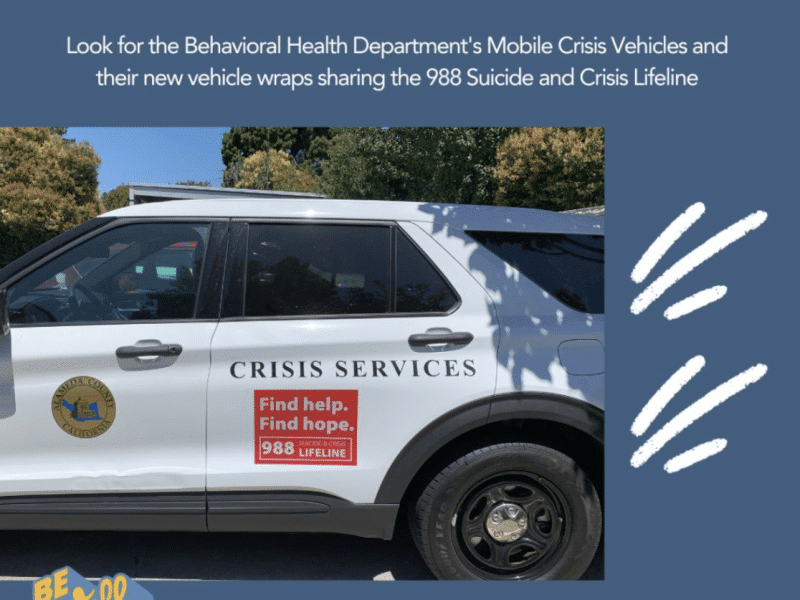
Who’s Paying for California’s Crisis Care?
California counties say insurers are failing to cover mobile mental health crisis teams, leaving taxpayers with millions in unpaid bills.

Helping Trick-Or-Treaters With Autism Feel Welcome
This year, make Halloween more inclusive for autistic children with these six tips for welcoming neurodivergent trick-or-treaters.