
With Information Always Available, Young Adults Find Uncertainty Harder to Bear
Smartphone use seems to blunt teen’s enthusiasm for getting a driver’s license, working a paid job or going out with friends, expert says.

Before smartphones, plenty of plans came down to picking a time and place to meet, showing up and hoping for the best. But Gen Z (born between 1996 and 2010) and Gen Alpha, (2011 through 2024) haven’t lived that way, psychologist and San Diego State professor Jean Twenge told The New York Times — and that may be fueling their discomfort with uncertainty. We live in extremely uncertain times, and young adults have grown less tolerant of unpredictable or ambiguous situations, suggests a new meta-analysis published in JAMA Psychiatry.
Examining 132 studies involving more than 35,000 college students across the U.S. and Canada, researchers found that intolerance of uncertainty began its steepest rise around 2012, around the same time that smartphones became ubiquitous.
The shift is meaningful because intolerance of uncertainty is linked to several anxiety disorders. It drives “worry cycles” that make ambiguity feel like a threat, especially amid “increasing political polarization, economic uncertainty, political uncertainty and the rise of information technology,” said study co-author Katherine M. Keyes, an epidemiology professor at Columbia University. Twenge, who was not involved in the study, suggested that fewer rites of teenage independence like getting a driver’s license, working a paid job or going out with friends may also play a role. When smartphones keep kids at home, independence can start to feel even scarier.
In last year’s Stress in America survey, 68% of respondents said they’d grown used to living with uncertainty. But more than one-third of adults (34%) aged 18 to 45 said uncertainty was partly why they had put off planning for the future, compared with 24% of those aged 46 to 61 and 13% of those aged 62 to 80.
In addition, the survey noted, worry about the future also had a profound impact on younger adults and their parents: “Nearly two-thirds of those ages 18–34 (63%) and more than half of parents (53%) said they have considered relocating to another country due to the state of the nation.”
“Big sources of uncertainty that we don’t have control over are particularly challenging,” said Lynn Bufka, a clinical psychologist with the American Psychological Association. “One of the things that we try to help people think about is where are the places you do have some control, where you can assert something.” To practice coping with uncertainty, Bufka sometimes has clients put their worries in an imaginary box they can check once per day.
Alternatively, psychologist Kalya Castillo instructs clients to post affirmations like “I have been here before, I have experience in managing uncertainty” on their phones or fridges. She also teaches radical acceptance, embracing reality without fighting or avoiding it. “Accepting reality does not have to mean we have to like it or agree with it,” Castillo said. “It means we are choosing to preserve our energy for factors within our control.”
The name “MindSite News” is used with the express permission of Mindsight Institute, an educational organization offering online learning and in-person workshops in the field of mental health and wellbeing. MindSite News and Mindsight Institute are separate, unaffiliated entities that are aligned in making science accessible and promoting mental health globally.


Author

Related Articles
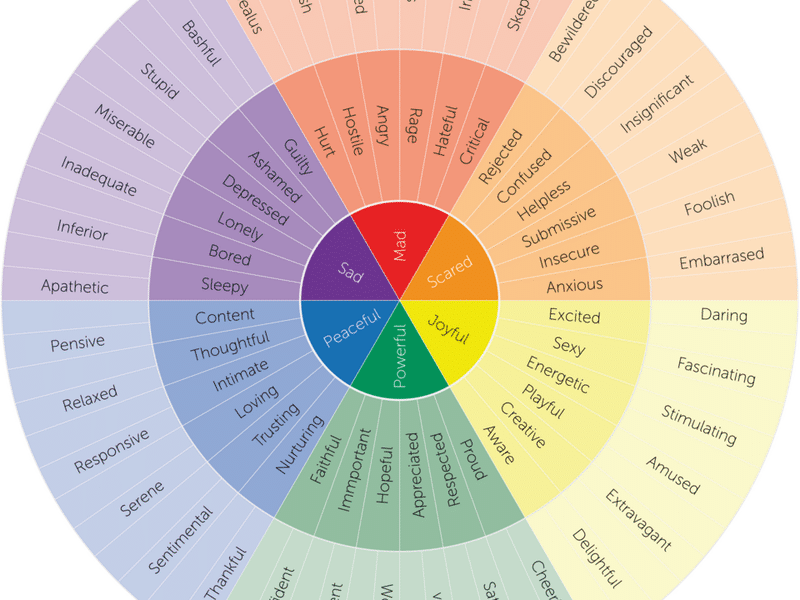
Why Precisely Naming Your Emotions is Good for Your Mental Health
Identifying and naming your emotions can improve emotional regulation, support mental health and help you cope with difficult feelings.

A NY Times Obituary Writer Reflects on Changing Standards in Writing About Suicides
“There is more openness about discussing suicide now. But the topic remains tinged with shame, taboos, moralizing and even romanticizing, in a way that other kinds of death are not,” Clay Risen writes.

Second Suicide at US Health Agency Reflects 2 Years of Workplace Trauma
Massive layoffs and an undermining of the agency’s mission is enacting a price. “Feds have been continuously attacked for a year and a half, and it is taking a toll,” said a former HHS official.
