
Why Precisely Naming Your Emotions is Good for Your Mental Health
Identifying and naming your emotions can improve emotional regulation, support mental health and help you cope with difficult feelings.
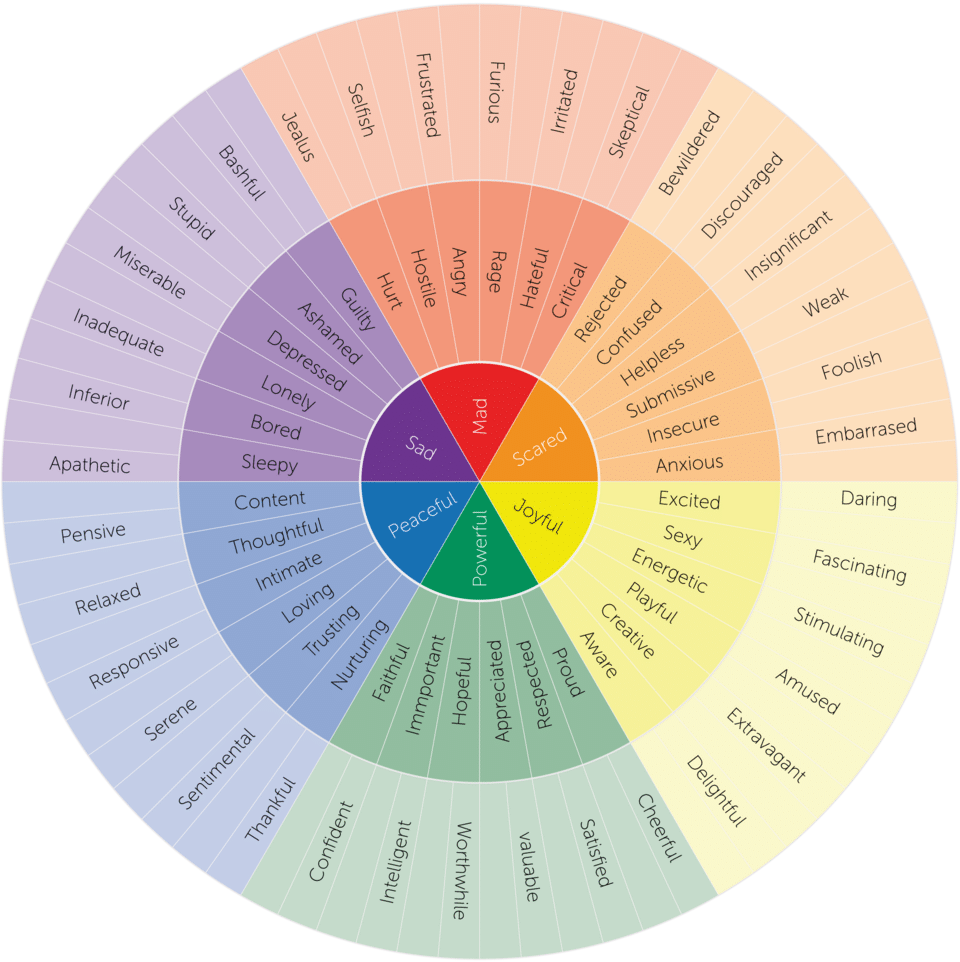
Feeling “bad” is a hard problem to solve. Without a more specific word for what is wrong, people tend to fall back on whatever coping habit is closest at hand, even unhelpful ones, said Dr. David Kimhy, an associate professor of psychiatry at the Icahn School of Medicine at Mount Sinai. “If you feel anger, that calls for one strategy. If you feel guilt or anxiety, that’s a different strategy,” he told The Guardian. “But if all you know is that you feel bad, it’s hard to know what strategy to use.”
The problem is more common than you might expect. While most people start building an emotional vocabulary as children, about 1 in 10 experience alexithymia, an extreme difficulty or complete inability to identify their own feelings. It’s not a diagnosis on its own, but it is commonly associated with autism and can be a feature of conditions like depression and post-traumatic stress disorder.
At the other end of the spectrum is emotional granularity, a concept first identified by neuroscientist Lisa Feldman Barrett in 2004. It means naming feelings precisely rather than lumping them under broad categories like “happy,” “mad” or “sad.” Research ties higher granularity to lower levels of mental illness, better emotional regulation and a lower chance of relapse for people recovering from substance use.
Specific emotions carry more useful information, explained Katie Hoemann, an assistant professor of psychology at the University of Kansas. Someone who realizes that their sadness is really loneliness might reach out to a friend. Precise words also help other people understand how to offer support. “Your words aren’t just for yourself, so if you can tell someone: ‘Hey, I feel frustrated,’ or: ‘I feel disappointed,’ that’s more informative,” Hoemann said. “You’re communicating in a way that tells the other person how they can help you, and maybe how you can move forward together.”
That’s where the feelings wheel comes in. Created by American psychologist Gloria Willcox in the early 1980s, it places broad feelings like happy, sad and angry at the center, then branches into more specific ones such as proud, remorseful or humiliated toward the edges. You’ve likely encountered one, voluntarily or not, as the tool has exploded in popularity and is now available on posters, spinning desk charts and even embroidered pillows.
The wheel, of course, is a starting point, not a substitute for care. People who struggle to name their feelings should work with a mental health professional. And for anyone prone to overthinking or too much emotional granularity, Hoemann cautioned against hunting for the perfect word every time. “There can be too much of a good thing,” she said.
The name “MindSite News” is used with the express permission of Mindsight Institute, an educational organization offering online learning and in-person workshops in the field of mental health and wellbeing. MindSite News and Mindsight Institute are separate, unaffiliated entities that are aligned in making science accessible and promoting mental health globally.


Author

Related Articles
With Information Always Available, Young Adults Find Uncertainty Harder to Bear
Smartphone use seems to blunt teen’s enthusiasm for getting a driver’s license, working a paid job or going out with friends, expert says.

A NY Times Obituary Writer Reflects on Changing Standards in Writing About Suicides
“There is more openness about discussing suicide now. But the topic remains tinged with shame, taboos, moralizing and even romanticizing, in a way that other kinds of death are not,” Clay Risen writes.

Second Suicide at US Health Agency Reflects 2 Years of Workplace Trauma
Massive layoffs and an undermining of the agency’s mission is enacting a price. “Feds have been continuously attacked for a year and a half, and it is taking a toll,” said a former HHS official.
