
Ukrainian Vet Amputees Seek Healing With Yoga ‘To Feel the Connection With Themselves Again’
Up to 100,000 Ukrainians have sustained amputations since the Russian invasion in 2022.
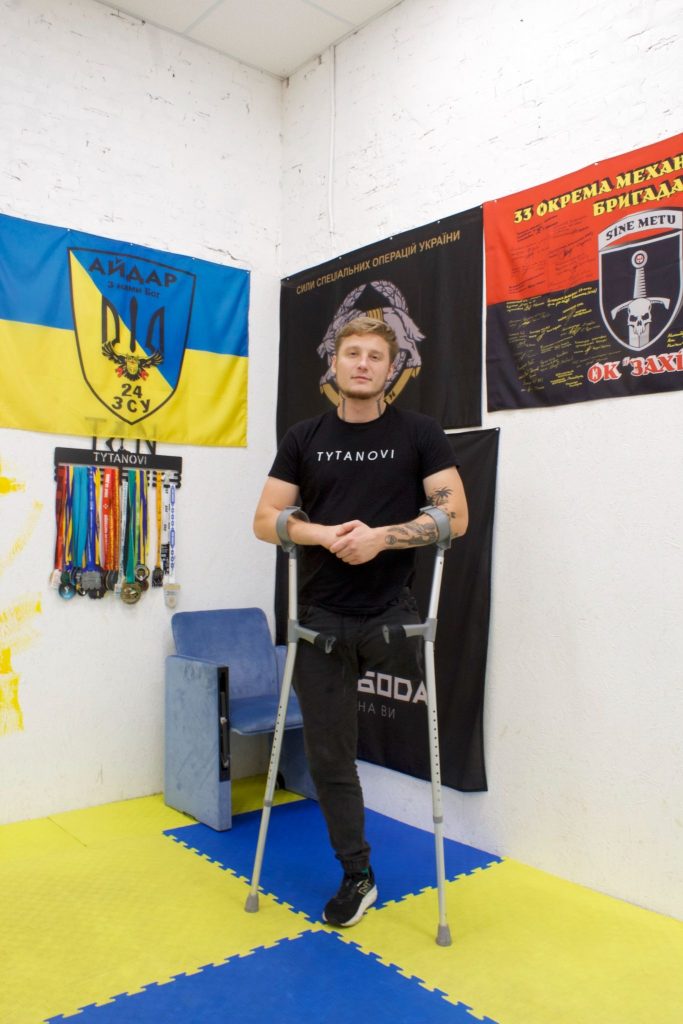
Oleksiy rests on the floor of the yoga studio, moving into his final resting posture a few minutes before his classmates. It’s only been one week since he had surgery to prepare his residual left thigh for a new prosthetic and his body is tired. But he is still eager to attend the yoga class he’s been going to for the last five months, at a rehabilitation center for Ukrainian war veterans with complex amputations in Kyiv.
“I do everything that is available here,” says 26-year-old Oleksiy, referencing the programs available at the Tytanovi rehabilitation center, where he was living when I met him late last year. His favorite part of the yoga class: “The end when you lie down. Everyone loves that.” For veterans struggling to sleep at night, due to pain or PTSD, the chance to rest is invaluable.
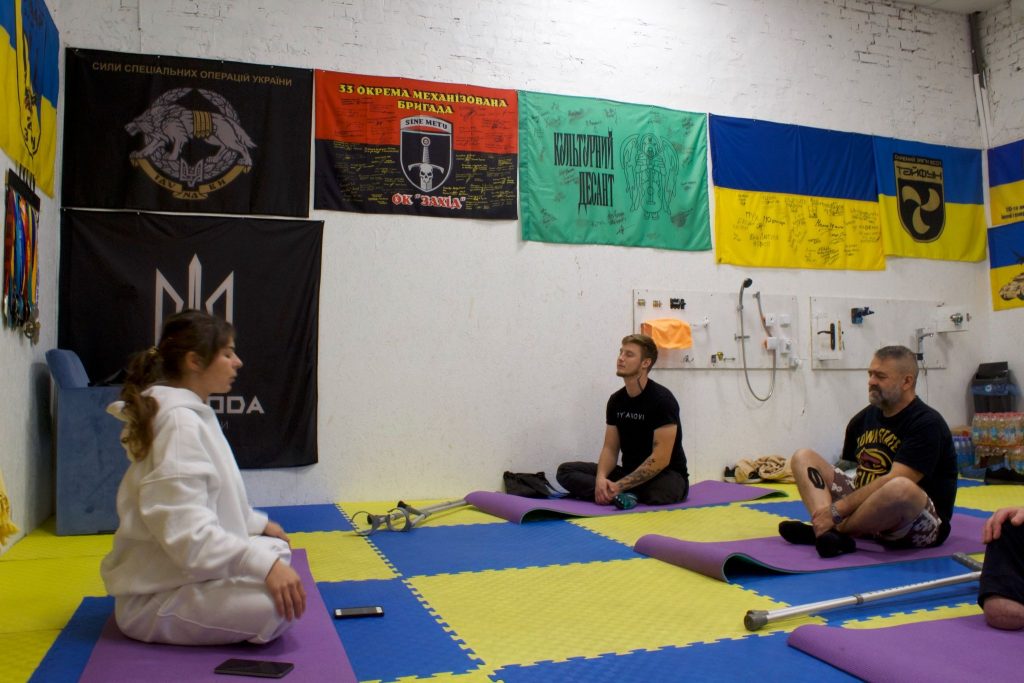
Oleksiy, who only shares his first name as is common practice among Ukrainian soldiers, attend class each week with teacher Viktoriya Lukyanenk and half a dozen other veterans.
“They have a problem with feeling themselves, their mind, soul and body,” Lukyanenk said, explaining that she has adopted the Kundalini-style yoga she normally teaches to include more time for rest between postures; at the end of class, she helps veterans process how they feel after different movements and settle their nervous systems. “Yoga to them is to feel the connection with themselves again.”
Yoga has become an increasingly popular rehabilitative strategy for Ukrainian veterans, who are facing heightened rates of complex amputations, lower back pain and post-traumatic stress. The decision to embrace yoga echoes work happening in the United States, where the Office of Veterans Affairs recommends yoga as part of a holistic treatment package for veterans, finding that it improves veterans’ lower back pain, reduces their reliance on opioids for pain management, and significantly improves their self-reported PTSD symptoms. This, in turn, lowers stress and improves sleep, memory and concentration.
In Ukraine, where international organizations estimate that 50,000 to 100,000 Ukrainians like Oleksiy have sustained amputations since 2022, the country is also contributing to a growing body of research on the benefits of yoga practice post-amputation – work that could help survivors of other conflicts as limb loss becomes an ever more common consequence of war.
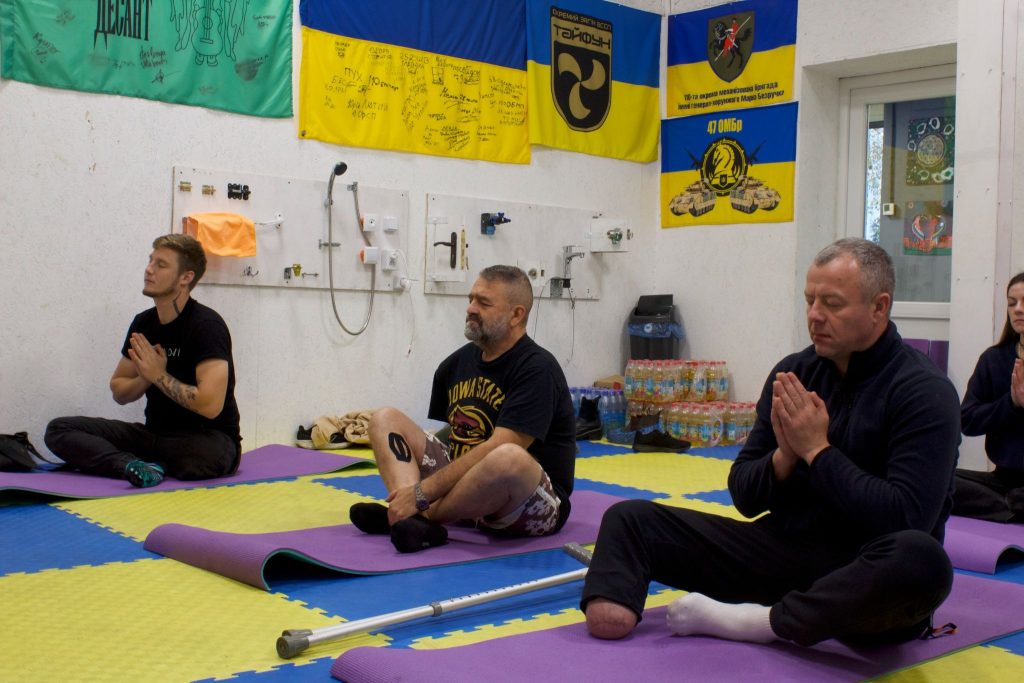
Konstantin Ronin, a recent Ukrainian war veteran and founder of Animal Gymnastics Yoga, used his yoga practice regularly while he was serving on the frontlines in the Pokrovsk region.
“Since I already have a yoga practice, I can repair myself when I feel a muscle strain with just a few exercises,” Ronin said, speaking through a translator. “But the main emphasis of my practice focused more on normalization of the mental state” through breathing and meditation.
When Ronin needed to relax, he says, he could use deep, slow yoga breathing exercises to soothe his nervous system; and when he needed to break out of fight-or-flight to move he could use more rapid breaths to awaken his body.
Now recently discharged from military service, Ronin is teaching yoga classes for other veterans. and soldiers. He pays close attention to “the emotional burden displayed on the body” of so many soldiers – and also the specific injuries common to veterans. While many Ukrainian soldiers, like Oleksiy, are navigating life with amputations, others are facing the burden of a changing landscape on the frontlines.
“You have to go quite a long distance now (carrying your equipment on foot) because of the drone,” says Ronin. As Russia deploys drones that can travel increasingly far across the Ukrainian frontlines, soldiers must move to their positions in the trenches on foot because vehicles would more easily be targeted.
“You can’t just carry heavy backpacks and go slowly,” he adds: Soldiers must be prepared to run and hide. “These constant changes of position, they are usually very fast, but not always correct, and produce a physical impact.” Done right, he believes, yoga can help correct that.
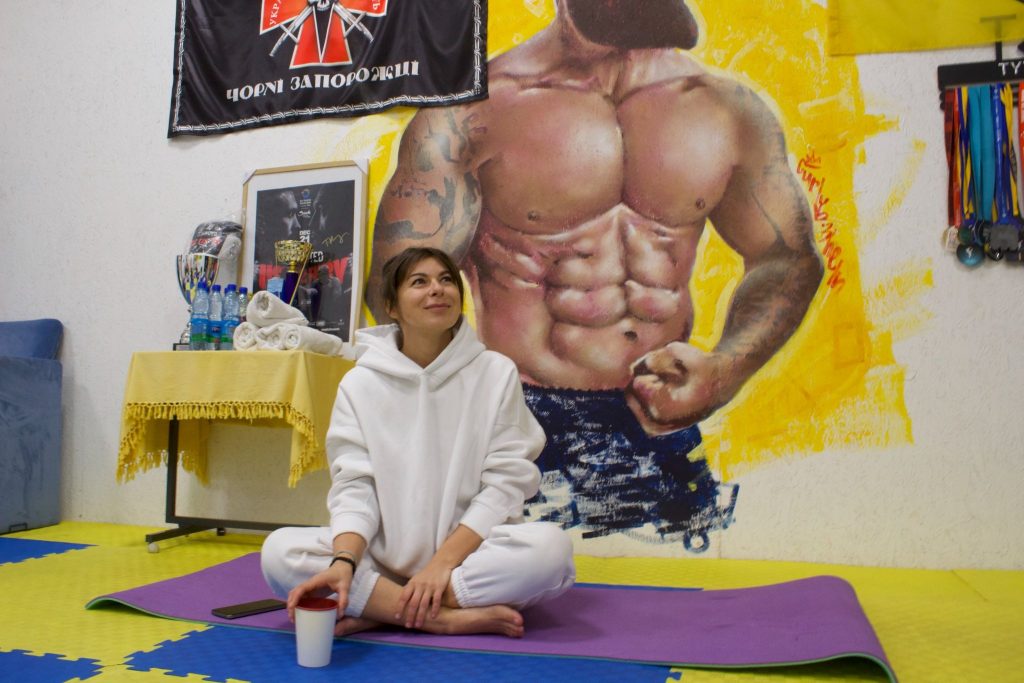
Yoga is among the many activities taught at the Tytanovi rehabilitation center, which also offers archery, swimming, basketball, boxing and golf. “Sports is hormones, it’s stress relief, it’s breathing and meditation,” head of the Tytanovi center Vyahcheslav Zaporozhets has said. “And even when a soldier has lost two limbs, three – we say, ‘You’re not disabled; you can do it!”
Although some men are reluctant to try yoga at first, the workout space at Tytanovi recognizes that they are each soldiers: banners from different military brigades line the walls alongside a mural of a chiseled Cossack warrior.
A US-based teacher with the Kundalini Research Institute, Simran Singh has considered the connection between yoga and the battlefield in his efforts to train more Ukrainian yoga teachers. “India was a continent with hundreds of kingdoms at war with each other, so there was a connection between yoga and war,” he said, referencing the teachings of the Bhagavad Gita.
Since Russia escalated its invasion of Ukraine in 2022, he and others at the Institute have helped trained 600 yoga teachers in Ukraine through a special yoga teacher training program, with a specific emphasis on training trauma-informed teachers who could support war veterans. One of those teachers is Lukyanenko, who volunteers each week by leading the yoga class at Tytanovi.
“The amount of trauma these bodies are holding is so beyond what we can even articulate,” Singh said. “In my opinion, Ukraine needs 50,000 yoga teachers.”
–
Tetiana Burianova contributed reporting and translation support.
This reporting was supported by the International Women’s Media Foundation’s Women on the Ground: Reporting from Ukraine’s Unseen Frontlines Initiative.
The name “MindSite News” is used with the express permission of Mindsight Institute, an educational organization offering online learning and in-person workshops in the field of mental health and wellbeing. MindSite News and Mindsight Institute are separate, unaffiliated entities that are aligned in making science accessible and promoting mental health globally.


Author

Related Articles

MindSite News Turns Five
Five years ago yesterday, as the U.S. was trying to recover from the COVID-19 pandemic, MindSite News was launched as the nation’s only news outlet exclusively reporting on mental health.
Students Say Mental Health Isn’t Taboo – But Talking to Parents Is
Millions of teens experience depression or anxiety each year, but they say the hardest part is telling their parents.
The Masked Men Around the Corner: As Youth Grapple with ICE Raids, Schools Get Creative to Protect Them
“Our students need to know that we’re here to fight for them,” says LA Assistant Principal Lorena Reynoso.