
Trump’s Proposed Changes Could Gut Mental Health Support for Kids in Head Start: The View from a San Francisco Classroom
The rule changes would eliminate the requirement that all Head Start programs use mental health consultants, prohibit expulsions, and other rules designed to promote a safe, nurturing environment.
A collaboration between MindSite News and San Francisco Public Press
For about a year, a toddler – we’ll call him Mario to protect his confidentiality – has been periodically acting out in a Head Start program in San Francisco, throwing himself on the floor, crying, pushing, scratching and hitting other children.
In many childcare programs, a child behaving this way could be kicked out, perhaps permanently – as happens to an estimated 250 children every day. But expulsions are prohibited under the federal rules governing Head Start, and the concerned staff at the center wanted to support Mario, who has been diagnosed with autism and is non-verbal.
Recently, staff members called his mother and learned that Mario’s father had been detained and then deported by ICE. They spent more time with him and made sure that he “knows we’re here, that he’s safe and that he feels seen and loved,” said Sandra Solis, a social-emotional specialist at the center. “If things like that happen, we can’t bring the family member back. But what we can do is still be present for the child.”
When a reporter visited on a September morning, Mario was using hand signals to communicate to Solis that he wanted leche with his lunch. Solis applauded him for pouring the milk with her into his cup, eliciting a triumphant smile from the youngster.
“He has good days and he has better days,” said Solis.
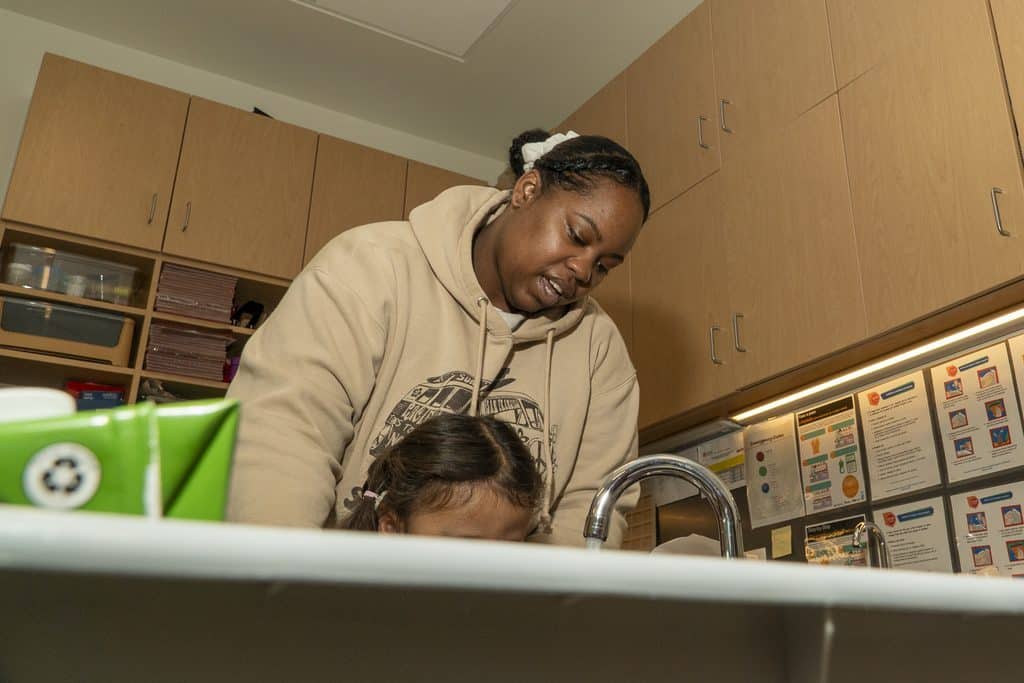
These kinds of efforts are built into the structure of Head Start, required under the federal rules. In San Francisco, specially trained social-emotional specialists like Solis, supported by consulting mental health consultants, work with children and families to get to the root cause of troubling behaviors among young children in Head Start classrooms and figure out ways to address them.
But a sweeping set of changes to the regulations governing Head Start proposed by the Trump administration could put jobs like Solis’ at risk and jeopardize the ability of the 61-year old program – a centerpiece of Great Society reforms of 1965 – to continue providing quality social emotional guidance and mental health support to the more than 715,000 children and families it serves each year.
The rule changes would eliminate the requirement that all Head Start programs utilize mental health consultants, prohibit expulsions, provide dual language communication, and maintain high teacher-to-student ratios. They would also reduce from 15% to 5% the amount of money a Head Start program can spend on administration – which limits a program’s financial flexibility and could impact spending on mental health, staffing and other extra supports.
In Mario’s case, the team – Solis and classroom teachers, working with a mental health consultant – have been in regular contact with his mother and have interacted with him for the last year. They discovered that transitioning from one activity to the next was a key trigger that often unmoored him. Through trial and error, Solis finally landed on a strategy that typically settles the boy: She instructs him through song to the next activity.
“We’re going to clean up! We’re going to clean up! We’re going to clean up!” she’ll sing to him. She goes through the motions of putting toys or books away, and he’ll join in.
This kind of support, experts say, has long-term benefits.
“We have an opportunity in the first three years of a child’s life to shape 80% of their brain development,” says Neal Horen, a clinical psychologist and the director of Infant, Early Childhood and Relational Health at the Thrive Center for Children, Families and Communities at Georgetown University. “And that brain development is a lot about social-emotional wellbeing.”
The Administration for Children and Families, the federal agency that administers Head Start, says the new regulations “would significantly reduce Federal bureaucratic burden on programs“ and “fundamentally transform the landscape, empowering states and local authorities to meet the unique needs of children and families in their communities.
But early education advocates say the new regulations are the first step in an attempt to eviscerate and kill the program. They point to a white paper by the conservative Heritage Foundation, released just weeks before the proposed rule change, that called for the deregulation of Head Start until it can be eliminated. The Heritage Foundation is the creator of Project 2025, the roadmap widely viewed as the policy playbook for the Trump Administration.
“We know that we are in their crosshairs, and we are doing everything that we can to keep this critical program for kids and families,” said Melanee Cottrill, executive director of Head Start California, a nonprofit that advocates for Head Start and provides training and networking for staff members. Cottrill’s organization has submitted public comments opposing the proposed rule changes, as have more than 33,000 other people and organizations to date.
An early analysis of the public comments by Press Audit, a news outlet that provides digital analytics and media monitoring, found that 88% of the comments opposed the rule change and just 5% supported them.
In San Francisco, MNC Inspiring Success, the 125-year-old child development agency that oversees 10 Head Start campuses – including the one that Mario attends – already satisfies the call in the proposed rule changes to “empower states and local authorities to meet the unique needs of children and families in their communities,” said Barbara Walden, its early education program director.
“We’re required to assess those needs and base our program goals and offerings on the needs of the community.”
Walden is particularly concerned about the proposals to eliminate requirements for mental health consultants, to allow reduced child-teacher ratios and to drop allowable administrative funding to 5% from the 15% currently permitted.
“If it’s not required, are we going to be able to pay for it?,” says Walden. “Are we going to be allowed to use federal funds to supplement and to be able to get those services for our families?”
The proposed rule change would also remove the requirement that prevents children like Mario from being expelled from school, as a way “to allow programs to determine their own discipline policies.”
But there’s an abundance of research showing that early expulsion of children from preschool can have long-lasting impact, said Sara Brisẽno Torres, director of Sana Sana, a program of San Francisco-based Instituto Familiar de la Raza that provides mental health consultants to work with Head Start classrooms.
“I think about the message it sends to preschoolers who are expelled,” said Torres. “’Am I bad? Am I the problem?’”
A report by The Children’s Equity Project at Arizona State University noted that preschool suspensions and expulsions “are associated with negative educational and mental-health outcomes, including lower educational achievement and later depression.”
Prevention means support
Many of the children served by Head Start need robust mental health and wellbeing support, Walden says. She ticks off a list of traumatic experiences that trail many Head Start families including poverty, domestic violence, child abuse and neglect. A growing number of families live in shelters, couch-surf, or sleep in their cars. Many are new immigrants.
“We actually have had some children and families who have walked here as part of the migrant caravans from their home countries,” Walden says. Of the 300 families served by the Head Start programs she oversees, up to 5% are referred to parent-child therapy.
“Early mental health intervention helps to reduce children’s behavioral problems, alleviate symptoms of anxiety and depression in both parents and their children, prevent child abuse and neglect, and improve children’s long-term academic, physical, and social outcomes,” according to a 2025 report by the Center for American Progress, a progressive think tank. “Head Start helps to reduce barriers to receiving such care and serves as a community hub for parents to access material support and health and parenting tools, alongside early care and education.”
Head Start pioneered a model that was based on supporting the mental health of all of the adults that come into contact with a child, says Kadija Johnston, a licensed clinical social worker who has done mental health consultation training around the country, including trainings for people serving Head Start.
“What Head Start saw before any other program in our country was that if you preserve and promote the emotional and social well-being of very young children and all of their caregivers, that contributes to overall healthy development for children, not only in the social and emotional domain, but in all domains of their development,” Johnston says.
Social and emotional support provided by Head Start helped a young mother we’ll call L navigate an emotional roller coaster with her child’s father, who lives separately, and the emotional meltdowns of their 4-year-old daughter who had to shuttle between two different households.
“Sometimes when she comes back she wants to be babied or cuddled, but other times she’ll come back and be screaming,” says L. Those behaviors also showed up at school. “She’d throw books, she’d throw chairs. I think she hit the teacher, other kids.”
“If I didn’t have the support from Head Start, I’d be lost”
As a first-time parent, L. struggled to deal with her daughter’s outbursts and the strained relationship with her daughter’s father. Solis and the team at Head Start gave her books to read with her daughter that speak to their experience, including “Mom’s House, Dad’s House.”
Solis became a regular confidant for L and helped her figure out how to set boundaries for her daughter while also making her feel safe and at acknowledging her feelings. Now when her daughter misbehaves, “I’ll say, it’s ok to cry, but your other behavior has consequences: There are rules at school and also at mommy’s house.” One thing was clear to L: she didn’t want to subject her daughter to what she endured as a child. When she misbehaved, L recalls, tearfully, “It was ve por el cinto – go get the belt.”
Over time, she has come to forgive her parents, even if she hasn’t fully gotten through the trauma. “They did the best they could with what they had.” The support she’s received from Head Start has helped her to regulate her own emotions and model to her daughter how to regulate her feelings.
“If I didn’t have the support from Head Start, I’d be lost,” she says.
In a 2015 study that examined how parent involvement in Head Start programs predicted changes in outcomes for parents and children over time, the researchers found that “parents who were more involved in Head Start centers demonstrated increased cognitive stimulation and decreased spanking and controlling behaviors. In turn, these changes in parenting behaviors were associated with gains in children’s academic and behavioral skills.”
Programs like Head Start that promote school readiness can also “have long-term effects on a child’s school success, health and quality of life,” according to a 2023 study published in Pediatrics in Review.
In San Francisco, social-emotional specialists like Solis get extra support from mental health consultants like Sana Sana’s Cindy Urquidez, who makes herself available to staff members during weekly visits.
“If the adults don’t have a space to feel supported, then it’s hard to then give back to your child,” Urquidez says.
She offers support to teachers to make their jobs more manageable because she says, from the moment they walk into the classroom, “They’re giving, giving, giving.” Often as soon as she enters campus, teachers are waiting to schedule a chat.
She may suggest a grounding exercise, such as deep breathing or a short meditation, or simply listen to them about something that’s going on in their personal lives. “Just validating their feelings is huge,” she says, “because it diffuses a situation.”

She also checks in with them about any behaviors cropping up among the children or whether a strategy they’re trying is working with a child. Sometimes, she says, it takes months of observation to figure out ways to make a child feel safe and teach them to show what they need.
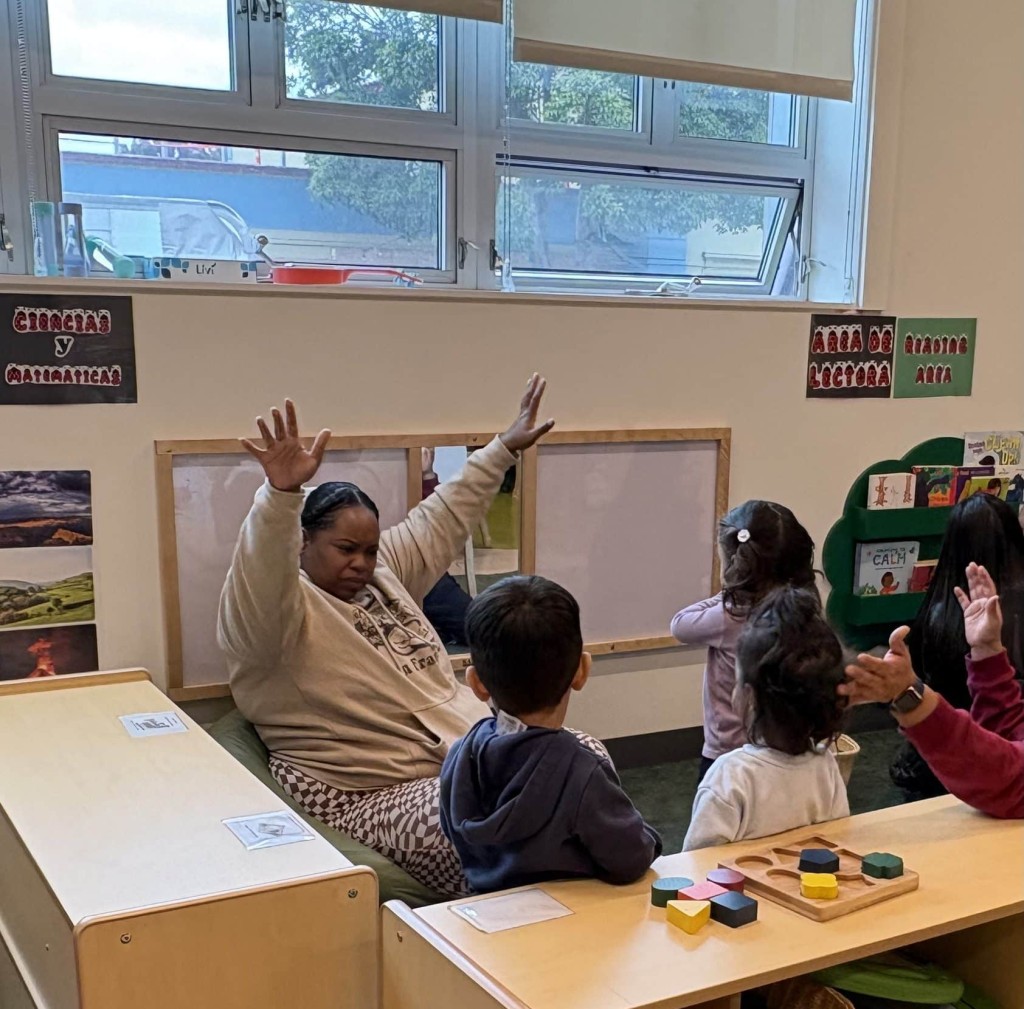
On a recent morning, Head Start teacher Sashae Cooper was working – and singing – with a class of 18-to 30-months-old children when a reporter came for a visit. “Please, no, thank you. Please, no, thank you,” she sings, before starting another song aimed at helping them identify their emotions.
“Show me a happy face, an angry face, a sleepy face, a scary face, a sad face, an excited face!” she croons. The children oblige, shifting their faces into a range of expressions as they sing along.
Cooper says she’s the type of person who’s always “’I’m fine. I’m ok. Things need to get done. I’m at work.’” But being raised in a family with multiple generations, her life was upended a couple years ago when she lost all her grandparents in a single year. She remembers a mental health consultant asking her “How are you? Like, I know the families are good, your kids are happy, your lesson plans, your paperwork is being turned in on time – but how are you doing?“
“And she really held that space for me to be like, ‘I’m not okay. I’m holding it together because I have a job to do, but after work I’m in shambles,’” Cooper recalled.
The consultant told her it was OK to process that trauma and advocate for what she needed. “And sometimes it was like I just needed an extra five minutes to step out, catch my breath, decompress, and to come back in,” she says.
Asked what she thought about the Trump administration’s proposals to remove requirements for mental health consultants and social emotional specialists, Cooper minced no words.
“It’ll be a disservice to how we show up for our kids because we can’t show up for ourselves,” she said. “Eventually that stamina runs out, and you’re running on an empty glass. It’s hard to fill up all the little ones’ cups if you don’t have any water to pour into them.”
Cooper and others also worry that requiring staff “to conduct all education to children in English“ will harm the self-esteem and development of children whose first languages are Spanish or other tongues.
“When it comes to mental health, I cannot imagine what this will do to a child’s sense of development around their identity and sense of belonging,” says Brisẽno Torres, director of Sana Sana.
Johnston, the mental health consultant who has spent decades working with Head Start educators is even more blunt: “It’s just another way of dehumanizing the people who are already at the margins of our society.”
Perhaps the most counterproductive part of the draft regulations is its estimated $1 billion a year in funding cuts, according to Horen, the Georgetown University psychologist. He contends that money invested in early childhood has a huge payoff.
“You can spend $5,000 now, or $125,000 a year to incarcerate somebody later,” he says, borrowing an oft-repeated quote from Geoffrey Canada, the early childhood innovator who founded the Harlem Children’s Zone. Horen says. “Where do you want to put your money?”
The name “MindSite News” is used with the express permission of Mindsight Institute, an educational organization offering online learning and in-person workshops in the field of mental health and wellbeing. MindSite News and Mindsight Institute are separate, unaffiliated entities that are aligned in making science accessible and promoting mental health globally.


Author

Related Articles

The Unseen Toll: Depression, Anxiety Plague Black Women a Year After Being Fired by DOGE
When Trump cut DEI programs and enabled DOGE to gut the federal workforce, hundreds of thousands of Black women lost their jobs. The cuts dismantled a job pipeline for Washington DC’s Black community and gutted the well-being of the women who hold up that community.

MindSite News Turns Five
Five years ago yesterday, as the U.S. was trying to recover from the COVID-19 pandemic, MindSite News was launched as the nation’s only news outlet exclusively reporting on mental health.

Students Say Mental Health Isn’t Taboo – But Talking to Parents Is
Millions of teens experience depression or anxiety each year, but they say the hardest part is telling their parents.