
Taking Mental Health Out to the Ballpark
The San Francisco Giants go to bat for mental health. And amid a loneliness epidemic, experts offer paths to connection.

Wednesday, May 15, 2024
By Courtney Wise and Taylor Barton

Greetings, MindSite News Readers. In today’s Daily: The San Francisco Giants go to bat for mental health – for players and the community. Amid a loneliness epidemic, experts offer paths to connection. And UnitedHealthcare is fined for failing to adhere to Minnesota’s parity law, which requires that mental health services be covered on par with medical and surgical care.
San Francisco Giants Rally Against Mental Health Stigma
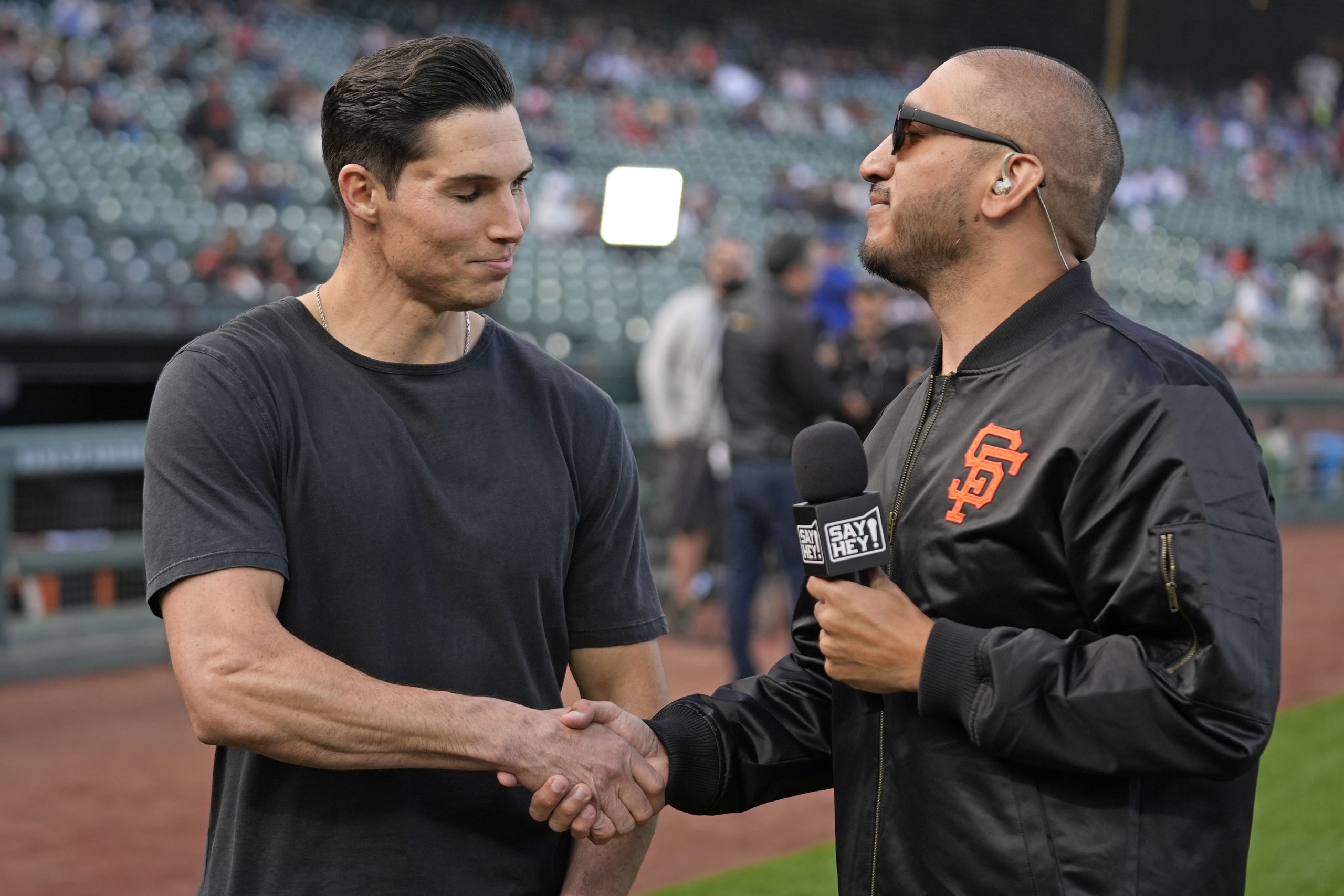
Four years ago, just a month after the COVID-19 pandemic shut down the 2020 major league baseball season, newly signed San Francisco Giants outfielder Drew Robinson attempted suicide. He lost the use of his right eye and his sense of smell, but eventually found a new mission – as the team’s first mental health advocate.
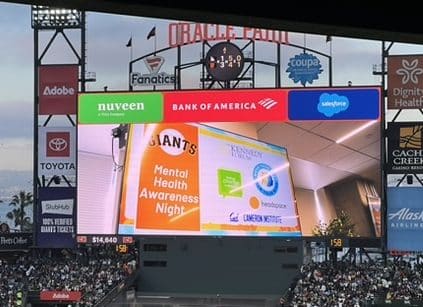
He’s not alone in that work. On Monday, while the Giants battled it out with the L.A. Dodgers at Oracle Park in San Francisco, the club filled the scoreboard with messages from current and former players about the need for everyone to prioritize their own mental health and look out for each other.
The club’s efforts started with a push to better support players and coaches. Sports psychologist Shana Alexander joined the Giants in 2020 and is responsible for the mental wellness of players, coaches and staff. The team also deploys Francisco Rodriguez as a mental performance coordinator and psychologist Emily Payette to work as mental health coordinator for its minor leagues clubs.
The team has also been active in supporting mental health efforts in the broader community. Last September, the Giants launched a partnership with Vibrant Emotional Health, which administers the 988 Suicide & Crisis Lifeline, to raise public awareness about mental health issues and to support suicide prevention work with high school students.
On Monday, the team sponsored a day of activities. Giants CEO Larry Baer and his wife, Pam, hosted a lunchtime talk with former Congressman and mental health advocate Patrick Kennedy about his new book and his efforts to transform mental health policy and advance equitable access to services. (Note: Kennedy is a member of the MindSite News advisory board.)
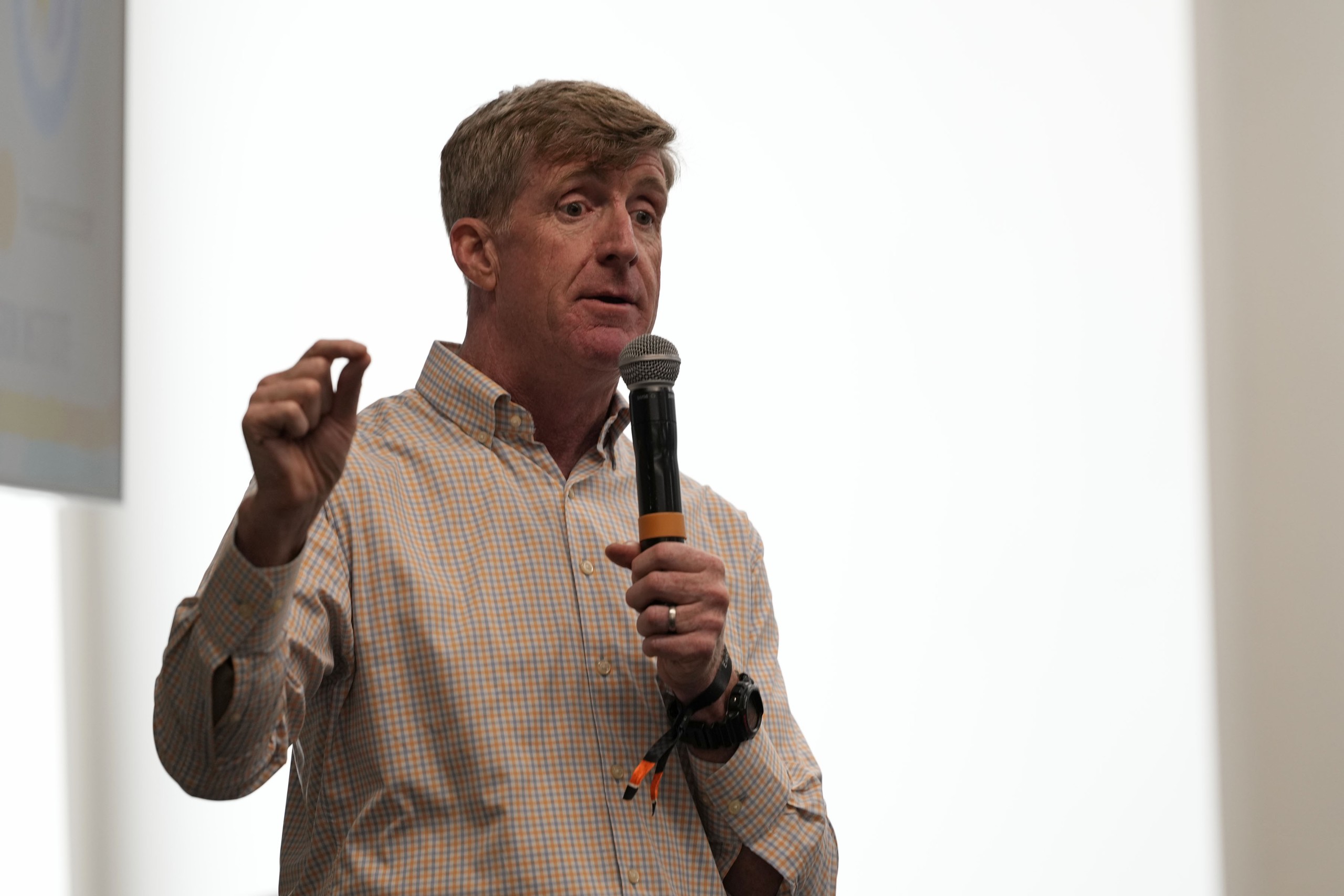
On Monday, the team sponsored a day of activities. Giants CEO Larry Baer and his wife, Pam, hosted a lunchtime talk with former Congressman and mental health advocate Patrick Kennedy about his new book and his efforts to transform mental health policy and advance equitable access to services. (Note: Kennedy is a member of the MindSite News advisory board.)
Robinson uses his intense personal story to connect with fellow players and the broader public. The year after his suicide attempt, he made a comeback with a Giants’ minor-league team. Playing with just one eye, he played in 38 games for the Sacramento River Cats and managed to hit three home runs before announcing his retirement.
Today, he balances work with players – encouraging them to connect with counseling resources and open up about their personal struggles – and community efforts. Last week he spoke at a Congressional Mental Health Caucus focused on overcoming stigma. On Monday he was joined by community partners for a pre-game panel at Oracle Park on prioritizing mental health. Speakers from Bring Change to Mind, Headspace, Move Your Body Calm Your Mind, the Kennedy Forum and the University of California’s Cameron Institute for Student Athlete Development shared resources and insights.
Being honest is crucial, Robinson said in an interview after the panel. Before his suicide attempt, he was in therapy for eight months but said he was holding back. “I was looking for help, but I wasn’t asking for help,” he said.
In a sport where failing 70% of the time makes you a star, keeping a positive mindset can be a challenge, said Paige Yastrzemski, whose husband Mike is a Giants rightfielder. Doing so in a hyper-masculine setting can be especially tough, she added.
That’s why Yastrzemski and fellow outfielder Austin Slater started an awareness campaign around something lighthearted. Mustache May is their annual effort to get people talking about mental health and raise funds for two nonprofits: Bring Change to Mind and the Heart and Armor Foundation. Both focus on destigmatizing mental illness, the latter for veterans dealing with PTSD.
Larry Baer said he hopes this kind of work will spread to the rest of major league baseball. To take care of himself, Baer says he does some form of exercise and mindfulness every day. His favorite – and unsurprising – mode of decompression: listening to the lyrical rhythms of a baseball game.
–Taylor Barton
Experts share strategies for combating loneliness
I’ve been lonely for most of my life. As I’ve grown into taking my mental health seriously, it’s become clear that, in many ways, I’ve been the reason for that loneliness. I’ve hidden myself from people and actively rejected attempts at friendship. There are reasons for that – none of which are appropriate to disclose here. Suffice it to say, loneliness is a place I know intimately.
But, COVID-19 – that event forced me to connect with others to survive. I found myself cracking in ways I didn’t know were possible and I’m only now identifying the pieces to be able to pick them up. I’m not lonely now, but I remain deeply anxious about the relationships I’m forming, mostly because although I have been good to others, I’ve long lacked the skill for allowing people to care for me.
So, what’s that got to do with today’s newsletter? Well, to put it simply, I’m far from alone in my loneliness, as this New York Times story makes clear. And the good news: there’s a path to connection for each of us.
These days, it’s not just the elderly who experience loneliness. Young adults and adolescents report levels of loneliness once associated with older adults. Middle-aged people experience loneliness too, but it’s often buffered by the social demands of coworkers, children and community. But later, as those interactions fade, many people find their relationships superficial or miss having others around. One factor, says US Surgeon General Vivek Murthy, is that we often take our social muscles for granted. “We have social muscles just like we have physical muscles, and those social muscles weaken when we don’t use them.”
That’s certainly been my biggest issue. I’m good at interacting with people when I need to, but only in the past year or so have I started practicing relationship maintenance – staying connected because it’s healthy. I’ve learned that no currency is more valuable than healthy relationships with other human beings. Science proves it: Unchecked loneliness is associated with heart disease, stroke, Type 2 diabetes, dementia, depression, addiction, and early death.
So what should you do if you find yourself feeling lonely? First, do a relationship audit. Seriously, now may be the time to assess the quality of your social network. “The longer you wait, the harder it gets to form new connections,” says Louise Hawkley, a researcher who studies loneliness. You don’t need a school bus full of deep connections to resolve loneliness. Four to six solid connections is enough, said Julianne Holt-Lunstad, a professor of psychology and neuroscience at Brigham Young University. Aim for quality – and variety – over quantity, she said. “Just like you need a variety of foods to get a variety of nutrients, you need a variety of types of people in your life,” she explained.
To assess whether they’re the right types of relationships, ask these two questions: Can I rely on the people in my life? Is this relationship more positive than negative? If the answer to both questions is yes, forge ahead.
Joining a group is one good way to build connections – one reason many retirees volunteer. Community groups provide a place to nurture new connections and engage with a cause or hobby that gives you a sense of purpose. They’re often filled with like-minded people, making it easier to find common ground.
Finally, cut down on your social media scrolling and take a chance on yourself. Take it back to the year 2000 – when even teenagers picked up phones and dialed numbers – and invite someone to spend time with you. Most of us fill our feeds with “highlight reels” rather than the “real life reel.” If you’re anxious about reaching out, offer to help someone when you call to connect. It can redirect your energy and be an early step in solidifying a relationship. “You’ll not only strengthen a social connection but get the mood boost that comes from helping,” Twenge said.
In other news…
United Healthcare fined $450,000 for parity violations: UnitedHealthcare, the nation’s largest health insurer, violated state law by making mental health reimbursements harder to obtain than medical or surgical reimbursements, the Minnesota Department of Commerce determined. The company also limited reimbursement of medications used to treat mental illness, failed to maintain accurate provider directories and failed to properly document reimbursement denials or advise customers of their right to appeal, Yahoo News reported.
The company didn’t deny or admit the allegations and said it would work with state regulators to address the problems. Parent company UnitedHealth Group reported profits of $22 billion in 2023. Under the consent order, UnitedHealthcare must adhere to a corrective action plan to address shortcomings and be monitored by the Department of Commerce until March 2025.
What do you do to help yourself in a mental crisis? Let us know! In the meantime, check out these responses from readers of Positive News, a digital outlet based in the United Kingdom.
“At my absolute worst last year, when I couldn’t get out of bed, my dad dragged me out of the house and made me plant sunflowers. At the time it seemed completely pointless to me, but putting my hands in the soil was hugely cleansing and watching them grow and flourish soothed me deeply. Since then, I have regularly planted new wildflowers in that patch of ground and tended both them and my mental health together.” – Pax, York, United Kingdom
“I started reading various authors from Buddhist and secular backgrounds during an extraordinarily difficult time last year, which led me to meditation. It has transformed my life. It helped me emerge from feeling submerged with anxiety and stress. I know that I will continue to practice so my mindfulness continues to deepen and expand. There is a better way to live, and meditation is the key.” – Rick, Canada
If you or someone you know is in crisis or experiencing suicidal thoughts, call or text 988 to reach the 988 Suicide & Crisis Lifeline and connect in English or Spanish. If you’re a veteran press 1. If you’re deaf or hard of hearing dial 711, then 988. Services are free and available 24/7.
Recent MindSite News Stories
Report an Unhoused Person in Mental Health Crisis in San Francisco, Here’s What Comes Next

In San Francisco, as in many cities, it’s not uncommon to cross paths with a person experiencing homelessness in the throes of a mental health crisis. The scene can be tragic, confusing and can feel dangerous. Bystanders might wonder how to summon help from the city – and what will happen if they do. We created a flow chart to answer those questions.
The Often Vicious Cycle Through San Francisco’s Strained Mental Health Care and Detention System

Last year, thousands of people fell into San Francisco’s badly strained system for treating severe mental health and drug-related crises. Many who enter that system receive temporary care and multiple involuntary psychiatric holds that fail to address long-term needs and problems.
A Student Journalist on Coping with the Stress of Covering a Campus Under Siege

Isabella Ramírez, editor of the Columbia Daily Spectator, describes the stress experienced by her team of student journalists as they covered occupations and police actions – and coped with accusations of being anti-Semitic and anti-Muslim over the past eight months.
If you’re not subscribed to MindSite News Daily, click here to sign up.
Support our mission to report on the workings and failings of the
mental health system in America and create a sense of national urgency to transform it.
For more frequent updates, follow us on Facebook, Twitter and Instagram:

The name “MindSite News” is used with the express permission of Mindsight Institute, an educational organization offering online learning and in-person workshops in the field of mental health and wellbeing. MindSite News and Mindsight Institute are separate, unaffiliated entities that are aligned in making science accessible and promoting mental health globally.
Copyright © 2021 MindSite News, All rights reserved.
You are receiving this email because you signed up at our website. Thank you for reading MindSite News.
mindsitenews.org

The name “MindSite News” is used with the express permission of Mindsight Institute, an educational organization offering online learning and in-person workshops in the field of mental health and wellbeing. MindSite News and Mindsight Institute are separate, unaffiliated entities that are aligned in making science accessible and promoting mental health globally.


Author

Related Articles

When Protecting Kids From Risk Goes Too Far
We explore childhood independence and the psychological cost of shielding kids from risk.

How to Save a Life: Lessons From 2 Bridges, 15 Years Apart
David Bartley, a suicide prevention expert who survived an attempt himself, on what saves lives.

How Neighbors Are Saving Lives Through Overdose Reversal
How many community people transition from life savers to ‘super savers.’