
Retired General Declares War on Stigma
A retired 2-star general is taking up a new fight: urging people with bipolar disorder and other mental health conditions to get the help he long avoided.


Wednesday, January 24, 2024
By Courtney Wise

Greetings, MindSite News Readers. In today’s Daily: A new study finds that vision challenges may be an early sign of Alzheimer’s disease. Massachusetts has failed to distribute vouchers that could have helped former foster children avoid homelessness. And a retired 2-star general is taking up a new fight: urging people with bipolar disorder and other mental health conditions to get the help he long avoided.
Plus, the myriad ways Black Americans are working to heal their own trauma, and Asian American survivors of last year’s shooting at a Monterey Park ballroom vow to keep dancing.
Federal housing vouchers are supposed to keep former foster kids off Massachusetts streets. So why isn’t it working?
More than 1,000 former foster youth aged 18 to 24 are estimated to be living on the streets of Massachusetts. A 2019 federal housing initiative was supposed to help them and others around the country by providing them with housing vouchers for three years. But as of last October, the state had received just 88 vouchers – and awarded housing to even fewer, according to data from the U.S. Department of Housing and Urban Development.
State officials told the Boston Globe it’s because the voucher program is marred by a laborious application process that deters housing authorities from participating. Getting a voucher could help 19-year-old Kianna, a former foster youth, who found herself sleeping on the streets of Worcester last December. She told the Globe she didn’t know a federal housing voucher was an option. “I just don’t have anyone to talk to about it, so it hurts,” Kianna, who entered foster care when she was 6, told the Globe. “And I get more depressed because it feels like no one cares about me.”
The program is supposed to work like this: Local housing authorities wanting to participate can submit an application to HUD – but only for each individual former foster youth. HUD will issue a voucher if requirements are met and the young adult can then use it to pay for an apartment – up to $1,800 in expensive cities like Boston. Recipients must pay the rest; in Boston, for example, the median cost of a studio is $2,300.
The fact that HUD only provides vouchers for each person, rather than issuing batches of vouchers to housing authorities, makes the process more cumbersome. In addition, advocates say young adults need more than just a voucher – they need help finding rentals. Having never searched for housing before, they don’t know how to negotiate with a landlord or divvy up chores with a roommate.
Change may be coming. The Springfield Housing Authority applies on behalf of 20 people at once now to streamline the application process. The Boston Housing Authority is also submitting in batches, as well as partnering with an organization to help voucher recipients find eligible apartments.
For his latest mission, Maj. Gen. Gregg Martin has declared war on the stigma of mental illness
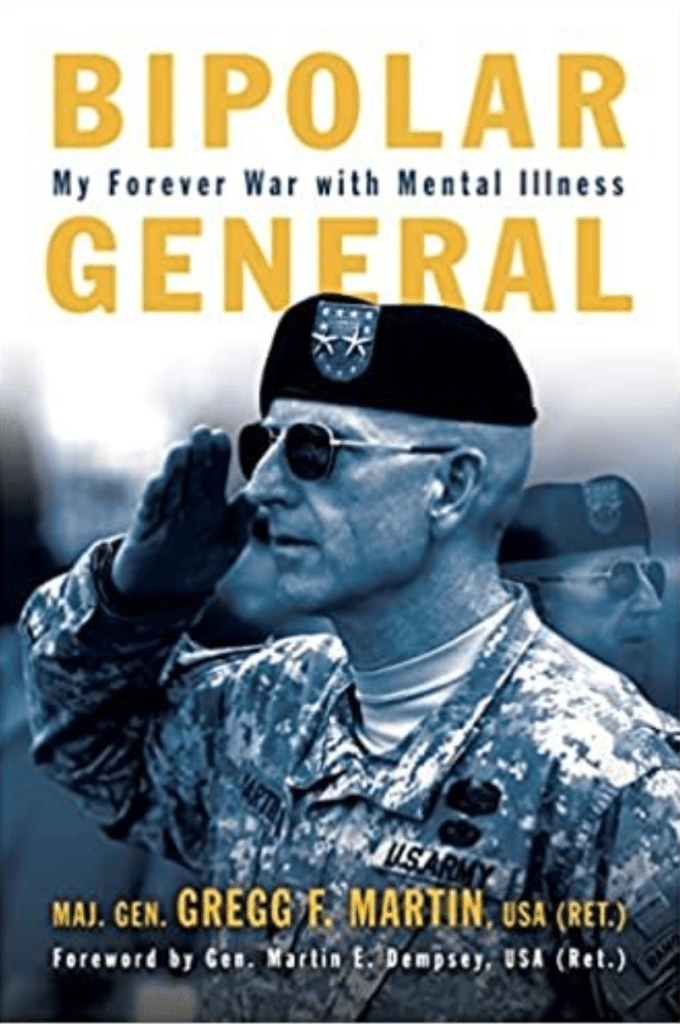
The retired two-star Army general is using his memoir, Bipolar General: My Forever War with Mental Illness, to influence the way the military approaches its service members with mental illness. In an interview with NPR, Martin said he rejected the idea that he had a problem because his manic periods helped him in his career. “I thought that God was rewarding me and giving me this strength and motivation and energy, because I was on kind of a divine mission as an Army officer. So it never occurred to me that there’s something wrong with my brain,” he said.
His behavior also generated praise from his superiors. He was eventually diagnosed with bipolar disorder.
Martin’s story is unsurprising to Alex Leow, a psychiatrist and biomedical engineer who studies bipolar. The military rewards an aggressive, tough-guy exterior, which tends to attract people on the bipolar spectrum, Leow said. “There is almost a double whammy effect. You are attracting more people on the [bipolar] spectrum into the military, but also because of the stress, because of the combat experiences … the likelihood that you actually develop symptoms is also higher,” she said.
Martin says that’s what happened to him. His bipolar symptoms became so pronounced that his superiors ordered him to resign and get a mental health evaluation. He followed through, but struggled to get treatment. His doctors hid his bipolar diagnosis so that he could leave the Army as a retired general, rather than end a decorated 36-year career with a medical discharge. That decision, which he isn’t proud of today, kept him in two years of ‘untreated bipolar hell.’ Now, years into treatment, he’s much better and urging others to get help.
One thing that’s not a delusion, Martin said, is his belief that God put him here to do great things. “That’s actually true because what I’m doing in terms of mental health advocacy and telling my bipolar story is the most important thing I’ve ever done in my life.”
Vision problems may signal Alzheimer’s, research finds
When Charlie Stewart started having trouble matching domino tiles in 2021, he and his wife Susan assumed it was a vision problem. Charlie’s optometrist referred him to a retinal specialist who found nothing and an ophthalmologist told Charlie that his eyesight was ideal.
A few months later, however, a neuropsychologist diagnosed him with a variant of Alzheimer’s disease known as posterior cortical atrophy (PCA). Most patients with PCA initially experience problems with vision not memory, and these symptoms often go undiagnosed for years, the Washington Post reported. Now an international research team has published a study in Lancet Neurology that suggests the illness presents, on average, at age 59 – five to six years earlier than symptoms appear in more common forms of Alzheimer’s. They also believe the variant affects up to 10 percent of all Alzheimer’s cases, or 700,000 Americans. The scientists hope their findings will shift the tide, inspiring physicians to look for signs that may lead to early diagnosis.
“We have a lot of work to do to raise awareness about the syndrome,” said Gil D. Rabinovici, one of the study’s authors and director of the UCSF Alzheimer’s Disease Research Center. “One thing that we found in our large study is that by the time people are diagnosed, they’ve had [PCA] for quite a few years.”
Susan Stewart said that, in retrospect, she noticed signs of PCA in Charlie more than a year before they went to get his vision checked. He’d started to fill in the wrong spaces in his checkbook, so she took over the responsibility – to his delight. She remembered him struggling to organize tools in the garage too. Then there was the “terrifying” time he scarcely saw traffic coming up behind him as he moved to merge on the freeway – a common symptom.
Researchers in the study found that while PCA patients have the amyloid and tau plaques that are a hallmark of Alzheimer’s, they form in different regions of the brain – those involved in vision, such as the occipital and parietal lobes. The syndrome more often presents in women; about 60% of current patients are female, the Post noted.
In other news…
This week marks one year since the mass shooting at the Star Ballroom Dance Studio on Lunar New Year’s Eve. Last year on January 21, Huu Can Tran entered the studio in Monterey Park, east of Los Angeles, and opened fire, killing 11 people and wounding 10 others. In this five-minute video story from the Los Angeles Times, survivors of the shooting continue their dance on the same floor in an act of honor, strength, and healing.
There’s more than one way to heal, and these Black Americans spoke to Capital B News about the many roads they’re taking to wellness. Jaquial Durham engages the arts as well as therapy and says the lyricism in Killer Mike’s last album, Michael, saved his life. No other hip hop albums covered love, marriage, family, failures, or grace the way that album did. Read the full story to meet a once reluctant reiki practitioner and the physician who believes music therapy, aromatherapy, and in-hospital art programs are as vital to healing as surgery and medicine.
For decades after it opened in 1911, Crownsville State Hospital was the only place Black residents with mental illness could be treated in Maryland. It became a segregated house of horror and was was plagued with allegations of torture and abuse. Now it’s about to reopen, and historian Janice Hayes-Williams has published a history of the hospital. She spoke with NBC Nightly News.
If you or someone you know is in crisis or experiencing suicidal thoughts, call or text 988 to reach the 988 Suicide & Crisis Lifeline and connect in English or Spanish. If you’re a veteran press 1. If you’re deaf or hard of hearing dial 711, then 988. Services are free and available 24/7.
Recent MindSite News Stories
What Martin Luther King, Jr. Knew But Never Said

The Rev. Dr. Martin Luther King Jr. was known for the soaring oratory he deployed as he led a movement for racial equity and social justice using the power of nonviolent protest. One thing he did not talk about was mental health.
As ‘Succession’ Heads Toward the Emmys, Our Writer Looks Back at a Master Class in Dysfunctional Family Dynamics
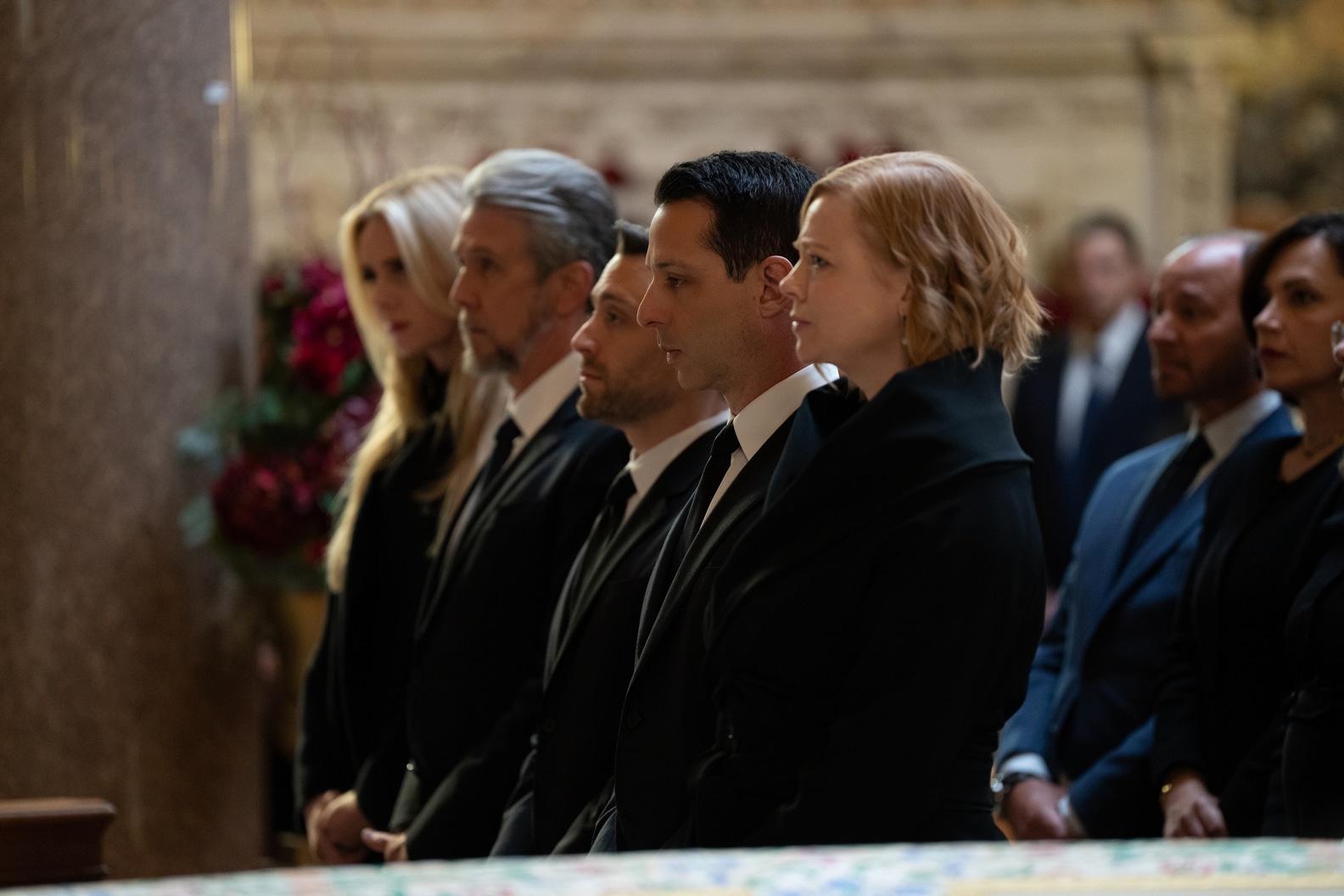
The popular HBO series, which ended in 2023, examined intergenerational trauma along with the worst kind of horrible bosses and conniving colleagues.
Building Hope in Philadelphia Neighborhoods Under Siege

Teachers and staff at YouthBuild Philly Charter School provide love, support and a safe haven for students in an area with high gun violence.
If you’re not subscribed to MindSite News Daily, click here to sign up.
Support our mission to report on the workings and failings of the
mental health system in America and create a sense of national urgency to transform it.
For more frequent updates, follow us on Facebook, Twitter and Instagram:

The name “MindSite News” is used with the express permission of Mindsight Institute, an educational organization offering online learning and in-person workshops in the field of mental health and wellbeing. MindSite News and Mindsight Institute are separate, unaffiliated entities that are aligned in making science accessible and promoting mental health globally.
Copyright © 2021 MindSite News, All rights reserved.
You are receiving this email because you signed up at our website. Thank you for reading MindSite News.
mindsitenews.org

The name “MindSite News” is used with the express permission of Mindsight Institute, an educational organization offering online learning and in-person workshops in the field of mental health and wellbeing. MindSite News and Mindsight Institute are separate, unaffiliated entities that are aligned in making science accessible and promoting mental health globally.


Author

Related Articles

Rumors of Kids Quitting College En Masse Are Exaggerated
This week: what the data says about Gen Z students quitting college, and why postpartum mental illness is more than depression.

Why Is Georgia Blocking Recovery Homes for Substance Abuse?
Georgia towns are using zoning loopholes to shut recovery homes down, even as addiction and mental illness surge statewide.

Why Are Mothers Punished for Parenting?
Those of us who roamed freely as kids can be arrested for letting our kids do the same.