
Who’s Paying for California’s Crisis Care?
California counties say insurers are failing to cover mobile mental health crisis teams, leaving taxpayers with millions in unpaid bills.
Greetings MindSite News readers.
Today is Election Day, the culmination of a long and deeply polarizing mid-term campaign that has been making nearly all of us feel stressed and anxious. If you haven’t voted already, don’t forget to do so, and make yourself heard! Visit vote.gov to find your state’s voting information. Your voice matters.
This week, our two main stories come from California. First, we explore the failure of insurers to pay for mental health crisis care. Then we look at the psychological impact of the Trump Administration’s threats on election workers. Also, Kaiser’s mental health career accelerator, Ohio’s Medicaid freeze, a death in ICE custody, the Boston Celtics $200M donation, and veterans on psychedelics.
California built crisis response teams. Insurers aren’t paying
California has spent hundreds of millions of dollars to build a statewide network of mobile mental health crisis teams. But the system relies on health insurers paying for crisis care – and counties say many of them aren’t doing so, leaving local governments to pay the bills.

Records obtained by the Bay Area News Group show that insurers have rejected or underpaid $4.1 million in claims from 11 Northern California counties from early 2024 to mid-2026. These unpaid bills raise questions about whether health plans are following state law that requires them to cover mobile crisis services as an alternative to police involvement during mental health emergencie
Under a law passed in 2022, private insurers must cover mobile crisis response care for their members, even when the responding provider is outside the insurer’s network. Health plans cannot require prior authorization before providing the service.
The legislation was part of an effort to expand access to mental health crisis care following years of concern about police encounters involving people with mental illness and was named for Miles Hall, a 23-year-old Black man who was shot and killed by Walnut Creek police officers while in the midst of a mental health crisis. It also provided funding for the 988 Suicide and Crisis Lifeline in California.
But county officials say insurers routinely deny claims or pay only a small portion of what is billed. Contra Costa County submitted $2.47 million in claims between 2024 and mid-2026 but only received about $210,000. San Francisco got about $4,000 out of $253,000 in claims, and San Mateo County collected around $1,500 for more than $248,000 in bills.
“This is a persistent problem across the state,” Tara Gamboa-Eastman of the Steinberg Institute, a mental health policy and advocacy organization, told the East Bay Times. “I am not aware of any counties that are not having issues with commercial insurance reimbursement except for those who have entirely given up trying.”
The California Department of Managed Health Care is reviewing the disputed claims and can fine insurers for mishandling payment disputes. The agency hasn’t said when it will complete its investigation.
Insurers say some reimbursement problems happen because of incomplete paperwork, wrong billing codes, or other issues with the claims counties submit. Mary Ellen Grant, a spokesperson for the California Association of Health Plans, said insurers evaluate claims based on the information provided, applicable coverage requirements and whether billing documentation is complete.
“We recognize that some counties have experienced reimbursement challenges and that those concerns deserve careful review,” she said in an email.
State regulators say the way counties bill might be causing some of these disputes, but the law’s author, Assemblymember Rebecca Bauer-Kahan, questioned insurers’ rejections for out-of-network services or for lack of prior authorization. Those are precisely the kinds of restrictions the law was intended to prevent, she said.
Mobile crisis teams bring clinicians, social workers, and other trained responders to help people in psychiatric emergencies and can sometimes prevent unnecessary trips to emergency rooms, as well as violent interactions with police. Most users are covered by Medi-Cal, California’s version of the federal Medicaid program, enabling counties to be reimbursed by the state and federal governments.
But crisis teams also help people with private insurance, including tourists and residents who may lack options in an emergency. In Contra Costa County, nearly 15% of mobile crisis encounters involved people with private insurance. County officials say the burden falls on local governments, which must provide crisis services whether insurers pay or not. Advocates are asking the Newsom administration to enforce the law more strictly, saying counties should not have to pay for services that private health plans are required to cover.
Trump threats harm California election workers’ mental health
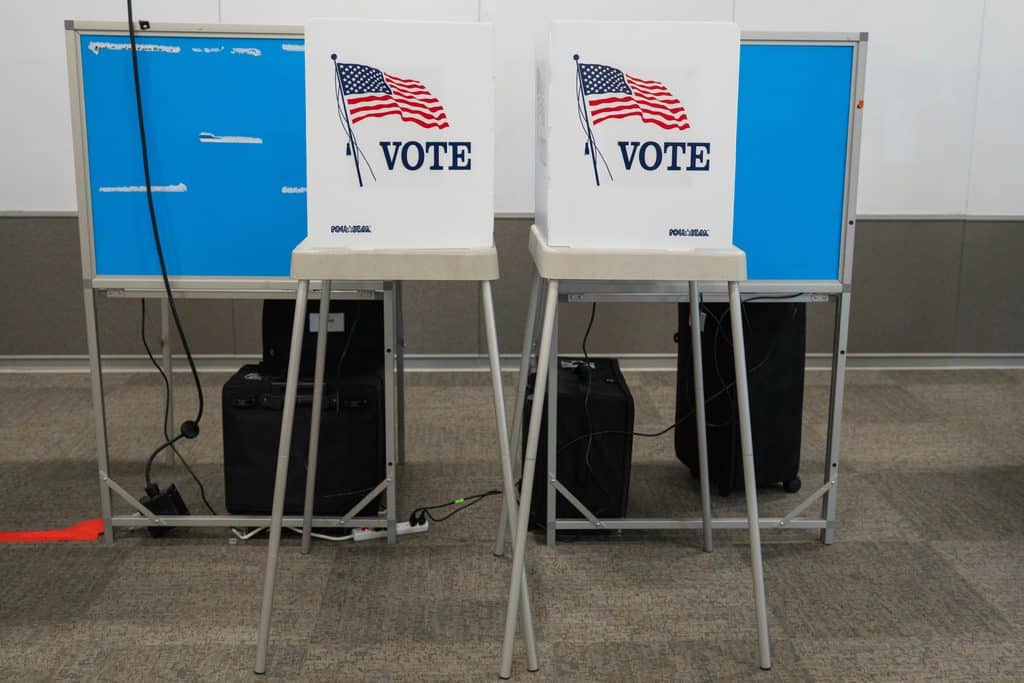
California election officials say threats of criminal prosecution from the Trump administration are hurting their mental health, interfering with their work, and causing staffing worries as the state gets ready to count ballots in the November midterm elections, ABC News reported.
In court filings submitted Friday, local election leaders said they feel anxious and frustrated about the Justice Department’s efforts to investigate the state’s voter registration records and pressure county officials to act against voters the federal government suspects are ineligible.
Francisco Diaz, registrar of voters in San Benito County, said he began making contingency plans for his office after Homeland Security officials sent a letter threatening to prosecute him. He worried about being arrested and how his absence could affect election operations. He also thought about telling his wife and parents.
“I felt fear and anxiety,” Diaz wrote in a court declaration. Last Friday, he said, four poll workers didn’t show up for work, and he thinks stress and anxiety may have contributed to their absence.
Kristin Connelly, Contra Costa County’s registrar of voters, said she felt overwhelmed by how much time her office spent responding to the federal demands and was worried employees might leave their jobs because of the threats.
The declarations were part of a lawsuit by civil rights groups and labor unions trying to stop the federal government from intimidating election officials. The filings show some of the personal and workplace pressures that local officials face while doing their jobs.
The Justice Department issued grand jury subpoenas to California election officials this week as part of a criminal investigation into the state’s voter rolls and separately asked federal courts to impound 20,000 California ballots that the Trump administration claimed had been sent to non-citizens. The latter effort was rejected by federal courts, including yesterday by the Supreme Court.
The administration has sought information about people it suspects may have voted illegally and has warned local officials about potential criminal liability if they process ballots from ineligible voters, even though there is no evidence of non-citizens voting in even remotely significant numbers.
Matt Morales, Santa Clara County’s top election official, said the federal government’s actions have had a chilling effect on his staff and could make it harder for counties to hire and keep the workers they need to run elections.
On Friday, U.S. District Judge Trina Thompson temporarily barred the Justice and Homeland Security departments from threatening, intimidating, or coercing state and local election workers into stopping ballot processing based solely on federal allegations that voters are ineligible.
Ohio lawmakers call for an end to the Medicaid home-care freeze
Outside Dayton, a quadriplegic woman has gone days without moving from her wheelchair to bed after the moratorium (on new payments to home-care providers) blocked two prospective caregivers from becoming certified to cover weekend shifts. In Huron, a respiratory therapist said she was forced to leave her career to care full time for her adult daughter after the freeze prevented her from hiring a caregiver she had recruited.
This reporting, part of an NBC News series called Disabled and Denied, has prompted Democratic lawmakers in Ohio to ask Gov. Mike DeWine to end a freeze on new Medicaid home-care providers that he ordered in May. They say the policy is leaving some disabled residents without the support they need.
DeWine, a Republican, put the six-month freeze in place to focus state resources on investigating possible Medicaid fraud. But the pause has stopped some families from hiring caregivers.
“This broad ban on new providers does serious harm to people who rely on caregivers for their daily needs,” state Sen. Beth Liston told NBC News. State Rep. Anita Somani said policies aimed at stopping fraud “can end up hurting the very people who need our help the most.”
The freeze is scheduled to end on Nov. 14. Almost every state, including Ohio, reported shortages of home-care workers in 2025, according to KFF.
In other news…
Mental health clinicians-in-training in California and Colorado can apply through Nov. 11 for up to $10,000 through a program funded by Kaiser Permanente. The Mental Health Career Accelerator, created with the National Council for Mental Wellbeing, gives eligible post-master’s candidates up to $10,000 in incentives. It also provides exam prep, mentoring, training and peer support.
The program aims to help qualified graduates overcome barriers to joining the behavioral health workforce. According to the National Council, more than half of people who earn a master’s in mental health do not complete the steps to get licensed. Applications for the January 2027 group will close on Nov. 11. Applicants need to have a qualifying master’s degree by December 31, 2026, and be working toward licensure in California or Colorado.
Chaofeng Ge, a Chinese immigrant who died by suicide at an ICE detention center last year, got no mental health care at the facility, even though he had tried to take his own life before, according to an internal ICE report reviewed by the Washington Post. MindSite News reported on his death early this year, as part of an interview on the mistreatment of Chinese immigrants in ICE custody.
Ge, 32, died in August 2025, just five days after arriving at the Moshannon Valley Processing Center in Pennsylvania. He was one of at least 55 immigrants to die in ICE custody since Trump returned to office, including 10 suspected suicides, the Post reported. Ge’s medical records, which showed a history of past suicide attempts and antidepressant use, were lost during intake. The review also found that guards missed required security checks before finding him.
“Whatever his flaws, he deserved to be treated with dignity and care,” said his brother, Yanfeng Ge. “Instead, he was cast aside, isolated, and ignored.”
$200 million donation from Boston Celtics will help build pediatric mental health facility The Boston Celtics ownership group and team have given more than $200 million to Boston Children’s Hospital, including money to build a major pediatric mental health facility, the Boston Globe reported. It’s the largest donation the hospital has ever received. Hospitals and health systems across the country are seeing more demand for pediatric mental health services. The donation will help children in mental health crises, fund research into childhood diseases, train pediatric nurses, and support family-focused health programs. Hospital officials said the new mental health facility will give more care to children and teens with behavioral health challenges.
Trump administration will make psychedelic drugs more available to veterans with post-traumatic stress disorder and other mental health conditions, Politico reported. The Department of Veterans Affairs is looking into treatments that could help up to 2.1 million people at a time when veterans and active-duty service members are grappling with an ongoing mental health crisis. About 23% of veterans who get VA care have had PTSD, compared to 7% of those who don’t use VA services, according to agency research. Veterans die by suicide at a rate about 57% higher than other U.S. adults, with nearly 18 deaths each day.
In April, President Trump signed an executive order telling federal agencies to speed up research and regulatory reviews of possible psychedelic treatments. The order also provided $50 million for research. No psychedelic drug is currently approved to treat mental illness in the United States.
The name “MindSite News” is used with the express permission of Mindsight Institute, an educational organization offering online learning and in-person workshops in the field of mental health and wellbeing. MindSite News and Mindsight Institute are separate, unaffiliated entities that are aligned in making science accessible and promoting mental health globally.


Author
Related Articles

Medicaid Changes Under Trump Undermine Care for Pregnant Women, New Moms
New Medicaid work requirements could put pregnant women at risk of losing health coverage.

Voters Reject Trump Administration’s Policies, Including Its Health Agenda
Election results put Medicaid cuts, Affordable Care Act subsidies and access to mental health care at the center of the healthcare debate.

Helping Trick-Or-Treaters With Autism Feel Welcome
This year, make Halloween more inclusive for autistic children with these six tips for welcoming neurodivergent trick-or-treaters.