
A Daughter’s Journey to Healing Through “Enoughness”
In Docile: Memoirs of a Not-So-Perfect Asian Girl, artist Hyeseung Song says the answer to the model minority myth is that you are enough, no matter what you do.

September 26, 2024
By Courtney Wise
Greetings, MindSite News Readers. In today’s Daily, musings on getting back on track after your big babies leave the nest and a personal essay on the psychological harms of both too little and too much money. Plus, books on the experience of motherhood, dangerous pro-eating disorder groups and posts on X, and a challenge from one therapist to each of us to give our children the space to live their lives for themselves.
Plus: A MindSite News interview by Melissa Hung with Korean-American artist Hyeseung Song about her recent memoir on her mental health journey to healing.
Docile: Memoirs of a Not-So-Perfect Asian Girl
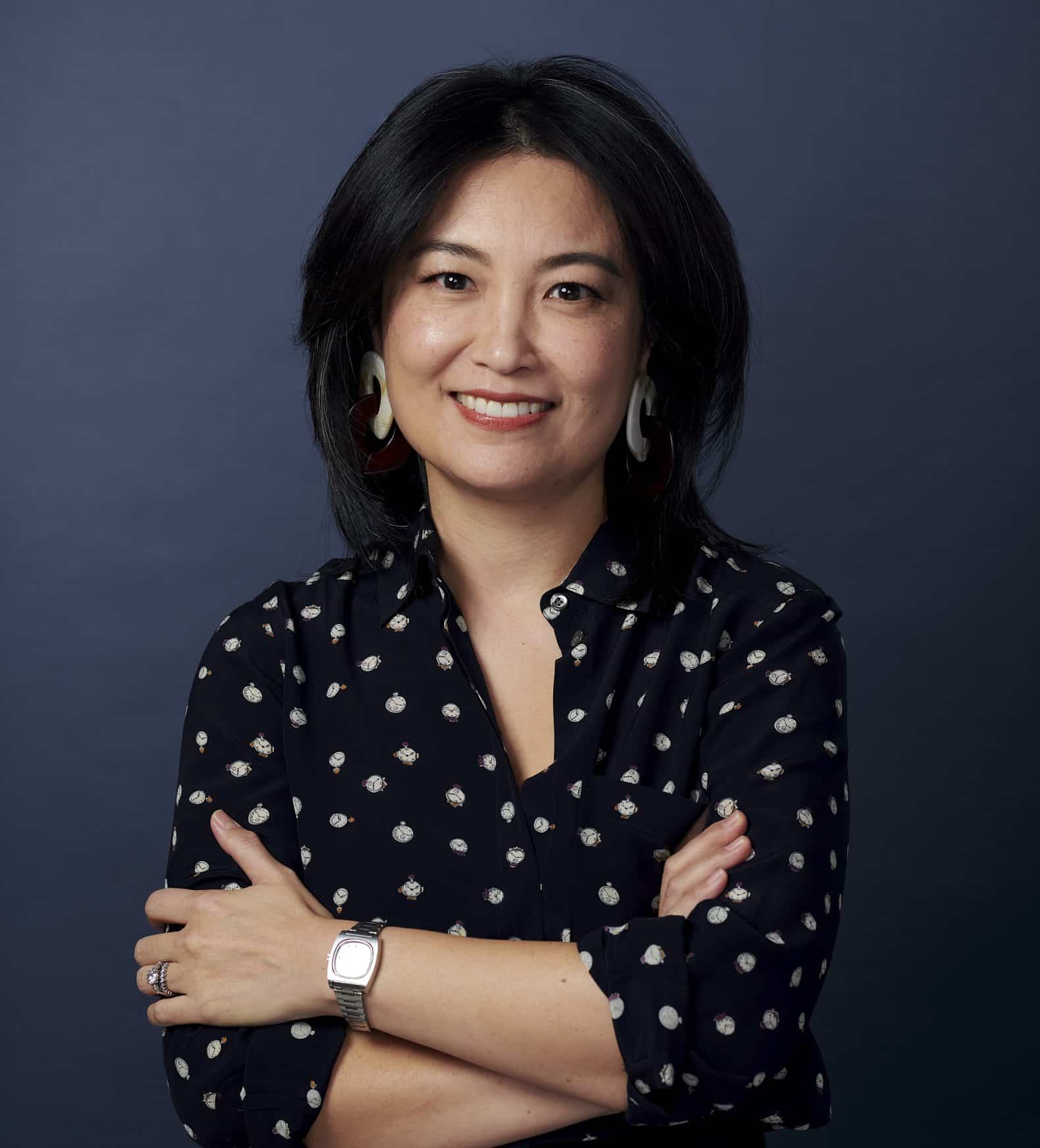
“The word “docile” only appears once in Hyeseung Song’s Docile: Memoirs of a Not-So-Perfect Asian Girl but its mention is pointed,” writes Melissa Hung in her interview with the Korean American author and artist. “From the bottom bunk of their twin beds, Song’s college roommate tells her, ‘You’re nothing like my docile Asian friend from boarding school.’
“In naming her debut memoir after this cliché of Asian girls and women, Song tackles head on the expectations she faced growing up — from society’s stereotypes to her Korean immigrant parents’ ideas that she behave within certain bounds and advance to the Ivy League,” Hung continues. “Unflinchingly honest, Docile is at once a story about an eldest immigrant daughter, parental relationships, mental health struggles, and a journey Song must make in order to find her self-worth.”
After being hospitalized for mental health struggles in law school and again at the Harvard graduate school of philosophy, Song tells Hung that she realized she was following “all the breadcrumbs that had been sprinkled out for me” rather than her heart’s desire. “I knew that I was on the wrong track. Intuitively, I knew. But my mom had spent her whole life telling me my intuition was wrong.” In a leap of faith, Song chose to heal herself and become an artist.
“The answer to anything like the model minority myth — and I say this in my book — is not abundance, it’s actually enoughness,” Song said in the interview. “You are enough. You’re just here and you are enough, no matter what you do. You deserve everything. You deserve food, shelter, water, love, dignity based on your enoughness because you’re human, not because of the things that you do and the ways that you are.”
Find out more in Hung’s in-depth interview with Song, who hopes fervently that Asian American teens and youth who’ve sunk into despair will pick up her book and find the help they need. You can read the interview here.
Rediscovering self (and sea lions) after the heavy lift of parenting is done

Our public parenting conversations are often focused on school-aged children and their caregivers, but there’s good reason to make space for discussing what happens after our babies become adults in charge of their own lives. It’s a tough adjustment, Tara Ellison writes in the Los Angeles Times.
As the mother to healthy, independent adults, she noticed her previously built-in social networks start to disintegrate, replaced by a sense of loneliness and uncertain purpose. “I didn’t give myself permission to pursue what interested me, partly because I had no idea what to pursue. How did people figure out what to do when their nests emptied out?” she wondered. Her marriage was a good one, but not sufficient to fill the void she felt within herself. Ellison fell into a depression and figured, at 50, the only way out would be to “reboot” her life.
“Midlife occupies the intersection between how you’ve lived in the past and how you want to proceed going forward,” Ellison wrote. “In recent years, women have begun to rework the narrative around menopause, reimagining it as a type of coming home to oneself. …I might have been up against a changing body and wacky hormones, plus a side of loneliness, but I was determined to rework that hand into something more favorable — even if I had no idea how.”
She started by getting acquainted with her body. Sometimes called “reverse puberty,” perimenopause and menopause, come with major changes that pushed Ellison to become a better advocate for her needs. And as she found a new doctor and dug into workshops about the changes that were happening, she made connections with new people that helped her reduce some of her social anxiety. They also gave her some pretty cool tips on how to explore her interests. My favorite (and one I plan to adopt): carrying a notebook to write down the random things she thinks would be fun. “Contrary to what society wants you to believe,” Ellison discovered, “the oldest women in the room are often the most interesting.”
The reduced demands of parenting also presented Ellison with a new opportunity to dig into her life, much of which is spent getting dirty with seal pups these days. As a volunteer at California Wildlife Center in Calabasas, California, she’s grown accustomed to scrubbing slimy poop from pens and discovering fish scales in her bra. Gross—but great, she said. The work she does to support the rehabilitation of seals and sea lions is hard physical labor, and 6 years later, still feels worth it. “I occupy a completely different emotional space,” Ellison declared. “By pushing through a stretch of listless loneliness and embracing my fears, this midlife crisis ended up blooming into a midlife renaissance.”
Girls, Interrupted: How economic inequality undermines us all
Having grown up in a working class household in the Midwest, Emi Nietfeld found herself miserable at the affluent boarding school where she was sent on scholarship after foster care. She was surprised to learn, at age 15, that rich people are harmed by economic inequality, too. Her roommate (“let’s call her Jane,” she writes) was rich but also miserable. Equally brilliant, the teenage girls shared the agony of serious mental health struggles, thanks to their vastly different financial backgrounds, Nietfeld argues in Slate.
Locked in a perpetual waltz with soft poverty, Nietfeld says she struggled to feel hope throughout her early years. She attributes the dissolution of her parent’s marriage, along with her and her mother’s subsequent mental health issues, including severe depression, self-harm, and hoarding, in part, to their frequent financial instability. Though manifested in different ways, Nietfeld says Jane also battled depression, anxiety, and a distorted body image because of the pressure she felt to get straight As, graduate from an Ivy League school, look just right, and get her own high-paying tech job to prove she could maintain her class status without her parents.
The inequality gap is only growing in America, Nietfeld notes, and a recent Lancet report suggests it’s partly the catalyst for increased mental illness in adolescents. “It makes status hypersalient, weakens social ties, and encourages us to choose prestige over purpose,” she asserts. “As inequality rises in lockstep with measures of psychic distress among teens, we need to consider its role if we want to keep kids from suffering needlessly, falling short of their potential, and, increasingly, dying before they reach adulthood.”
It’s not a hyperbolic notion. Nietfeld highlights epidemiologist Kate Picett’s book, The Spirit Level, in which she finds that nations with greater inequality have 3 times the rate of mental illness as more egalitarian countries—and even the wealthy in less equal nations are at risk. Moreover, the life expectancy of Americans, no matter our income, is lower than it’s been in 20 years.
Clay Cockrell, therapist to the ultra-rich, has this to say of his clients: “Money at this level is toxic and dangerous. People die of this.” Enormous wealth nurtures a spirit of competition between the generations, Cockrell added, intimidating children who fear they won’t match their parents’ financial success. (Succession, anyone?) Moreover, there’s no telling who one can trust when you have so much more than others, sparking loneliness and paranoia. And with studies suggesting that even the upper middle class has less compassion and empathy than working-class folks, we need to be concerned about people lacking two vital emotions that keep humans connected.
Peer Mentor Program Helps Students on the Spectrum Forge Friendships
College life can be intimidating to many students, especially if they are on the spectrum. Rutgers University–New Brunswick wants to provide support for neurodiverse students so they can get off to a good start.
To do so, the university is offering specialized peer mentoring through the College Support Program (CSP), run by the Rutgers Center for Adult Autism Serivces. Besides hanging out, checking on homework and making sure students’ classes are going well, mentors also encourage students to find a second home in the university’s community center for neurodivergent students.
“What I like about the program is that we get to hang out and do different activities every week,” Josh Garfinkel, a Rutgers–New Brunswick communications major and a mentee in the program, told Rutgers Today. “It gives you a chance to step away from your academics and gives you time to de-stress. You need to have some fun.”
His peer mentor, Alyssa Nielsen, says she enjoys spending time with the “sweet and kind” Garfinkel. For his part, Garfinkel says the peer mentoring “really has made a tremendous impact on my college experience because it was very hard to adjust to college life in the beginning…It’s helped me succeed overall here at Rutgers.”
As assistant program coordinator Keya Pai put it, peer mentoring is an opportunity to help “build a bond with one another – and also being that friendly face that they can go to when they’re having difficulties navigating through campus life.”
In other news…
Parents, stop living vicariously through your children: What I mean is more nuanced and explained better by therapist Nedra Tawaab. In this post on her blog, Tawaab recalls feeling something akin to a violation when she realized what her father was saying when he told her he lived vicariously through her. Society already imposes expectations upon each of us, many of which we have to sift through to get to the lives we want for ourselves. Likewise, “when parents aren’t able to achieve something in their own lives and then impose those ambitions onto their children, they are getting in the way of their children telling their own story,” Tawaab writes. “We have to allow our children space and also make space for ourselves to create our own identity.”
X, the social media site formerly known as Twitter, was recently spotlighted by The Guardian for its proliferation of pro-eating disorder posts. Reporters found 7 groups, with a combined total of almost 200,000 members, after speaking with Debbie, a Guardian reader diagnosed with bulimia as a teen, who was triggered by the posts suddenly appearing on her feed. They’ve popped up in greater number due to the lack of moderation on the site ever since Elon Musk took over. Debbie said she is aware the groups exist, “but you’d have to search to find them” previously, she said. British lawmakers are also displeased. “These findings are most concerning,” said Wera Hobhouse MP, chair of the all-party parliamentary group on eating disorders. “X should be held accountable for allowing this harmful content to be promoted on its platform, which puts many lives at risk.”
A few books on motherhood worth searching for: Seven years into motherhood myself, including the time I cared for my kid in utero, I’m still not tired of reading about other mothers’ experiences. Hope for a book recommendation led me to Electric Lit this week, where I was pleasantly surprised to find not 1 book recommendation, but 7, all from small presses. They’re not parenting books, either, promises Jennifer Case, a writer who placed her own essay collection at the top of the list. Rather, her recommendations “capture the lyrical, literary depictions of the actual, internal experience of being a mother…the sometimes-joyous, sometimes-heartbreaking, sometimes-painful transition” to mom.
If you or someone you know is in crisis or experiencing suicidal thoughts, call or text 988 to reach the 988 Suicide & Crisis Lifeline and connect in English or Spanish. If you’re a veteran press 1. If you’re deaf or hard of hearing dial 711, then 988. Services are free and available 24/7.
Recent MindSite News Stories
Docile: Memoirs of a Not-So-Perfect Asian Girl
Hyeseung Song tackles head on the expectations she faced growing up and the journey she had to make to find her self-worth. Continue reading…
New Report: Mental Health Philanthropy Inches Up, but Still Lags Far Behind the Need
Mental health giving is rising slowly, but it’s still a small percentage of overall giving. Continue reading…
988 Crisis Line Rolls out Georouting Technology, Giving Crisis Counselors a Better Idea of Caller’s Location

The 988 Suicide & Crisis Lifeline will deploy technology that routes calls based on their proximity to cell phone towers, preventing confusion and delays, the Biden administration announced. Continue reading…
If you’re not subscribed to MindSite News Daily, click here to sign up.
Support our mission to report on the workings and failings of the
mental health system in America and create a sense of national urgency to transform it.
For more frequent updates, follow us on Facebook, Twitter and Instagram:

The name “MindSite News” is used with the express permission of Mindsight Institute, an educational organization offering online learning and in-person workshops in the field of mental health and wellbeing. MindSite News and Mindsight Institute are separate, unaffiliated entities that are aligned in making science accessible and promoting mental health globally.
Copyright © 2021 MindSite News, All rights reserved.
You are receiving this email because you signed up at our website. Thank you for reading MindSite News.
mindsitenews.org

The name “MindSite News” is used with the express permission of Mindsight Institute, an educational organization offering online learning and in-person workshops in the field of mental health and wellbeing. MindSite News and Mindsight Institute are separate, unaffiliated entities that are aligned in making science accessible and promoting mental health globally.


Author

Related Articles

The Lindsey Clancy Murder Trial
Women nationwide watch the Lindsay Clancy trial and see themselves in her story, plus an investigation into hospitals that fail patients with addiction.
Grief and Rehabilitation in a California Prison
This month: a DUI offender’s path to rehabilitation, Lindsay Clancy revisited, Illinois prison protests, a fatal cell fire, and Missouri’s competency crisis.
Meta Pays $17 Billion Settlement for Lawsuit Over Child Harm
Meta will pay up to $17.1 billion and reshape how its platforms operate after 47 states argued that they are harmful and also addictive to children by design.