
Dangers of Mental Health Crisis Arrests
Some Americans are shot by police during a mental health crisis, but 10,000 have been killed by ‘non-lethal’ force like stomach restraints.


October 9, 2024
By Courtney Wise

Greetings MindSite News Readers. In today’s Daily, a story on the experiences of two Washington men arrested during separate mental health crises. One man made it home; the other lost his life. A quick look at the challenges working people with disabling mental illness face in obtaining disability coverage.
Plus, why experts say setting boundaries with friends is important, 5 common signs of dementia and why Joker: Folie à Deux is a more realistic portrayal of mental illness than the original Joker.
And before we dive into today’s mental health news, I wanted to remind you about our annual reader survey. Your feedback is invaluable in helping us understand what you find most useful in our reporting and in these newsletters. Please take a few minutes to share your thoughts—it means a lot to our team.
Police responded to two men facing two different mental health crises. Only one made it home.

In a real-life tale all too commonplace, two men were arrested by police during a mental health crisis, but only one made it home alive. The family of Hien Trung Hua, a Vietnamese immigrant struggling with bipolar disorder, told the Seattle Times they’re still reeling from his 2023 death in the Yakima County Jail. Two major missteps quickly took place, both of which were overlooked until Hua’s family filed a lawsuit.
First, Hua was wrongly placed in general population, despite the reason for his arrest and a recommendation from the jail’s own nurse that he be placed in mental health services upon booking. Secondly, after an intense 10-minute struggle with jail guards, Hua was held in prone restraint and died.
An in-depth investigation by the Associated Press and cited by the Times found that more than 1,000 people have died from the use of force not intended to kill, and most of the deaths resulted from prone restraint. “It seems highly likely that Mr. Hua wouldn’t have died but for the prone restraint in the hallway,” said Eric Jaeger, a paramedic and EMS educator who viewed the recording of Hua’s death.
Months earlier, Jim Curtice, the county’s elected coroner, begged to be killed by officers – and threatened to kill them – while under the influence of alcohol. Police inflicted no harm upon Curtice, despite his assault of officers. In fact, they never took him to jail. In stark contrast to their handling of Hua, Curtice was driven to a hospital for mental health treatment. He would later enter rehab and upon leaving tell reporters for the Herald-Republic, “I am doing very well. I did some hard work.”
The issue is one of systemic injustice, the Times shows, highlighting in their reporting how the choices made by police, jail staff, and health care providers yield disparate outcomes for people in mental crisis.
A key problem is also that officers receive training suggesting it is safe to restrain people on their stomachs. In reality, experts say the many deaths resulting from prone restraint show restraining people on their stomachs is dangerous and makes it difficult for them to breathe, especially if officers put pressure on their backs.
Exacerbating the pain for Hua’s family, Curtice, in his role as coroner, later signed off on Hua’s autopsy report, which originally attributed his death to natural causes. That decision was made after consulting police reports and the findings of semi-retired forensic pathologist Jeffrey Reynolds, which the jail would later use to uphold the actions of their staff as “professional and appropriate.” But neither Curtice or Reynolds consulted the video recording of Hua’s death at the time of their investigation. And today, Curtice again finds himself in trouble with the law for substance use. Last month, he admitted to removing drugs from the bodies brought into his office for personal consumption.
In a July addendum to his autopsy report, Reynolds reclassified Hua’s cause of death as negligent homicide, writing “his demise, without struggle, was not imminent.” In an interview with Times reporters, Reynolds added that he’d mistakenly relied on the jail’s description of the incident without watching the recording himself. After watching the videos, he changed his mind.
Disability coverage hard to come by for people with mental health disabilities
Obtaining disability coverage is notoriously difficult. The process can be even more daunting for people with mental illness. Licensed psychologist Anne Huebner told the Milwaukee Journal Sentinel she’s had too many patients sacrifice their therapy sessions to get her help completing their disability application. And too many times, they’re denied. “They’re often frustrated with everyday tasks and, of course, frustrated they have to fill out these forms that don’t make sense to them,” Huebner said. “Their symptoms will worsen, they’ll put the process aside. It seems the process discourages people who are already struggling.”
While it is clear the rates of denial are higher for people with severe and persistent mental illness than they are for those with physical ailments, the true scope is impossible to ascertain. Federal law doesn’t require that such denials be tracked and reported, so few insurance companies do. It’s a symptom of the sloth-like progress toward health coverage parity, the Sentinel finds. Coverage limits are wildly disproportionate, with behavioral health disabilities capped at 24 months, while physical disabilities can be covered into retirement age. Even the assessment process is out of alignment.
“Unlike when taking an X-ray, where all you have to do is sit still, in a neuropsychological evaluation you have to pay careful attention and try your best to respond to questions or tests,” said Steven Rothke, a clinical neuropsychologist. But people with severe mental illnesshave trouble with short- and long-term memory, concentration and motivation. Insurers claim their goal in making the process so arduous is to eliminate fraud, but Huebner and Rothke say fraud is rare. “It can happen,” said Huebner. “But, generally speaking, with the people that I’ve seen, so much of their circumstances have changed since they became sick that they can’t get out of — like losing their life savings and resources — and they’re worse for it. That is pretty obvious.”
Set a boundary and upset a friend? Sometimes it’s necessary, experts say.
When you set proper boundaries, some people in your life will become upset. That’s okay, several experts told the New York Times. The piece reminded me of a blog post I read earlier this year by therapist Nedra Tawaab, author of the NYT bestseller Set Boundaries, Find Peace. She opens the post with a hilarious anecdote about one reader who gifted the book to her daughter-in-law and became upset after a boundary was then set on her behavior.
“You need to start telling people how to be kind when they set boundaries,” the reader wrote. “I loved your book so much I bought a copy for my daughter-in-law, but after she read it she asked me to call before I come over to her house. This is not something that I’ve ever done with my son and she was very mean to ask that of me.” I would venture to say that her daughter practiced exactly what she read in the book, Tawaab replied.
The fact is, boundaries are set in place by us to protect us. They’re necessary for our care, but also create circumstances in which other people won’t always get what they want. That’s upsetting for some people. Accepting that your boundaries will cause some people discomfort – and that’s okay – is the first step to setting boundaries that will stick and be helpful to you. Work on not seeing the way people respond to your boundaries as a reflection on you, said Juliane Taylor Shore, a licensed therapist and the author of Setting Boundaries That Stick.
Kathleen Smith, a therapist and the author of True to You, even suggests taking cues from authoritative parenting. It’s a style that merges firm boundaries with warmth and support. It’s “automatic” for the human brain to care about what others think, Smith said, “and for good reason! We’re built to cooperate and to keep people calm and happy.” But, setting boundaries to preserve your mental wellbeing is more important than pleasing others. So stay firm, even with your loving yet demanding friend. Boundary setting “is how we help kids grow up,” said Smith, “and this is how we help each other grow up, also.”
In other news…

Courtesy of Warner Brothers
Joker: Folie à deux portrays mental illness better than the original Joker, according to Slate. “Much to my delight…the subtitle “folie à deux” is not just a clever flourish by the filmmakers,” reviewer Matthew Rozsa writes. “As if to compensate for the first movie’s deficiencies, Joker: Folie à deux is a better depiction of mental illness than the original Joker.”
“Joker: Folie à Deux is a story entirely about thoughtful depictions of different psychological conditions — and the theme that drives the plot is the literal “folie à deux” of characters sharing fantasies about being Joker…Instead of stigmatizing mental illness, “Joker: Folie à Deux” becomes a meditation on what mental illnesses can reveal about our societies,” Rozsa writes. His enthusiastic review may have been the exception, however; the movie was widely panned.
LGBTQIA women experience higher rates of mental health issues and struggle more to obtain any level of health care, according to the results of a national survey released this week. 5,000 LGBTQIA respondents pointed to cost and discrimination as the primary reasons for delaying or not seeking mental or physical health care when needed. “Historically, medical spaces have not been safe for us,” Savy Elahian, who led the data analysis for the report, told NPR. “There’s been experimentation [on people]; there’s been medical racism. It’s important to understand the historical impacts, especially for LGBTQ+ people of color.”
5 common signs of dementia, not including memory loss: As our loved ones age, instances of memory loss begin to spark concern. But while memory loss is the most well-known dementia symptom, it’s not the only sign that should prompt a visit to the doctor, experts told the New York Times. Other signs to look for include financial problems, sleep issues, personality issues, running stop signs and other driving difficulties and loss of smell.
If you or someone you know is in crisis or experiencing suicidal thoughts, call or text 988 to reach the 988 Suicide & Crisis Lifeline and connect in English or Spanish. If you’re a veteran press 1. If you’re deaf or hard of hearing dial 711, then 988. Services are free and available 24/7.
Recent MindSite News Stories
Treatment Not Trauma: The Push to Transform Chicago’s Mental Health System Takes Some Big Steps
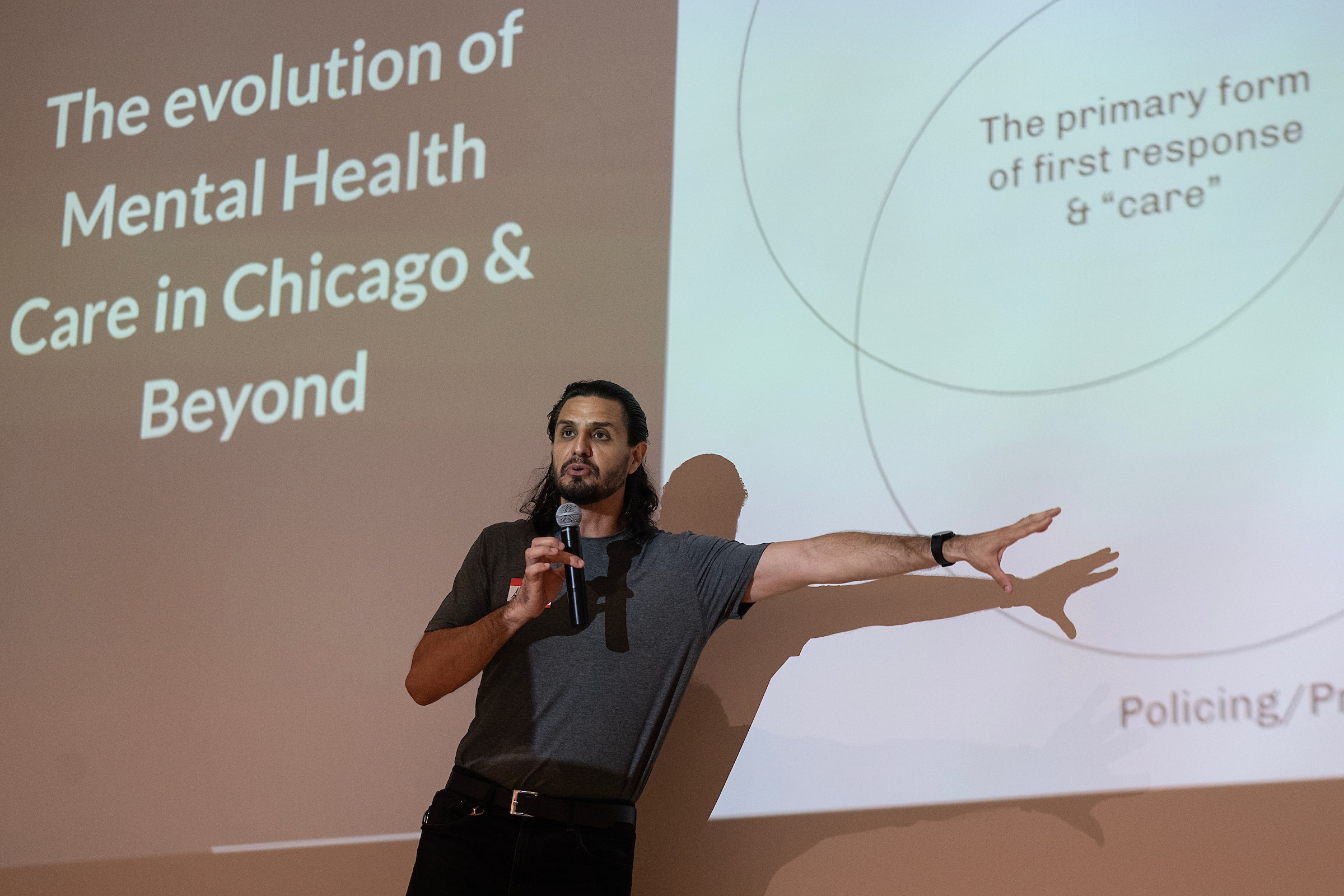
A coalition of community advocates and mental health professionals have been demanding change in Chicago’s mental health landscape for years. For the moment, at least, they’re taking a victory lap.
Docile: Memoirs of a Not-So-Perfect Asian Girl

Hyeseung Song tackles head on the expectations she faced growing up and the journey she had to make to find her self-worth. Continue reading…
New Report: Mental Health Philanthropy Inches Up, but Still Lags Far Behind the Need

Mental health giving is rising slowly, but it’s still a small percentage of overall giving.
If you’re not subscribed to MindSite News Daily, click here to sign up.
Support our mission to report on the workings and failings of the
mental health system in America and create a sense of national urgency to transform it.
For more frequent updates, follow us on Facebook, Twitter and Instagram:

The name “MindSite News” is used with the express permission of Mindsight Institute, an educational organization offering online learning and in-person workshops in the field of mental health and wellbeing. MindSite News and Mindsight Institute are separate, unaffiliated entities that are aligned in making science accessible and promoting mental health globally.
Copyright © 2021 MindSite News, All rights reserved.
You are receiving this email because you signed up at our website. Thank you for reading MindSite News.
mindsitenews.org

The name “MindSite News” is used with the express permission of Mindsight Institute, an educational organization offering online learning and in-person workshops in the field of mental health and wellbeing. MindSite News and Mindsight Institute are separate, unaffiliated entities that are aligned in making science accessible and promoting mental health globally.


Author

Related Articles

The Lindsey Clancy Murder Trial
Women nationwide watch the Lindsay Clancy trial and see themselves in her story, plus an investigation into hospitals that fail patients with addiction.
Grief and Rehabilitation in a California Prison
This month: a DUI offender’s path to rehabilitation, Lindsay Clancy revisited, Illinois prison protests, a fatal cell fire, and Missouri’s competency crisis.

Meta Pays $17 Billion Settlement for Lawsuit Over Child Harm
Meta will pay up to $17.1 billion and reshape how its platforms operate after 47 states argued that they are harmful and also addictive to children by design.