
It’s World Mental Health Day
The theme of this year’s World Mental Health Day is mental health at work, where stigma, harassment and other poor working conditions pose significant risks.

October 10, 2024
By Courtney Wise
Greetings, MindSite News Readers. Happy World Mental Health Day!
In today’s Daily, a peek at the difficulties one woman faces maintaining sobriety while navigating motherhood and the mindset one school-based therapist in Minnesota embodies to help boys be themselves without fear.
Plus, the case for “empty brain hours” and concerns about TikTok’s impact on youth mental health prompts lawsuits from multiple states.
And psychiatrist and Yale faculty member Bandy Lee, editor of The Dangerous Case of Donald Trump: 37 Psychiatrists and Mental Health Experts Assess a President, and a group of leading mental health experts, lawyers and others recently held a conference that concluded Trump’s dementia, mental health problems and psychopathology make him a danger to the world and unfit to be president.
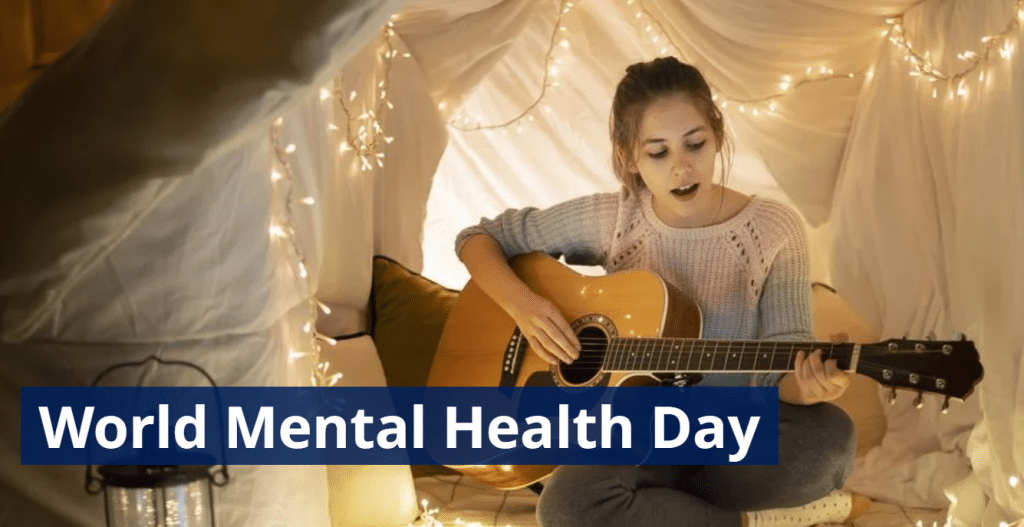
October 10 is World Mental Health Day
As the World Health Organization points out, the objective of World Mental Health Day “is to raise awareness of mental health issues around the world and to mobilize efforts in support of mental health…and what more needs to be done to make mental health care a reality for people worldwide.” This year’s theme is workplace stress and mental health at work, where stigma, discrimination, harassment and other poor working conditions pose significant risks.
In Kentucky, it’s easier to get help for addiction than it is to find help as a mom
Maintaining sobriety is a daily struggle for Grace Bechtel. She’s successfully faced the challenge for 20 months now, but there are psychological, logistical and legal obstacles every day. With two young children, Bechtel allowed the the Washington Post to observe how motherhood adds another layer of complexity.
Preferring meth to high school, she dropped out in the 10th grade. But these days she’s got her sights set on becoming a family lawyer. So shortly after having her daughter Lana, who is just 5 months old, she attended a high school for adults. Then, Lana got sick and, soon thereafter, so did Bechtel’s eldest daughter, Arya. After missing 10 days of school to tend to them, her teacher encouraged her to try again the next semester. Maintaining work can be just as hard. Without a partner or child care provider, Bechtel returned to waitressing just 2 weeks after giving birth to Lana, but without steady child care, she was forced to quit. Finding help as an addict, Bechtel said, is easier than finding help as a mom.
According to the CDC, mental health conditions, including suicide and overdose, are among the leading causes of death for pregnant women and new mothers in the United States. And in Kentucky where Bechtel lives, existing legislation practically guarantees that women who become pregnant in the throes of addiction will have a baby. The state boasts a near-total abortion ban.
Though the number of addiction treatment beds has grown in recent years, experts say there remains a growing link between motherhood and deaths of despair. “Particularly women who don’t want to be pregnant but have to be pregnant — they are struggling to avoid psychological suffering,” said Nora Volkow, an addiction researcher at the National Institutes of Health. And while Kentucky lawmakers did squeak out a “Momnibus bill” earlier this year, opening up maternity and mental health care to pregnant people, they failed to include much-needed paid parental leave and child care support funds to address what economists call “a growing crisis.”
Then there’s the matter of housing. For now, Bechtel’s home is a halfway house, but with the help of a recovery specialist, she was approved for subsidized housing through Section 8. Unfortunately, lawmakers in her community blocked an ordinance that would ban discrimination against renters due to their income source. As badly as she’d like to live independently now, some days it feels like a far off dream.
‘No boy needs to feel this way’: MN therapist draws on his past to help boys who feel ostracized
As a therapist based in an elementary school, Max Utterberg spends his days observing and combating an American culture that discourages boys from displaying any behavior beyond traditional masculinity. He also knows how tough that can be for boys who just aren’t rough and tumble. “Growing up,” Utterberg told the MinnPost, “I was a very sensitive boy. I was ostracized. I was called ‘gay’ every day in the fifth grade. It was difficult for me to fit in.”
Somehow, those awful experiences inspired him to return to the site of his pain—fulltime. “I decided in high school that I wanted to be a therapist because I enjoyed listening to and helping my friends. I also decided that no boy needed to feel the way I felt when I was a kid.” Even being in an elementary school continues to push against societal norms. “I will tell someone about the work I do, and they’ll say, ‘middle or high school?’ It does not occur to them that a man would work in an elementary school,” he said.
Which is why he’s committed to the work. Creating an environment in which boys can be authentic is important because as they get older, the rules boys learn about gender come from their friends and peers. That can encourage the perpetuation of toxic masculinity, which proliferates the media and culture we absorb. And though toxic masculinity is a real thing, he believes it can be overcome with examples of men and boys in a positive light. They can do that by interacting and growing alongside men who lead healthy, caring, and meaningful lives.
“Boys learn positive masculine traits if they are in some kind of activity like Quiz Bowl or chess club or football. In those situations, they can learn good things from their peers and mentors,” he said. “It gives them street cred and a sense of belonging.”
For another take on the subject, see our archived article on the song “Boys Will Be Bugs” for Cavetown’s take on toxic masculinity.
In other news…
This September 27, forensic psychiatrist Bandy Lee of Yale University and the World Mental Health Coalition convened a group of national experts at the National Press Club in Washington, D.C. to discuss presidential candidate Donald Trump’s grave danger to democracy and the world. The speakers included leading psychiatrists, economists, historians, journalists, and lawyers who documented how Trump’s mental health has further deteriorated and how he has become increasingly dangerous to the United States and the fate of the world. We will do follow-up reporting on the conference and its findings, but in the meantime, you can watch a video of the conference here.
Treating mental health like a public health issue will prompt real change, said Karestan Koenen, professor of psychiatric epidemiology and head of the Population Mental Health Lab, at the Harvard Chan School of Public Health. Graduating more therapists to work with millions of people one-on-one is important, she said in a post on the school’s blog, but not enough to shift the tide.
Pointing to the decreasing number of motor vehicle deaths, despite the reality that people drive more and farther than ever, Koenen argues that public health interventions made the difference. “We decreased these deaths by population-based public health interventions like cracking down on drunk driving, changing speed limits, setting regulations around car safety, making it more attractive to pay more for a safe car, raising the driving age, and restricting teen driving.” Public health strategies can be applied to mental health the same way, she said. The best place to start is with economic policies that will reduce stress on families, including paid family leave, addressing food insecurity, and making it possible for people in economic crisis to stay in their homes.
My daughter hates riding in a silent car. As a child, I hated it too. Then I grew older and began to understand the value of stillness and quiet. It’s where the peace I’m always chasing has a chance to take root and sit with me a while. It’s on a quiet walk with nothing else to do where my mind has a chance to rest. Those types of brain breaks are essential for good mental health, writes Elyse Fox in her column for Teen Vogue. She calls them “empty brain hours.” Not required to fill an actual hour, Fox defines them as “a time to go inside yourself, to let your stress out and see what takes its place.” The breaks can’t accrue while scrolling social media, either. The point of the daily total brain breaks is to start the practice of setting healthy boundaries within ourselves. The stillness that’s all ours gives us the space to stretch and keep being our best selves – or it may reveal the necessity for extended rest.
Thirteen states and the District of Columbia have sued TikTok, arguing the social media site doesn’t do enough to prevent young children from becoming addicted to it, Reuters reports. The 14 separate suits specifically assert that the social media giant uses software that’s intentionally addictive and designed to keep children scrolling for as long and often as possible. Washington state’s lawsuit asserts the site “operates like a virtual strip club with no age restrictions.” In a statement, California Attorney General Rob Bonta said, “TikTok cultivates social media addiction to boost corporate profits…intentionally [targeting] children because they know kids do not yet have the defenses or capacity to create healthy boundaries around addictive content.” In response, TikTok said, they strongly disagree with the claims, “many of which we believe to be inaccurate and misleading.” The company further expressed disappointment about an unwillingness of states to work with TikTok on “constructive solutions to industry-wide challenges.”
If you or someone you know is in crisis or experiencing suicidal thoughts, call or text 988 to reach the 988 Suicide & Crisis Lifeline and connect in English or Spanish. If you’re a veteran press 1. If you’re deaf or hard of hearing dial 711, then 988. Services are free and available 24/7.
Recent MindSite News Stories
Treatment Not Trauma: The Push to Transform Chicago’s Mental Health System Takes Some Big Steps
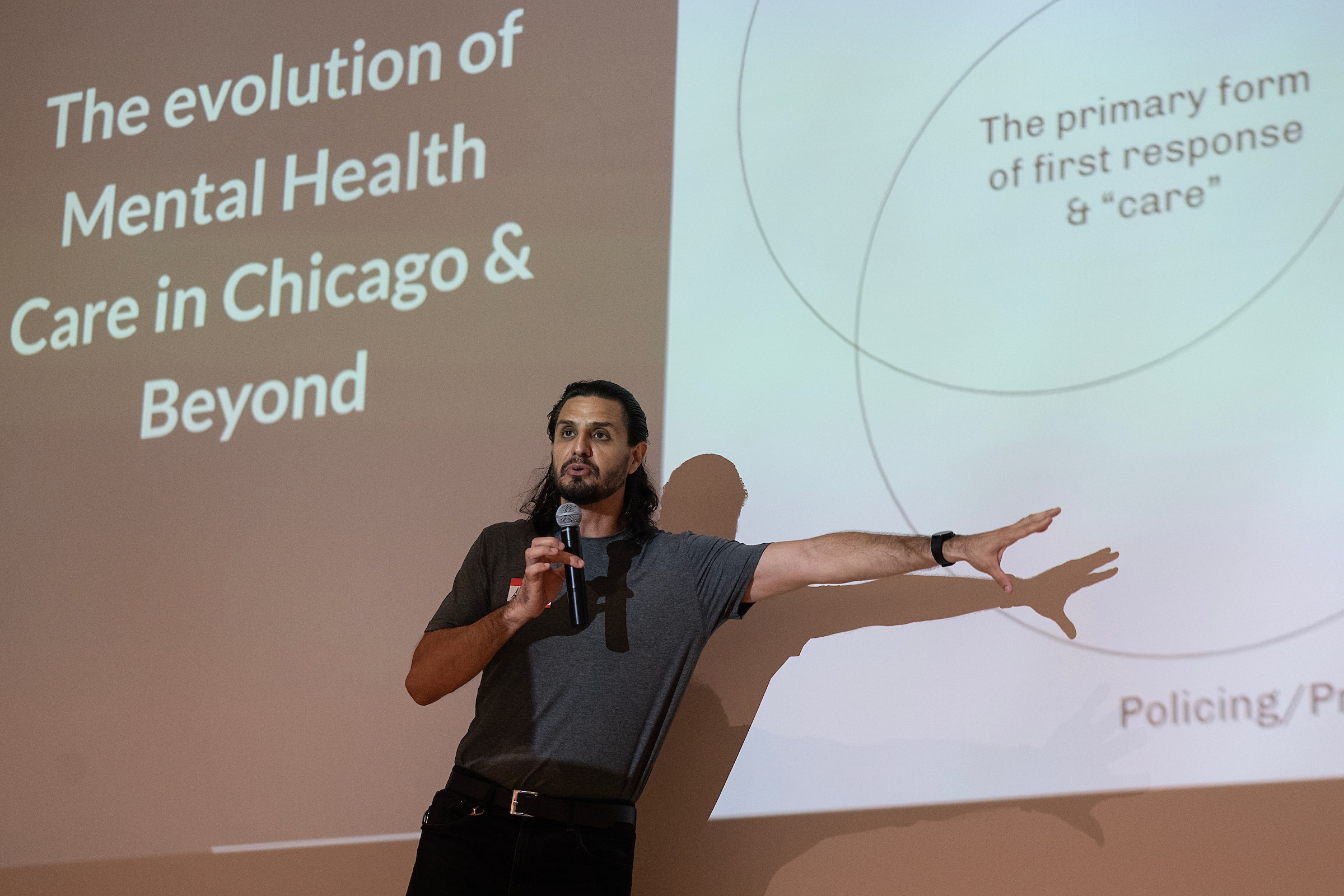
A coalition of community advocates and mental health professionals have been demanding change in Chicago’s mental health landscape for years. For the moment, at least, they’re taking a victory lap. Continue reading…
Docile: Memoirs of a Not-So-Perfect Asian Girl
Hyeseung Song tackles head on the expectations she faced growing up and the journey she had to make to find her self-worth. Continue reading…
New Report: Mental Health Philanthropy Inches Up, but Still Lags Far Behind the Need

Mental health giving is rising slowly, but it’s still a small percentage of overall giving. Continue reading…
If you’re not subscribed to MindSite News Daily, click here to sign up.
Support our mission to report on the workings and failings of the
mental health system in America and create a sense of national urgency to transform it.
For more frequent updates, follow us on Facebook, Twitter and Instagram:

The name “MindSite News” is used with the express permission of Mindsight Institute, an educational organization offering online learning and in-person workshops in the field of mental health and wellbeing. MindSite News and Mindsight Institute are separate, unaffiliated entities that are aligned in making science accessible and promoting mental health globally.
Copyright © 2021 MindSite News, All rights reserved.
You are receiving this email because you signed up at our website. Thank you for reading MindSite News.
mindsitenews.org

The name “MindSite News” is used with the express permission of Mindsight Institute, an educational organization offering online learning and in-person workshops in the field of mental health and wellbeing. MindSite News and Mindsight Institute are separate, unaffiliated entities that are aligned in making science accessible and promoting mental health globally.


Author

Related Articles

The Lindsey Clancy Murder Trial
Women nationwide watch the Lindsay Clancy trial and see themselves in her story, plus an investigation into hospitals that fail patients with addiction.
Grief and Rehabilitation in a California Prison
This month: a DUI offender’s path to rehabilitation, Lindsay Clancy revisited, Illinois prison protests, a fatal cell fire, and Missouri’s competency crisis.
Meta Pays $17 Billion Settlement for Lawsuit Over Child Harm
Meta will pay up to $17.1 billion and reshape how its platforms operate after 47 states argued that they are harmful and also addictive to children by design.