
Did the Navy Fail Tiara Gray?
A mother attributes her daughter’s suicide to the military’s failure to treat her mental ills.

Wednesday, November 13, 2024
By Courtney Wise

Greetings, MindSite News Readers. In today’s Daily, a heart-wrenching glimpse into the challenges military service members face while active duty during a mental crisis. Experts share research on the mental health benefits of authenticity. Plus, new research finds that Americans’ alcohol consumption spiked by 20% during the pandemic – and continued to rise until at least 2022.
With this in mind, we’re sharing an episode to a podcast about how to know when to stop drinking that also links to a community aimed at folks seeking to become their most authentic selves in recovery.
Did the Navy prioritize its need for labor over a sailor’s life?
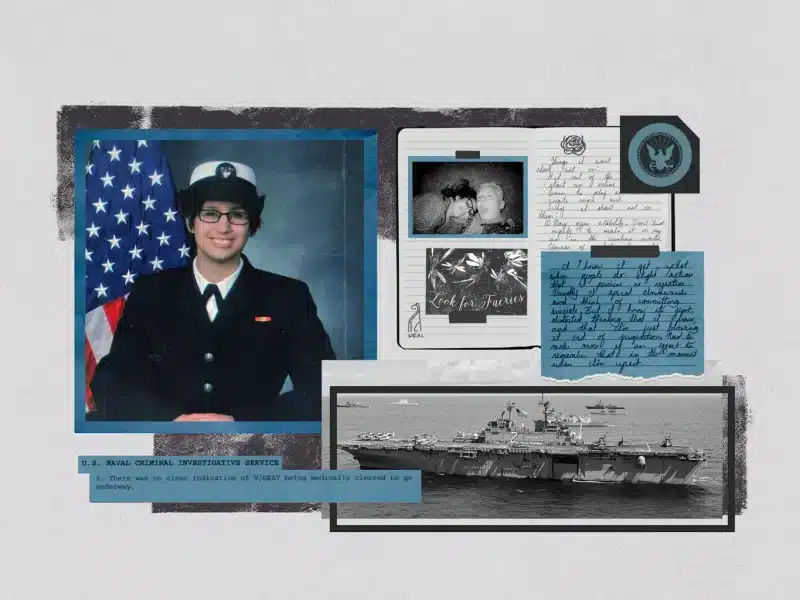
Six years ago, Navy Petty Officer 2nd Class Tiara Gray died by suicide. Her mother, Tina Goss, attributes the death mostly to the Navy’s carelessness in treating Gray’s mental health. Her position is buoyed by thousands of pages of documents, including Gray’s Navy medical records, which show she was diagnosed with severe anxiety, major depressive disorder, and borderline personality disorder – yet was kept in an extremely high-pressure job. The documents form the heart of an investigation by the Voice of San Diego aptly tilted: Deadly Failure: A Sailor Was in Crisis. Her Command Kept the Pressure on Anyway. In collaboration with San Diego’s NBC News 7, Gray’s story has since been expanded into a 52-minute documentary.
At the time of her death, Gray served as a machinist’s mate second class, or MM2, on the USS Essex, responsible for maintaining the hydraulic systems in the rear part of the amphibious assault ship. “[Tiara] held basically the entire shop on her back,” one sailor wrote in a report. It was the wrong place for her to be with such serious mental illness.
“Borderline is one of the most disruptive disorders in terms of social and occupational function and also has the highest correlation in rates of occurrence in suicidal behavior and death by suicide,” said M. David Rudd, a former Army psychologist. “All of those things indicate very clearly she is not appropriate for military service. Someone with borderline personality disorder is not going to be able to function well in what is an ever-changing, remarkably difficult job.”
Symptoms of borderline, also called emotional unstable personality disorder, include a distorted sense of self, extreme mood swings, self-harm, and impulsivity. It comes with with a sky-high risk of suicide – 40 times greater than the general population – and research suggests that 8% to 10% of borderline patients will die by suicide.
The Navy documented Gray’s severe mental illness, including two hospitalizations for suicide risk and a 35-day stint in inpatient rehab for alcohol use disorder. Yet the more than 25 Navy mental health personnel who treated her didn’t agree on their recommendations, medical records show. Some marked her fit for duty – while noting that her high-pressure job exacerbated her symptoms. Others did not.
Experts reviewing Gray’s case say the Navy’s mental health system lacks necessary safeguards for high-risk people like her. Like many industries, the military is short on labor and recruitment is falling, creating an incentive to ensure that people who apply are accepted. And once they’re in, mountains are moved to ensure they stay.
Although Gray’s mental illness predated her Navy enlistment, she enlisted without a problem. Records show she was less than candid in disclosing her mental health challenges during recruitment, and once she was in, it took time for her to reveal her long struggle with depression. But even when it became known, little changed. Her strong performance amid an ongoing labor shortage disincentivized her command from letting her go, perhaps impacting the recommendations of mental health staff, Rudd said.
In the military, psychologists juggle conflicting mandates, he explained. In other settings, mental health providers are tasked only with the needs of the patient. But on a Navy ship, they must also consider the needs of the unit. Commanding officers – the patients’ bosses – get to view patient files and submit recommendations based on the ship’s operational needs, and leave psychologists feeling the pressure. “You can have a commander that says, ‘We really wanna keep this person.’” Rudd said. “You can hear those directions like they’re an order, even if they’re not.”
Gray’s mother, Tina Goss, filed a medical malpractice suit. But in cases like this one, Voice of San Diego reported, the Navy is allowed to investigate itself – and it found no issue with its treatment of Gray. An appeal also failed. Goss is attempting another lawsuit, but the statute of limitations may keep it from moving forward. “I wanted some type of resolution like, ‘Hey we know we messed up.’ It doesn’t even have to be an apology, just an acknowledgement,” Goss said. “Anything that can help this from happening again. The military needs to do better. I was really angry at the Navy for a long time. I’m still angry.”
The gift of authenticity – so valuable for your mental health
“Are you doing what you mean to be doing?” A brilliant and beloved educator friend of mine, Thomas Nikundiwe, had a habit of asking that question. I used to lean on him to prod me, and in the three years since he’s gone on, I’ve forgotten to ask myself. New research about the mental health benefits of authenticity is a good reminder. It’s all about doing what you intend to do, on purpose, Rebecca Schlegel, a professor of psychological and brain sciences, explained to the Washington Post. “The key to feeling authentic is ultimately that ownership piece,” she said. “‘Do I feel like I’m doing this because I want to? I have a reason, and it’s consistent with my values that I’m doing this.” Research shows a strong link between feeling authentic and feeling like one is living a meaningful life, Schlegel added.
It doesn’t come easy, either. Achieving authenticity is a process, said philosophy professor Jeffrey Hanson. It requires you to be intentional about your values, your thoughts, and your actions — all of which create who you are in the world. “It’s a matter of becoming someone rather than being someone,” he said. Living authentically is also good for the mind, because it releases us from the stress of going against our personal values.
Taking action to people-please, rather than in response to your values, can cause mental strain, Schlegel’s research suggests, including higher levels of anxiety, stress, and depression. People who struggle with authenticity struggle to find meaning in life, and inauthenticity is also linked to putting others down and rupturing relationships. Authenticity, on the other hand, is associated with stronger interpersonal bonds, greater satisfaction in relationships, higher degrees of self control, and better decision-making and problem-focused coping skills – the ability to eliminate obstacles, rather than turning to emotionally destructive and negative self-talk.
If you’ve been struggling to live authentically, Schlegel suggests paying attention to yourself and making note of the moments when you feel, “‘This is something that I care about, and (the feeling) is coming naturally to me.” Research shows that people feel most authentic when situations are fluent, rather than forced. Also, choose actions that you can confidently support out loud. It’s not about defending your choices, as much as it is about feeling good “endorsing” them for yourself, said Hanson.
You can stay grounded in authenticity by reflecting on your values and sticking to them. Doing so will help you be flexible when things happen to divert, delay or disqualify a goal. Hanson offers an example of a would-be college student who is rejected from the university they believe they must attend in order to become their best, truest self. “We have to maintain an attitude of openness to being surprised by a possibility that we didn’t envision in the first place,” Hanson told the Post, “and surprised by the possibility that something that we didn’t know that we wanted really was the ideal for us all along.”
In other news…

When do you know it’s time to stop drinking? That’s the title of a recent episode of Search Engine from PJ Vogt, a podcast
about the internet. It features a talk with writer AJ Daulerio, who produces a newsletter, meetings and a podcast about recovery called A Small Bow.
What’s next for psychedelics in Massachusetts post-election? Advocates for Massachusetts Question 4 will have to try again, Lucid News reports. Voters in the state decided against legalizing psychedelics for recreational consumption and personal cultivation. In a message to supporters, Ismail Ali, director of policy and advocacy for the Multidisciplinary Association for Psychedelic Studies (MAPS), expressed disappointment. “Traditional knowledge, scientific evidence, and stories from other states point to psychedelics’ transformative potential, but this outcome shows us that our movement has work to do,” he wrote. Opponents of the measure said they have no disagreement with the medicinal benefits of certain psychedelics, but they question the safety of allowing a large amount of psychedelic mushrooms to be grown in one’s home. “Where we drew the line is the safety issue,” said Chris Keohan, a spokesperson for the Coalition for Safe Communities. “To allow 144 square feet of grow in someone’s house is an astronomical amount of mushrooms to be growing in someone’s house.”
After pushback from Texas, psychologists avoid costly new test: In late October, the Association of State and Provincial Psychology Boards (ASPPB) announced it would pause the rollout of an additional licensing test. The exam, billed as a “skills test” to cull unqualified applicants, would have cost an extra $450, on top of the $800 fee for a knowledge exam psychologists must pass to practice professionally, along with a $210 jurisprudence test and a $320 oral exam. They must also pay a $340 fee to begin a period of 3,500 hours of supervised work. Texas’ licensing authority led the charge against the new test, the Texas Tribune reports. John Bielamowicz, presiding member of the Texas psychologists’ licensing board, is glad ASPPB decided to pull back on the new test, but anticipates something else will take its place. “It’s clear they intend to repackage the same ideas and try to force it through at a later date.”
If you or someone you know is in crisis or experiencing suicidal thoughts, call or text 988 to reach the 988 Suicide & Crisis Lifeline and connect in English or Spanish. If you’re a veteran press 1. If you’re deaf or hard of hearing dial 711, then 988. Services are free and available 24/7.
Recent MindSite News Stories
Mental Health Experts Continue Their “Duty to Warn” About Trump’s Mental Unfitness Up to 11th Hour

Trump shows “unmistakable” signs of dementia and is unfit for office, according to a coalition of mental health experts. Continue reading…
‘The Fear Cut Through My Family’: Alarm Over Trump’s Potential Return Sparks Deep Anxiety Among Chicago Immigrants

As Election Day nears, immigrant-led coalitions provide support amid fears of mass deportations and violence. Continue reading…
He attempted suicide. Peoria Jail restrained him in a chair for five days.
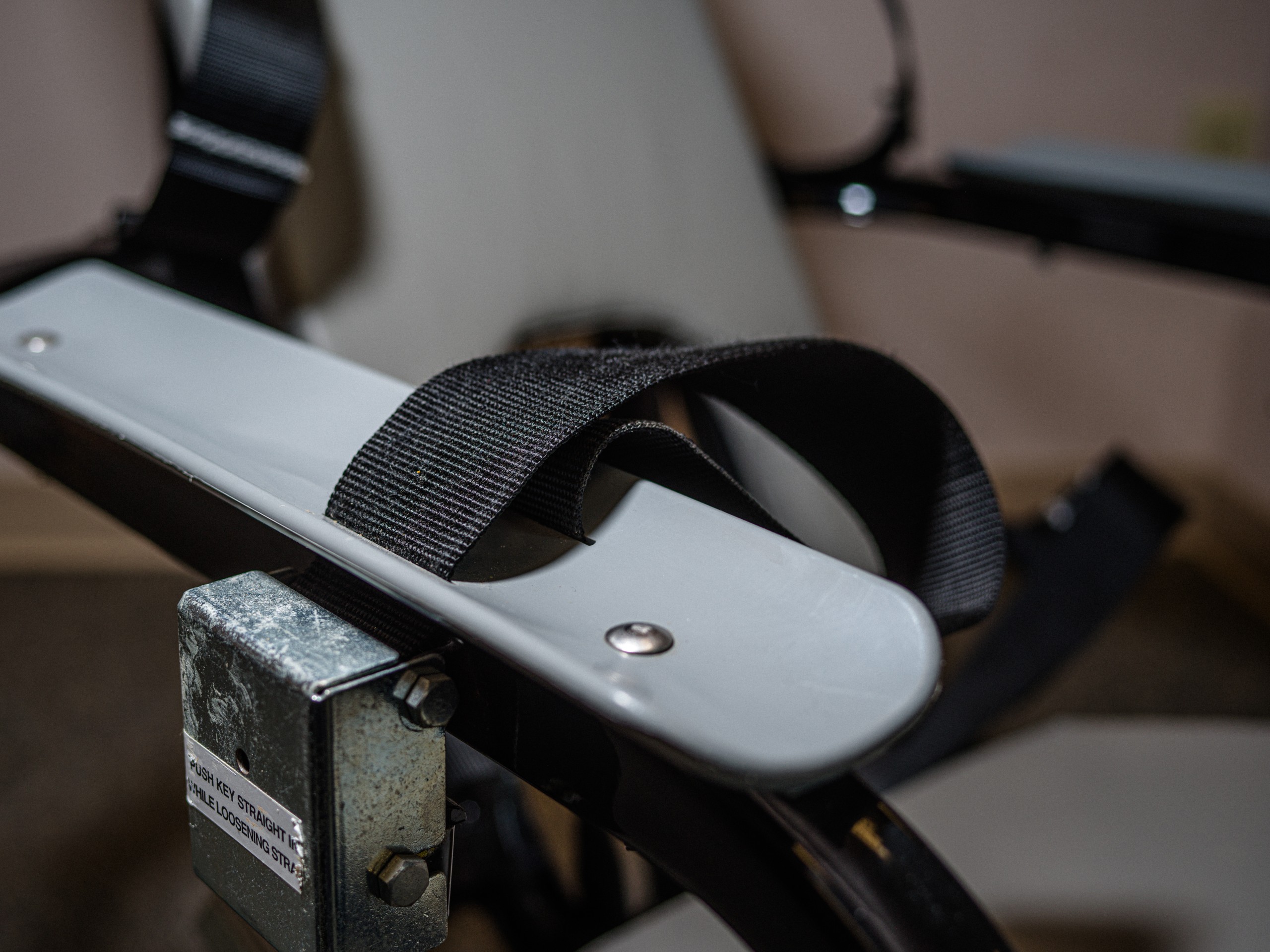
Peoria County Jail in Illinois has kept mentally ill charges in restraint chairs far past industry recommendations.
If you’re not subscribed to MindSite News Daily, click here to sign up.
Support our mission to report on the workings and failings of the
mental health system in America and create a sense of national urgency to transform it.
For more frequent updates, follow us on Facebook, Twitter and Instagram:

The name “MindSite News” is used with the express permission of Mindsight Institute, an educational organization offering online learning and in-person workshops in the field of mental health and wellbeing. MindSite News and Mindsight Institute are separate, unaffiliated entities that are aligned in making science accessible and promoting mental health globally.
Copyright © 2021 MindSite News, All rights reserved.
You are receiving this email because you signed up at our website. Thank you for reading MindSite News.
mindsitenews.org

The name “MindSite News” is used with the express permission of Mindsight Institute, an educational organization offering online learning and in-person workshops in the field of mental health and wellbeing. MindSite News and Mindsight Institute are separate, unaffiliated entities that are aligned in making science accessible and promoting mental health globally.


Author

Related Articles

The Lindsey Clancy Murder Trial
Women nationwide watch the Lindsay Clancy trial and see themselves in her story, plus an investigation into hospitals that fail patients with addiction.
Grief and Rehabilitation in a California Prison
This month: a DUI offender’s path to rehabilitation, Lindsay Clancy revisited, Illinois prison protests, a fatal cell fire, and Missouri’s competency crisis.

Meta Pays $17 Billion Settlement for Lawsuit Over Child Harm
Meta will pay up to $17.1 billion and reshape how its platforms operate after 47 states argued that they are harmful and also addictive to children by design.