Battling Hopelessness Among Youth
Youth in communities with few resources are more apt to feel hopeless. Some students and teachers are working together to make a difference.

Tuesday, November 18, 2024
By Courtney Wise
Greetings, MindSite News Readers. In today’s Daily: Young people who live in communities that provide fewer resources are more apt to feel hopeless, research shows. But an article we’re co-publishing from our friends at PublicSource in Pittsburgh shows us how youth and supportive teachers can work together to make a difference.
Plus, California gets ready for a fight with the incoming Trump administration over state laws that mandate gender-affirming care for its citizens. A new study suggests that people with ADHD may have milder symptoms if they keep a busy but routine schedule. And military suicides rose again last year, despite efforts to reverse it.

Youth leaders in Pittsburgh high school try to make up for local deficits by creating a caring atmosphere
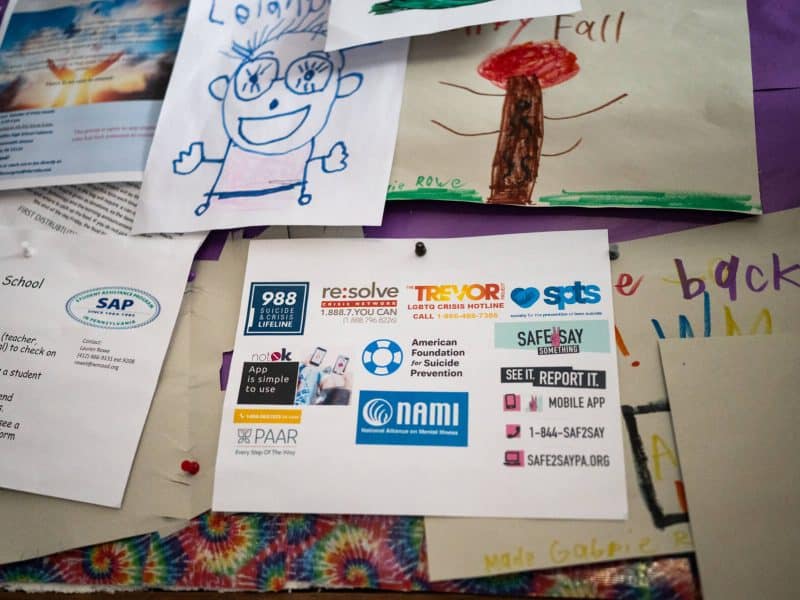
Lauren Rowe’s art room at West Mifflin Area High School is more than just a place for drawing and painting: It serves as a safe space for students to talk openly about their mental health struggles.
An educator for 17 years and lifelong resident of West Mifflin, a suburban town southeast of Pittsburgh, Rowe has witnessed firsthand the evolving social dynamics and challenges teenagers face daily. Now as the faculty sponsor for a student-led youth mental health club, she is helping students make their school a safer place.
It’s important work because in towns like West Mifflin and other historically underserved communities, about half of high school students report feeling hopeless, according to a new study University of Pittsburgh researchers published in September. They found that communities where larger numbers of youth report feeling hopeless generally have fewer community assets including health services, transportation and educational centers.
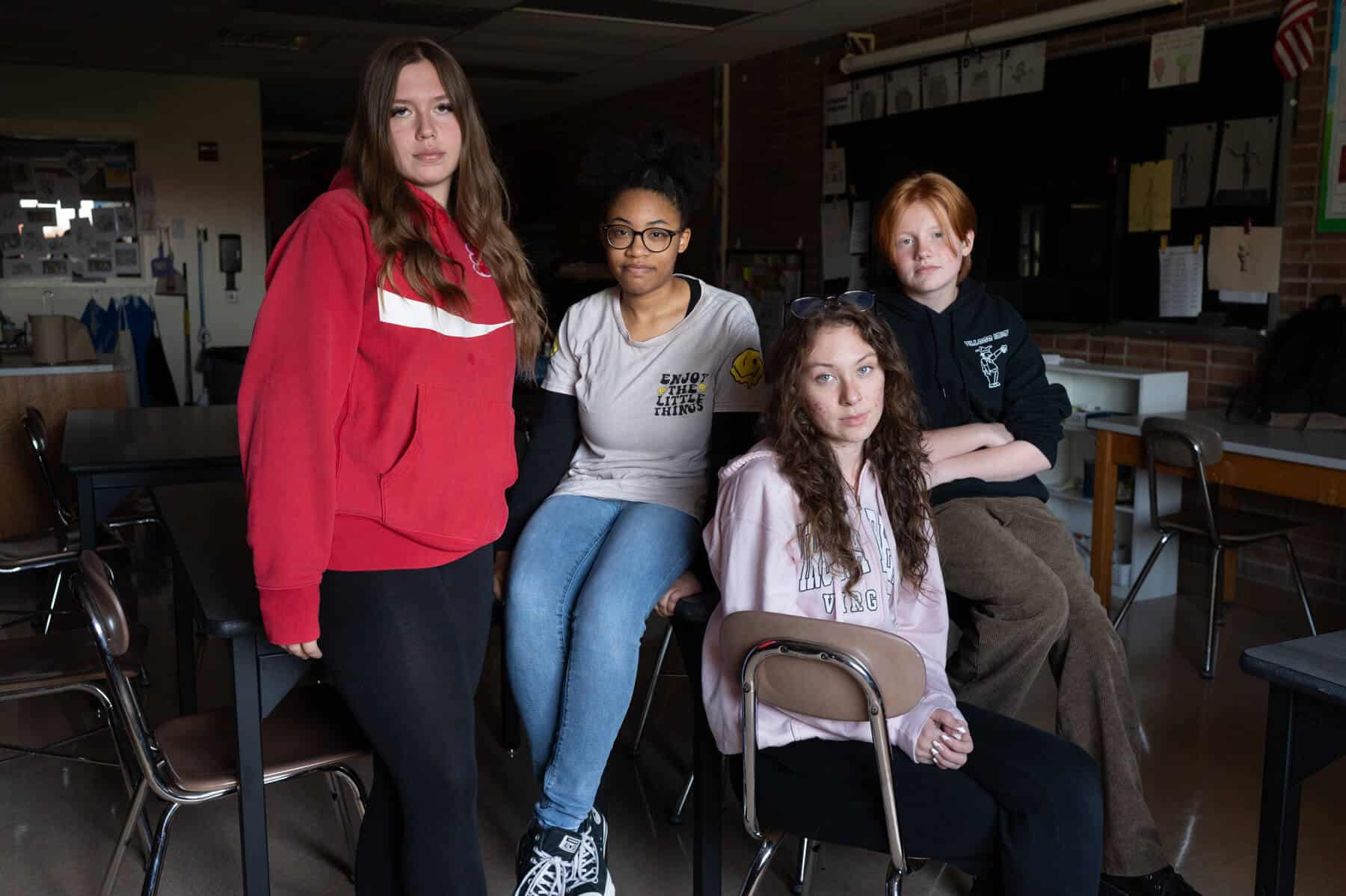
The students who help lead the West Mifflin SAVE Promise Club, part of a national youth organization, are working to counter the hopeless feeling by creating safe spaces where they and their peers can openly discuss what’s bothering them – and try and prevent things like gun violence, suicide and relationship abuse.
“There is a weird idea about mental health that I have heard over the years – (that) ‘mental health issues make you a weak person,’ but that is not true,” said 14-year-old SAVE Promise member Jameela Jenkins. “Some of the strongest people I know have mental health issues.”
Read the full story here.
Protections for transgender care in California may be challenged by incoming Trump administration
Lawmakers and health care administrators are gearing up for a fight with the returning Trump Administration over the state’s support for access to transgender care. California law mandates that health plans licensed by the state provide transgender enrollees with medically necessary gender-affirming care including mental health counseling, hormone therapy, surgery and support for non-surgical transition. Doctors in California are shielded for offering such care, which some other states have criminalized.
“I’m privileged to be here,” Mars Wright, a 29-year-old Los Angeles artist and streetwear designer, told the LA Times. He’s especially relieved that he’s already had the surgery he needed to complete his gender transition.
Trump has vowed to end “left-wing gender insanity” by pushing Congress to remove all federal funding for gender-affirming care. He also has pledged to prohibit such care for children in every state and to banish healthcare providers that offer it from taking part in the Medicaid and Medicare programs.
It’s a deeply intimidating threat, said Julianna S. Gonen, director of federal policy for the National Center for Lesbian Rights, because hospitals get so much revenue through Medicare and Medicaid. The fear of losing those funds “is so severe that hospitals will probably comply before they run the risk of being terminated from the programs,” she said.
Legislators in California and other supportive states could opt to pay for gender-affirming care on their own without a federal contribution. Advocates say that because transgender people make up only about 0.6% of U.S. teens and adults, shouldering the cost wouldn’t be a huge expense. “I’m not going to sit here and say that California can turn back every despicable federal attack on trans people,” said state Sen. Scott Wiener (D-San Francisco). “But we are going to do everything in our power to stick up for the community.”
Staying busy may help some people manage their ADHD symptoms
Sophie Didier developed a pretty effective strategy for managing her symptoms after she was diagnosed with ADHD in high school: She kept herself busy, while also taking medication. “I felt more organized then,” Didier, now 24, told the New York Times. “Like I had a better handle on things.”
That’s not surprising to Margaret Sibley, a professor of psychiatry and lead author of a study published last month. Previous research has shown that ADHD symptoms wax and wane, improving or worsening over time. Sibley’s findings suggest that taking on more responsibility is associated with periods of milder ADHD symptoms.
Sibley and her team tracked 483 ADHD patients for 16 years, starting around age 8. For most, symptoms shifted over time, including full or partial reduction of symptoms. Periods of remission often coiincided with demanding periods of life – times when people were focused on raising children, had financial responsibilities for others or were working or attending school full-time. People with ADHD “seem to do best when there’s an urgent deadline or when the stakes are high,” Sibley said.
Being active in sports may also help, said Douglas Tynan, a child and adolescent clinical psychologist who did not work on the study. “Some high school students with ADHD do better when they are in season for a sport than out of season,” he said. “They are not only busier and have less free time, but also are having a dose of high activity.”
But staying busy doesn’t help everyone, says Craig Surman, director of the clinical and research program in adult ADHD at Massachusetts General Hospital. Surman, who was not involved in the study, says his research suggests that the ability of people with ADHD to respond to more intense demands has more to do with how well their existing strengths and abilities align with what’s expected of them.
Routines are also important. Abby Balderson, 44, said she’s at her best when her life is structured around a predictable schedule, with consistent waking and bedtimes. Sibley concurs that much of ADHD management is figuring out what works best for you. “If you can put the right things in place in your life, you can maximize the likelihood that you’ll keep your ADHD at bay,” she said.
In other news…
Trump’s vows to round up the homeless and put more people in “mental institutions” may be more talk than real. That, at least, is the view of Keith Humphreys, a professor of psychology at Stanford University who studies addiction medicine. “I just don’t see that happening,” Humphreys told NPR. “From Washington, you actually don’t have many law enforcement tools to affect street disorder in cities,” he said, because federal agents “don’t do things like grab a homeless person off a street corner in Chicago who’s causing trouble because they’re mentally ill or they’re addicted or both.”
Military suicides continue to rise, a new DOD report says. After a decline in 2022, 523 active-duty service members died by suicide in 2023, a 12% increase over the previous year. Young enlisted men were most affected, with guns used in 65% of cases. The increase in suicides comes at a time when military leaders have focused intensely on the problem. Defense Secretary Lloyd J. Austin III ordered a review of military suicides in May 2022 and launched a suicide prevention campaign in Sept. 2023 that focused on improving delivery of mental health care, reducing stigma, improving suicide prevention training and educating service members on safe firearm storage to reduce impulsive actions in time of crisis.
If you or someone you know is in crisis or experiencing suicidal thoughts, call or text 988 to reach the 988 Suicide & Crisis Lifeline and connect in English or Spanish. If you’re a veteran press 1. If you’re deaf or hard of hearing dial 711, then 988. Services are free and available 24/7.
Recent MindSite News Stories
Mental Health Experts Continue Their “Duty to Warn” About Trump’s Mental Unfitness

Trump shows “unmistakable” signs of dementia and is unfit for office, according to a coalition of mental health experts.
‘The Fear Cut Through My Family’: Alarm Over Trump’s Return Sparks Anxiety Among Immigrants

In the weeks before the election, fear and anxiety began to mount. Now mental health advocates and allies are getting ready to confront a new reality.
He attempted suicide. Peoria Jail restrained him in a chair for five days.

Peoria County Jail in Illinois has kept mentally ill charges in restraint chairs far past industry recommendations.
If you’re not subscribed to MindSite News Daily, click here to sign up.
Support our mission to report on the workings and failings of the
mental health system in America and create a sense of national urgency to transform it.
For more frequent updates, follow us on Facebook, Twitter and Instagram:

The name “MindSite News” is used with the express permission of Mindsight Institute, an educational organization offering online learning and in-person workshops in the field of mental health and wellbeing. MindSite News and Mindsight Institute are separate, unaffiliated entities that are aligned in making science accessible and promoting mental health globally.
Copyright © 2021 MindSite News, All rights reserved.
You are receiving this email because you signed up at our website. Thank you for reading MindSite News.
mindsitenews.org

The name “MindSite News” is used with the express permission of Mindsight Institute, an educational organization offering online learning and in-person workshops in the field of mental health and wellbeing. MindSite News and Mindsight Institute are separate, unaffiliated entities that are aligned in making science accessible and promoting mental health globally.


Author

Related Articles

The Lindsey Clancy Murder Trial
Women nationwide watch the Lindsay Clancy trial and see themselves in her story, plus an investigation into hospitals that fail patients with addiction.
Grief and Rehabilitation in a California Prison
This month: a DUI offender’s path to rehabilitation, Lindsay Clancy revisited, Illinois prison protests, a fatal cell fire, and Missouri’s competency crisis.

Meta Pays $17 Billion Settlement for Lawsuit Over Child Harm
Meta will pay up to $17.1 billion and reshape how its platforms operate after 47 states argued that they are harmful and also addictive to children by design.