Trump’s Big Bill Will Harm Sick Kids, Texas Doctor Warns
Today’s Daily discusses how medicaid cutbacks will affect families across the U.S., helping caregiver parents cope, teens and petty cash, and more.
Greetings, MindSite News Readers. Cuts in Medicaid and CHIP by the Trump administration will drive sick children and their families into poverty and debt, a Texas pediatrician says. Research finds that caregivers in the United States – including those of disabled children – contend with higher rates of suicidal thinking than the general population. In today’s Daily, we look at some of the reasons why. Plus, how teens in New Orleans and Indianapolis used a guaranteed $50 per week to enhance their lives, and more.
But first: Daddy Victory Club is spotlighting modern Black fatherhood by building meaningful social connections. Kouri Marshall told Block Club Chicago why he decided to launch the club back in 2007. “I know there’s not a general roadmap to parenting, but I was looking for resources or some guidance just to be prepared for the process,” he said. “Since I didn’t notice it, I created it.” At meetups and through mentoring, fathers at various stages of parenting share what they’ve learned on the journey. Though the club was formed to support Black dads, Marshall emphasizes that “there is not a monopoly on fatherhood,” and dads from all backgrounds are welcome.
Children’s health insurance cutoffs a preview of coming disasters, Texas pediatrician writes

“I am in a hospital room in San Antonio, Texas, and a young mother is begging me—quietly, politely, and in front of her preschooler, whom I’ll call Dani—to make her child well enough to leave the hospital today. “We’ll do whatever Dani needs,” she says.
“Of course,” I say.
“But could it be today?” she asks.
Her child has a serious infection and is not ready to go home. In fact, Dani may need surgery. The mother only wishes they could leave because Dani is uninsured: every night of hospitalization means thousands of dollars in additional costs.
This story is recounted by Rachel Pearson, a Texas physician writing for The New Yorker, who points out that Dani was formerly covered by the Children’s Health Insurance Program (CHIP), which is similar to Medicaid. Like Medicaid, it offered health coverage to patients who otherwise could not pay for it. During the pandemic families were automatically re-enrolled, but afterward they had to re-enroll each year. During that time, 2 million people in Texas were cut from the rolls, often for a form filled out incorrectly or too late, a joint Propublica/Texas Tribune investigation showed.
Social workers are helping the family re-enroll but the process may take three to six months, Pearson writes in The New Yorker. Meanwhile, the family is incurring staggering medical debt with each additional day – the daughter, it turns out, will be wheeled into the operating room that night. As Pearson points out, what is happening to the family is what will be happening to millions of people in other states, as Trump’s big budget bill – with huge cuts in Medicaid, CHIP and even Medicare – takes effect.
Between 11 million and 17 million Americans will lose coverage nationwide as work requirements and other procedural hoops are imposed, experts say, predicting this may lead to more than 50,000 new preventable deaths each year. “This is akin to slicing up an umbrella with kitchen scissors and claiming that the cuts will help the umbrella refocus on its mission of keeping out the rain,” Pearson observed.
She points to one of her patient families devastated by the disenrollment crisis. When the child’s mother went to pick up medication for her daughter with epilepsy, she found that her Medicaid had lapsed and the anti-seizure medicine cost thousands of dollars. Since she could not pay for it, her child wound up in the emergency room. The hospital could not safely discharge the child without medications, and although a charity program that agreed to cover them, filling the prescription took days. As Pearson noted: “A preventable seizure led to a days-long hospital stay that was both expensive and avoidable.”
“Poverty makes people unhealthy; meanwhile, the cost of medical care often ruins families financially.” she added. “Medical expenses can plunge a family into poverty.” In the richest country in the world, this is especially galling.
“I was a working-class kid from Texas, and I want to care for children like that,” Pearson concluded. “But I do not want to play a part in driving families into poverty or grinding children’s futures into dust. For doctors who care for poor families, cuts to Medicaid and CHIP threaten our ability to make the oldest promise in medicine: that we will do no harm. Day after day, I meet parents who are willing to sacrifice anything to save their children’s lives. They shouldn’t have to.” – Diana Hembree
Parents of children with disabilities suffer from isolation, lack of help
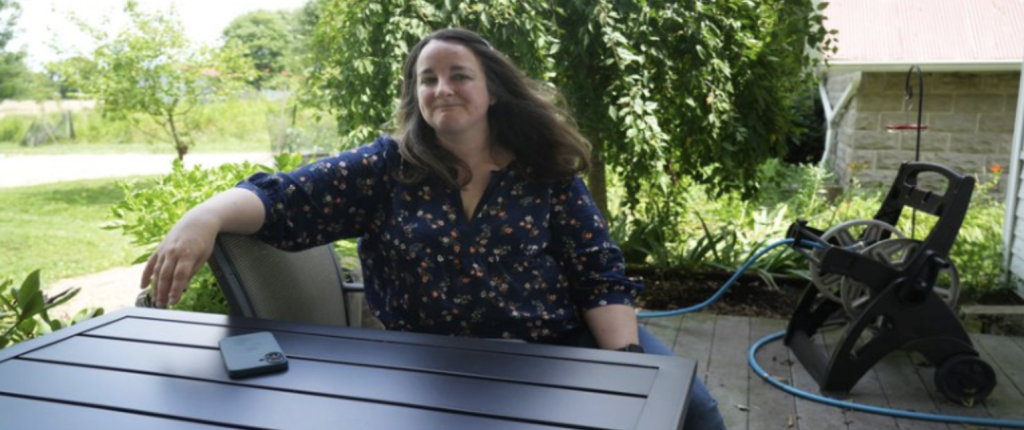
The weight of isolation, overwhelming responsibility, and a shortage of assistance, means many parents of children with disabilities are facing a mental health crisis. Angie Scheu told USA Today she’s thought about suicide three times. “It usually follows a period of catastrophizing,” she said, “of feeling hopeless and helpless and just not sure what to do, and not feeling like I have any answers.” The married mother of three loves her daughters: teenagers Evelyn and Sophia, and 4-year-old Rachel, who has Down syndrome. But she’s perpetually stressed. The family’s budget is tight; she works weekends and nights for a nonprofit. She’s used up all the therapy sessions her husband’s health insurance will cover.
Scheu is far from alone. While an estimated 4% of Americans contend with suicidal ideation, among caregivers, the rates are much higher. Parents of disabled children report the highest rates, at 42%, followed by dementia caregivers at 32%, and veterans’ caregivers at almost 24%. They’re also largely suffering in silence: more than half of parents of disabled children who report suicidal thoughts never mention their feelings to anyone.
For now, to cope, Scheu takes a seat on her back porch and listens to the birds. “It’s easy to catastrophize,” she said. “I try not to allow myself to go down that path anymore… there are too many people that rely on me.” In some ways, Scheu doesn’t see her situation as exceptional. “Sometimes being a mom means that your needs come last… I think that’s something just about every mom can shake her head yes to.”
“A lot of people who are caregivers feel guilty for feeling overwhelmed, because they feel like they should be caring for the person,” said Wendy Martinez Farmer, VP of 988 Strategy, Grants and Clinical Standards. “But we need to normalize the conversation that these feelings that you’re having, the feeling trapped and frustrated and sometimes angry, is very normal.”
Talk therapy can help, and so can calling the 988 helpline. But people who want to relieve caregivers shouldn’t only lean on those strategies, said Lindsay Jurist-Rosner, co-founder and CEO of Wellthy, a service for coordinating care. “If you’re feeling physically overwhelmed and time-starved, and you’re worried about your financial future and putting food on the table because the cost of care is so hard, does spending an hour with a therapist change any of that?” Don’t underestimate the value of tangible support, said Jurist-Rosner. That could be money to cover recurring costs, or help with practical tasks, like cooking and cleaning – even time spent with loved ones, however brief, can be a balm.
Farmer said that many caregivers, having called 988 for someone else, end up talking about their own challenges, too. She feels that shame sometimes stops them from sharing their feelings. “When you’re caring for people, people will call you a hero. And heroes don’t ask for help, right? We need to change that narrative. In order to be healthy enough to care for the person that you love, you have to take care of yourself.”
Can ten months of unconditional petty cash transform teen lives?
Four years ago, Vernell Cheneau III participated in a novel experiment at his high school. He received $50 a week, over 40 weeks, to spend however he wanted. It taught him that “money goes fast.” He’s now in college, familiar with adult financial struggle. “Everything costs something,” he told The Hechinger Report. “If you’re stuck in a rut, it’s expensive to restart. In this country, it’s expensive to be poor.”
Across the United States, and in pockets throughout the globe, researchers curious about universal basic income (UBI) have been testing the power of minimal guaranteed funds. There is hope that programs could address mentally and emotionally taxing issues, like persistent poverty and gender and racial inequality. Characterized by recurring cash deposits unattached to a work requirement, pilots of UBI have intended to promote financial stability, improve health, and expand opportunity, particularly for people and families with low incomes.
While children in recipient families have seemed to do better, most UBI pilots are geared toward adults.
That’s where The $50 Study takes a different approach. A randomized-controlled trial conducted at three high schools across New Orleans and Indianapolis, it gave teens weekly cash infusions – without any restrictions on how they could spend them. Over 40 weeks, teens in the treatment group were given $50, and researchers documented what they did with it. They were also surveyed online before, during and after. Findings reflect what’s been seen in grownups: Teens spent a significant amount on essentials, like groceries, and their material wellbeing improved.
Moreover, while the cash didn’t lead to a change in academic performance, those who received payments were more likely to attend school and have stronger long-term planning and financial skills than their peers who didn’t. They also ended the study with an average of $300 saved – 15% of the total they were given, or triple the national savings rate for US adults.
“When young people are given the opportunity to manage money in low-stakes environments, they build the habits that shape long-term financial health,” said Stacia West, co-founder of the Center for Guaranteed Income Research, which partnered with The Rooted School Foundation to run the study. “The short-term habits we’re seeing are laying the foundation for lifelong financial capability.”
Lyrik Grant saved half the money, and used the rest to pay for dance class supplies and a college entrance exam. Kevin Jackson bought stuff he wanted from the TikTok shop. It helped Kapri Clark pay for her own braces. “That was the most helpful thing ever,” Clark said, now a nursing student at the University of Louisiana at Lafayette. “I make enough to take care of myself, but I watch every dollar,” she said – she continues to braid hair as a source of income. “There’s a lot of people struggling in life to eat, to live. Think if they got kids.”
Last year, the City of New Orleans earmarked $1 million to extend the study. The city faced a bitter rise in crime during the pandemic, and “research shows that people who are economically stable are less likely to commit crime,” according to Courtney Wong, a former high school teacher who now serves as the city’s deputy director of economic development. The money put The $50 Study into nine high schools and researchers will now follow roughly 800 participating seniors for 18 months post-graduation.
“This targets young people in that perfect moment,” Wong added. “They’re in the right spot where even a little amount of help could have big, positive impacts before issues of crime or unemployment or things like that even come up.”
In other news…
Surrogates – women carrying a baby for someone else – are at greater risk of developing mental illness: A recent study finds that women who serve as surrogates are more likely to be diagnosed with a new mental illness during or after pregnancy than women who conceived naturally or through in vitro fertilization (IVF). Researchers analyzed data from 767,406 births in Ontario between April 1, 2012 and March 31, 2021, of which 758 were cases of gestational carriage, or surrogacy. Among them, 236 surrogates were diagnosed with a new mental health condition by March 2024, such as anxiety, a mood disorder, substance use disorder, or psychosis – after controlling for factors including age and income, that amounted to a 43% higher diagnosis rate compared to women who conceived without assistance, and a 29% higher rate compared to women who conceived through IVF.
“Our findings underscore the importance of adequate screening and counseling of potential gestational carriers… [and] the provision of support during and after pregnancy may be particularly important,” lead author Maria Velez told The Guardian. When surrogates were compared with women who conceived unassisted but no longer lived with their child a year after giving birth, their risk was not as elevated, which led Velez to suggest that surrogates may suffer grief from having to surrender the infant. But surrogacy expert Zaina Mahmoud, who was not involved with the study, cautions against doing so based on this research alone. The researchers “hypothesise that grief from relinquishing the infant may contribute, but they don’t actually measure that grief,” she said. Still, she concurred that more research was needed, and with researchers’ call for more screening of potential surrogates, and said that surrogate aftercare and support should be extended to more than two years postpartum.
Using sound to share what it’s like to live with psychosis: Last year, student Michael Vargas Arango won NPR’s College Podcast Challenge, earning a $5,000 scholarship and a spotlight for his original show, The Monsters We Create, featuring interviews and personal testimony from people living with schizoaffective disorder, including Vargas Arango himself. What sets the show apart from others like it is the special effects, which he uses to communicate the experience of living with the condition. Just three in 1,000 people have schizoaffective disorder, which combines the delusions and hallucinations of schizophrenia with the mood episodes of depression or bipolar. “I am not dangerous. I’m not crazy, and I’m not delusional,” he says in the first episode. “Im just one more guy with a mental health condition living with it.”
The program found its audience – parents began asking him for advice about supporting their children with the disorder; others asked if he’d be willing to translate the podcast into other languages to reach non-English speakers. This year, Vargas Arango is back with a sequel of sorts, The Monsters We Saved, which features listeners sharing how profoundly the original program affected them. On the new show, he shares the story of Stefano, who hails from the same town he’s from: Medellin, Colombia. “I felt like I was talking to myself in an earlier stage of my journey,” he told NPR. “Having the opportunity to guide someone else on their own journey was just priceless. I felt so happy, so fulfilled and not scared anymore.”
The name “MindSite News” is used with the express permission of Mindsight Institute, an educational organization offering online learning and in-person workshops in the field of mental health and wellbeing. MindSite News and Mindsight Institute are separate, unaffiliated entities that are aligned in making science accessible and promoting mental health globally.

Author

Related Articles

The Lindsey Clancy Murder Trial
Women nationwide watch the Lindsay Clancy trial and see themselves in her story, plus an investigation into hospitals that fail patients with addiction.
Grief and Rehabilitation in a California Prison
This month: a DUI offender’s path to rehabilitation, Lindsay Clancy revisited, Illinois prison protests, a fatal cell fire, and Missouri’s competency crisis.

Meta Pays $17 Billion Settlement for Lawsuit Over Child Harm
Meta will pay up to $17.1 billion and reshape how its platforms operate after 47 states argued that they are harmful and also addictive to children by design.