
Did School Closings Boost Gun Violence in Philadelphia?
In today’s issue, we explore whether disinvestment and school closings are linked to the erosion of community and a rise in gun violence in Philadelphia.
Plus, Utah’s troubling plan to involuntarily warehouse homeless people on the outskirts of Salt Lake City, and the Oakland LGBTQ Center has had to scale back services after losing $600,000 in federal funding for supporting diversity and inclusion.
But first, Happy Veterans Day! The fathers of MindSite News’ editors were World War II veterans, and we wish all the veterans out there and their families a good holiday, peace and healing. Here is a great selection of new stories from The War Horse, an award-winning nonprofit newsroom, on the impact of military service. It includes a piece by a then-young soldier in Vietnam who wanted peace, freedom and the right to vote (his superiors were not pleased); why soldiers may be flagged for investigation even if they have never committed a crime; and the potential of doula support for pregnant military members.
As Philadelphia Weighs New School Closings, Advocates Ask: Does Shuttering a School Impact Neighborhood Violence?
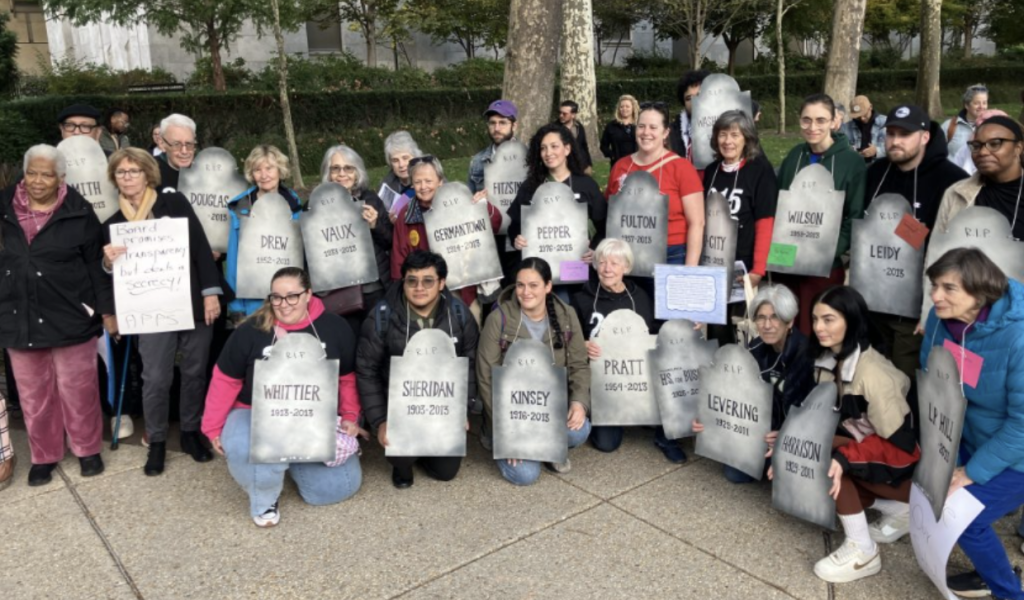
For decades, M. Hall Stanton Elementary School in Philadelphia was an anchor for its working-class community. Its 450-seat auditorium hosted community meetings, kids played hop-scotch and basketball outside on the playground and, for many years, its classrooms filled up in the evenings for adult education.
Then the school was closed – later reopening as a charter – as part of Philadelphia’s shuttering of 30 schools between 2012 and 2014. Such school closings create a sense of loss and change the character of the neighborhood, says Chantay Love, executive director of the EMIR Healing Center in Philadelphia’s Germantown section. EMIR, named for Love’s brother who was lost to gun violence, is also an acronym for Every Murder Is Real. It’s a nonprofit organization that provides support services for those who have been impacted by shootings.
“Just like we convene around different entities, communities convene around schools,” Love told MindSite News. “It’s because they’re a cheering space, not only for the neighborhood but also for the young people. It becomes their second home. It’s where they get to thrive and develop. And when it’s taken away from them, the nuance of the neighborhood is removed.”
Schools, said Love, “were the sacred place,” and by closing them, “you leave a hole in the neighborhood.”
Those tears in the community fabric can have far-reaching ramifications. As the city’s current school board prepares to debate a new round of school closures, a question raised by community advocates is likely to reemerge: Did shutting down 30 schools more than a decade ago exacerbate Philadelphia’s gun violence by destabilizing those neighborhoods? MindSite News, Resolve Philly and the Philadelphia Journalism Collaborative examined that question in a deeply reported examination by Denise Clay-Murray. Read the full story here.
Utah’s alarming plan to involuntarily commit unhoused and mentally ill people
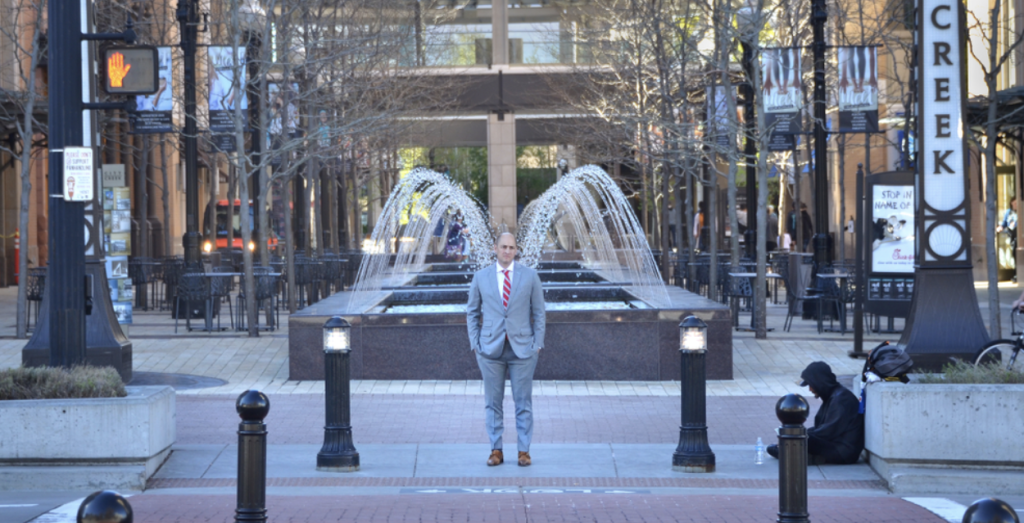
The state of Utah is hatching plans to move homeless people out of Salt Lake City and into a large-scale facility on the edge of town, where as many as two-thirds won’t be allowed to leave – a move that embodies President Donald Trump’s vision for removing unhoused people from public streets, according to an in-depth article in the New York Times.
In his July 24 executive order called “Ending Crime and Disorder on America’s Streets,” Trump called for an end to “so-called ‘harm reduction’” and “housing first“ policies, and an increase in civil commitments, where homeless people are forcibly removed from streets and placed into involuntary treatment for mental illnesses. The order “unfairly targets individuals who are unhoused, more specifically those living with mental health conditions,” according to the Massachusetts chapter of the National Alliance on Mental Illness (NAMI), echoing the national organization. The policies are misguided as well as “harmful, stigmatizing, and threaten decades of progress in disability rights and mental health advocacy,” the NAMI chapter said.
Utah is hoping to build its involuntary treatment facility with the support of the business community – and since outdoor sleeping is now banned in the city, medical center detention may be the only way homeless people can avoid jail, according to the Times. Randy Shumway, a management consultant appointed by Utah Governor Spencer Cox,heads a committee of political appointees and business that replaced the state’s homelessness planning board – he proposes that “rescue” teams give homeless people a choice between going to jail or involuntary treatment in a “resource-rich environment.”
But those resources don’t seem to exist. State Senator Jen Plumb, who is also a physician, pointed out the state’s existing shortage of psychiatric beds means that without new spending, the center could be less about treatment and more like “a prison or a warehouse.” Shumway has suggested money could come from redirecting funding away from community groups. But much of that money is spent housing the homeless. Josh Romney, son of the Republican former Senator Mitt Romney and chair of the nonprofit that owns the city’s existing shelters, warned that “if you start fiddling with that money, you’re going to be pulling people out of housing into homelessness.”
Other critics highlighted shameful historical instances of moving marginalized people into remote, isolated camps. “It’s what they did in World War II in Japanese detention camps,” said Jesse Rabinowitz of the National Homelessness Law Center, a Washington advocacy group. “This reads similar to rounding up Jews or other people the Nazis didn’t like.”
Utah itself has a long history of poorly regulated wilderness camps providing involuntary treatment to troubled teens, in which children as young as 14 were maltreated – and sometimes died – in the care of poorly trained and sometimes abusive counselors.
To me, the proposed center sounds to like a large-scale, more extreme version of the one in The Factory of Maladies, a memoir by artist Deborah Hartung that explores her harrowing seven days of involuntary commitment in a mental institution in San Francisco after a suicide attempt, a book we’ll revisit in an upcoming newsletter.
What stayed with me most in Hartung’s finely etched account was her terror, confusion and despair – and being ordered to swallow strong antipsychotics every day. She was released in a week thanks to intervention from a loved one. That would not be an option for many of the unlucky denizens of the Utah camp and would effectively keep them locked up with little recourse.
In other news….
The Oakland LGBTQ Center – whose existence is based on a commitment to serve people who have unique needs – has been forced to curtail key services after losing federal grants. The California center lost $600,000 in federal funding after being notified that it was “not in alignment” with the Trump administration’s opposition to diversity, equity and inclusion (DEI). As a result, the nonprofit can no longer subsidize mental health services, and its housing assistance and addiction treatment services are on hold indefinitely.
The center also lost additional funding for HIV prevention, according to the Mercury News, and had to lay off half its staff. Described as the first center of its kind in California to be founded and led by gay Black men, the center operates in the Lakeshore LGBTQ cultural district and continues to run a health clinic, youth club, library and food pantry, as well as support groups. The team is hoping to fill some of the funding gap with more local grants as well as donations from individuals.
Are AI outputs protected speech under the First Amendment? We’ve written about the tragic case of Sewell Setzer III, a teenager who killed himself after falling in love with a Character.AI chatbot. His grieving mother, an attorney, filed a suit – the first of its kind in US federal court – accusing Character.AI of causing the death, arguing that “highly sexualized, depressive” encounters with human-like chatbots led Sewell to “addictive, unhealthy and life-threatening behaviors.” (Since this October article in New York Times Magazine on the case, Character.AI has announced a ban on under-18s using its chatbots.)
Character.AI’s defense makes a bold claim, the Times notes: “The company argues that the words produced by its chatbots are speech, like a poem, song or video game. And because they are speech, they are protected by the First Amendment.” The company unsuccessfully attempted to use a version of this argument to dismiss the case entirely, but the case is not yet settled.
In praise of bed-rotting. I thought my teenager had invented the phrase until I started seeing it pop up in articles! Where in the old days we might have unwound by curling up in bed with a book, many in the younger generations are settling in amongst comfortable pillows to scroll on TikTok or watch mindless TV. It’s become a particularly popular remedy for post-pandemic exhaustion. In ‘A Love Letter to Bed-Rotting,’ Audrey Wu of the Harvard Independent says that although you may need to put some limits on the practice, “You deserve to find love and rest, and you may just find both in the art of bedrotting.”
The name “MindSite News” is used with the express permission of Mindsight Institute, an educational organization offering online learning and in-person workshops in the field of mental health and wellbeing. MindSite News and Mindsight Institute are separate, unaffiliated entities that are aligned in making science accessible and promoting mental health globally.

Author

Related Articles

When Protecting Kids From Risk Goes Too Far
We explore childhood independence and the psychological cost of shielding kids from risk.

How to Save a Life: Lessons From 2 Bridges, 15 Years Apart
David Bartley, a suicide prevention expert who survived an attempt himself, on what saves lives.

How Neighbors Are Saving Lives Through Overdose Reversal
How many community people transition from life savers to ‘super savers.’