
When Protecting Kids From Risk Goes Too Far
We explore childhood independence and the psychological cost of shielding kids from risk.

Greetings, MindSite News readers.
In today’s Daily, we explore childhood independence and the psychological cost of shielding kids from risk. We follow the quest for answers from the Navy about a wave of alleged suicide attempts aboard the USS Abraham Lincoln. And we check in on the University of Michigan’s potentially stress-reducing move to drop grading for first semester, first-year students.
But first, Move-In Day Mafia, the nonprofit founded by award-winning TV editor, producer and Howard University alumna TeeJ Mercer in 2022, stages dorm room makeovers at zero cost for first-year HBCU students who’ve aged out of foster care, faced homelessness or need financial aid. The stakes are stark: 70% of foster youth dream of college, but only 8 to 12 graduate, in part due to financial insecurity. Many even arrive on campus alone.
“How can students focus, create, and thrive when they are worried about their basic human needs?” Mercer asked when speaking with Because of Them We Can. “I just want them to go to school and not have to work two or three jobs to take care of themselves. The only thing they should be concerned about is studying hard, partying, making memories and ultimately graduating,” she added. She intends for MIDM to help replace the “foster care to prison pipeline” with the “foster care to HBCU graduate pipeline.” Having tripled the number of students served in just four years, they are well on the way.
When protecting kids becomes its own kind of harm

After their 6-year-old’s scooter ride to a nearby playground triggered a child neglect investigation, Atlanta parents Mallerie Shirley and Christopher Pleasants kept their son indoors for weeks. They were afraid of being arrested. “His mental health really struggled,” Shirley told the New York Times. The family was eventually cleared of wrongdoing, and they learned that Georgia had recently narrowed its neglect definition to protect kids’ right to independent play. But the episode captures a growing tension between childhood autonomy and the climate of fear that governs modern parenting. That worry, researchers say, carries a psychological cost.
Helicopter parenting and inflated stranger-danger panic have converged to leave both parents and kids more stressed and depressed — casualties of overprotection. According to a recent Harris Poll, 62% of children aged 8 to 12 have never walked or biked somewhere without an adult. That pattern spells bad news for their adult futures. Without allowing them appropriate time to err and problem-solve independently, we risk building perpetually dependent children.
“There is no way for a child to feel capable and competent without being given space to make survivable mistakes,” developmental psychologist and co-founder of the Mount Sinai Parenting Center Aliza Pressman said. “You want the child to stretch and bend, but not break. That’s the premise of healthy child development.” Peter Gray, Boston College professor and author of the forthcoming book, “Restoring Childhood: How to Set Kids Free in the Age of Anxiety,” was even more pointed. “We’re not allowing children to learn that they’re both physically and psychologically tough. We assume they’re fragile and it becomes a self-fulfilling prophecy,” he said.
Parents seem to know this reality and understand its costs, but have so far been slow to change their behavior. According to a 2023 survey from C.S. Mott’s Children’s Hospital in Ann Arbor, Michigan, 84% of parents with children aged 9 to 11 say unsupervised free time benefits kids, but only half would even allow their kid to find an item in the grocery store by themselves. Still, 13 states have loosened neglect laws in recent years to avoid situations like those Pleasants and Shirley experienced. The Promoting Childhood Independence and Resilience Act, a bipartisan federal bill, was introduced in the House of Representatives in May, indicating a growing acknowledgment that attempting to shield children from every risk may leave its own scars.
Did multiple USS Abraham Lincoln sailors try to jump overboard? Families and a senator press for answers
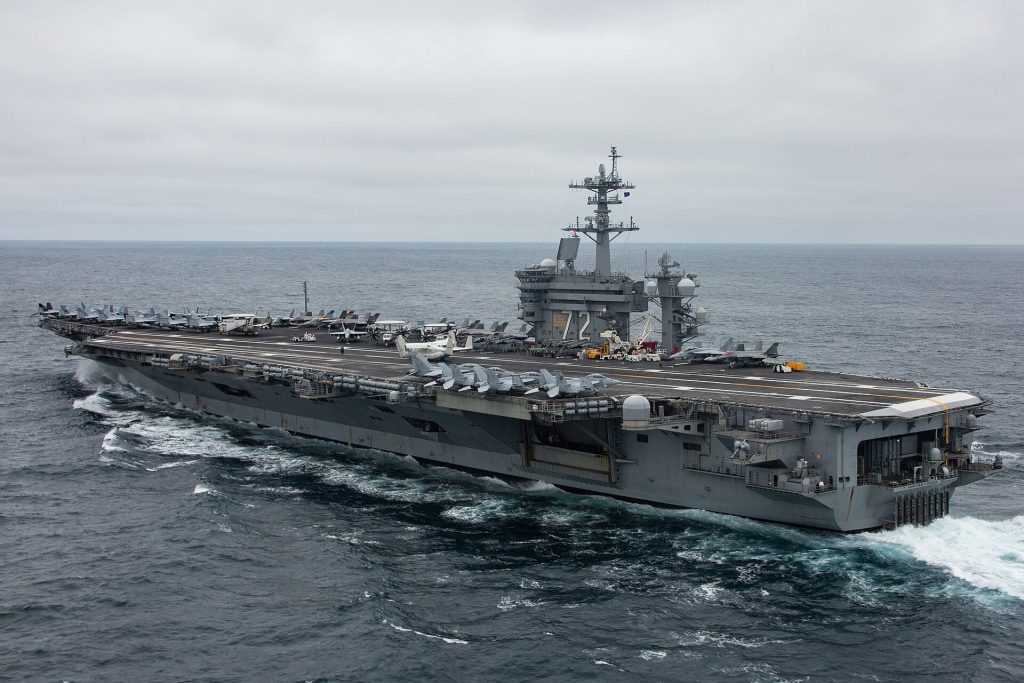
Multiple sailors aboard the USS Abraham Lincoln have attempted to jump overboard in recent months, amid an extended deployment with no clear end date in sight, Military Times reports. With roughly 5,000 sailors and Marines in tow, the aircraft carrier has been at sea since November 21, 2025, to support military operations against Iran. Originally expected to return home in May, the deployment has been extended with no announced return date.
Last week, more than 200 family members met with Navy officials, including Secretary of the Navy Hung Cao, in San Diego to raise concerns about sailors’ mental health and exhaustion. Additional families joined a virtual meeting held later that same evening. “We hear you loud and clear (regarding) the impact this has on families, on service members and the long-term ability of us to stand, sustain our forces’ health,” said Vice Adm. Joseph Cahill on the virtual call, while also pointing to counselors, chaplains and Human Factors Councils aboard to monitor sailors’ well-being and determine any risk factors.
Still, the Navy hasn’t disclosed how many sailors have attempted to go overboard or practice self-harm aboard the Lincoln during this deployment. Families have also described difficulties with communication, compounding the strain. “I think they’ve had five weeks of non-stop combat operations or something like that, so that makes it really tough to communicate consistently or even know if we’ll be able to,” explained Shelby Sanders, a rising high school senior whose mother is on board. “It sucks,” she added.
One day after the first Military Times report, Democratic Sen. Richard Blumenthal from Connecticut, who sits on the Senate Armed Services Committee, wrote Defense Secretary Pete Hegseth and Navy Secretary Cao to demand answers about conditions aboard the aircraft carrier. In addition to details on who requested and authorized each deployment extension and why, Blumenthal demanded an accounting of the resolutions to a number of quality-of-life problems reported on the ship, including mold, broken toilets and laundry facilities, water shortages and missing hygiene supplies.
His letter further asks for specifics on how the Navy is monitoring fatigue, morale, mental health and crew readiness aboard the Lincoln, and whether commanding staff has noticed an uptick in safety incidents, medical issues, disciplinary incidents or other readiness indicators associated with sailors’ number of consecutive days at sea.
To date, while Navy officials acknowledge mail and supply disruptions, they have not provided a precise number of sailors who engaged in self-harm during the current deployment. They’ve denied reports suggesting an increase in mental health concerns for those currently on board.
The name “MindSite News” is used with the express permission of Mindsight Institute, an educational organization offering online learning and in-person workshops in the field of mental health and wellbeing. MindSite News and Mindsight Institute are separate, unaffiliated entities that are aligned in making science accessible and promoting mental health globally.

Author

Related Articles
Star Athletes Open Up About Mental Health at Healthy Minds Festival
Athletes shape how Americans picture strength, which puts them in a unique position to show that male vulnerability belongs in that picture.
Nature Rx: A Prescription That May Save Your Life
A healthcare movement that “prescribes” time outdoors and in community to people struggling with their mental health.
Cornell Assault Prompts Parents to Talk With Their Sons
Sexual assault on campuses nationwide is still a grave problem.