
E-Bikes, Betting Games and Kids’ Impulse Control Are a Bad Mix
Greetings, MindSite News readers. In today’s Daily, why experts urge parents to set strict boundaries on e-bike and e-scooter use. What science reveals about your kid’s fixation with Roblox. And […]

Greetings, MindSite News readers.
In today’s Daily, why experts urge parents to set strict boundaries on e-bike and e-scooter use. What science reveals about your kid’s fixation with Roblox. And a new book on social media and emotional regulation.
But first, my lifelong friend, Yvonne Brooks, died Tuesday morning after a decade-long battle with cancer. She would’ve been 43 today. She was a brilliant engineer and a woman of tremendous character — funny, brave, confident and independent, fully building a life on her own terms. I imagine with another 66 birthdays, she’d have been featured in an article on Today, much like Delaware centenarian Susan Young Browne, who’s still driving a car and living on her own at 108 years young.
Set strict boundaries around e-bike or e-scooter use for kids’ long-term good.
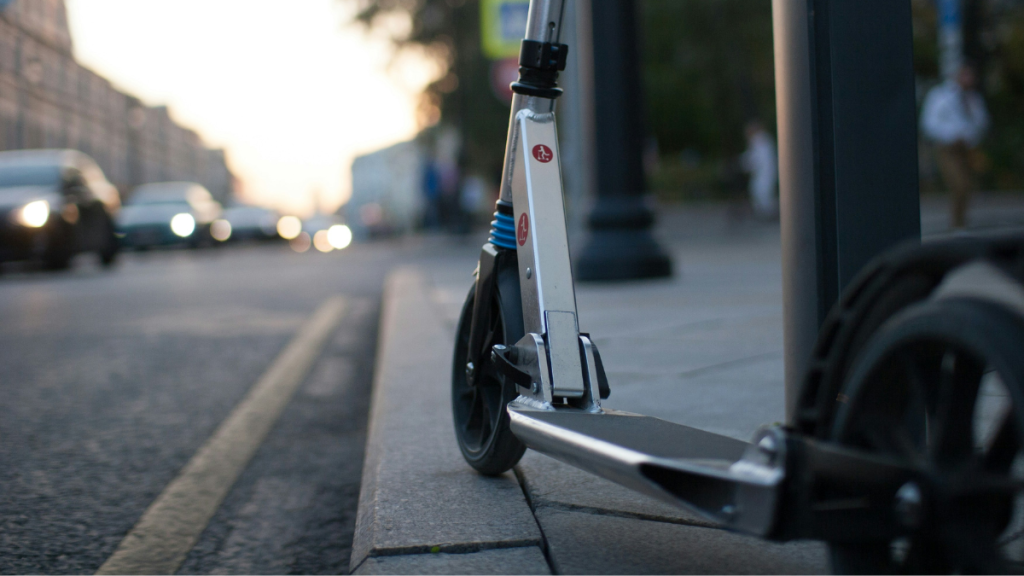
When I was growing up, falling off a bike was a rite of passage. Scrapes and bruises were the price of good playtime. Some of my friends were more daring — willing to pop a wheelie here and there, or speed down a hill, taking whatever risks foot power on two wheels would allow. We remember those days and those falls fondly, but a growing number of young people won’t. They’re landing in emergency rooms after wiping out on now-ubiquitous e-bikes and e-scooters, which carry a greater danger than traditional bikes. At higher speeds, a crash can produce injuries that more closely resemble a car wreck, including complex fractures, concussions and even amputations. From 2017 to 2024, e-bikes, e-scooters and self-balancing scooters also resulted in 533 deaths, according to the Consumer Product Safety Commission.
But speed isn’t the primary risk factor for young riders, according to Dr. J. Todd R. Lawrence, a pediatric orthopedic surgeon, and Madison A. Kesler, a research associate, in a recent STAT op-ed. The issue, these experts suggest, is adolescent brain development. Kids and teens simply haven’t developed the impulse control to manage the risk that e-bikes’ and e-scooters’ higher speeds entail yet, the authors write. The brain’s reward and emotional systems form before the regions that govern impulse control and risk assessment, and the gap between them is widest during adolescence.
The mismatch helps explain why teens gravitate toward risk and are especially susceptible to peer pressure, no matter how mature or responsible they seem. As such, a well-adjusted, thoughtful and athletic teen can still be developmentally unready to make split-second safety calls on a motorized device moving at up to 50 miles per hour.
The stakes don’t end with impulsivity. When children are seriously hurt on these devices, recovery can mean surgery, months out of school and lasting mental health consequences. That’s why the authors urge parents to set boundaries that recognize the danger as a matter of brain development, not personal character.
They also call for e-bikes and e-scooters to be regulated according to what they are — motorized vehicles, not bicycles — along with age-appropriate access standards, mandatory helmets, transparent labeling, responsible advertising and speed-limiting options that parents can control. New Jersey is leading the pack when it comes to regulation. On July 19th, the state reclassified e-bikes as motorized bicycles, mandating that riders be at least 15 years old, hold a license, register with the state and wear a helmet, with liability insurance required for faster, throttle-capable models. The move creates a framework for legislation that other states can follow.
“Technology evolves faster than public policy, and physicians often see the consequences first,” Lawrence and Kesler write. Tighter guardrails around how young people ride e-bikes and e-scooters are essential — both to prevent serious injuries and to protect their long-term wellbeing.
Parents Raise Concerns about Roblox ‘Addiction’

Peter Galassi vetted the videogame Roblox before letting his son play, and the games struck him as so repetitive that he was mostly puzzled by the appeal. Having also noticed his 9-year-old’s desire to always be on the platform, he set tablet screen time limits to control his use. That’s how Galassi discovered the bigger problem, as he told a writer for the Atlantic: His son had evaded the preset parental controls by secretly opening multiple accounts on his mother’s phone. The goal? To improve his odds of hatching rare pets in a game. By then, he’d also begun erupting into tears when other players “got lucky” and won rounds that he lost, and parroted a terrifying refrain: “My luck is horrible; my life is horrible.” After he broke three tablets during “apoplectic meltdowns,” Galassi was shocked. It was “like we had a son who was on meth,” he told the Atlantic.
Galassi’s son isn’t unique. Unlike yesteryear’s gaming platforms, Roblox’s design and interactive features are far more aligned with slot machines in Las Vegas than the stages of Nintendo’s Super Mario. Behind the mediocre graphics and stagnant story plots sit loot boxes: virtual items that players open blind for a shot at a rare prize. They’re everywhere. In fact, nearly 60% of the top-grossing Roblox-based games on Google Play and iPhone include them. Flagging them as “nearly identical to the variable-reward loops that slot machines and sports-betting apps use,” experts told The Atlantic why these Roblox games are especially addictive.
The immediate answer is developmental. The adolescent brain “might be particularly vulnerable to developing problems” like addiction, according to Dr. Marc Potenza, a psychiatrist and gambling researcher at Yale. The brain regions that are sensitive to rewards turn on earlier than the ones that regulate risk. Early exposure to intermittent-reward games may destabilize that development, setting kids up for a higher risk of addiction as adults.
Stanford addiction specialist Dr. Anna Lembke added: “There is evidence showing that the earlier that a child is exposed to social media, the more likely they are to get addicted to social media. The earlier that they’re exposed to drugs and alcohol, the more likely they are to get addicted to drugs and alcohol. So we can infer from that that the earlier they’re exposed to gambling, the more likely they are to get addicted to gambling.”
Asked about “the presence of pay-to-play games on its platform,” a spokesperson for Roblox noted that “only 1.4 percent of our 132 million daily active users were payers” and that it has “clear policies prohibiting both actual and simulated gambling.” The company also noted its recent adoption of age-based accounts, which “bring age checks, content ratings, ongoing game reviews, and parental controls into an easy-to-understand framework for kids, teens, older users, and parents.”
The Atlantic noted that 1.4% of daily active users “could still be a lot of children, based on the company’s reported number of young users.”
But if your child plays Roblox, don’t panic. Not everyone who is exposed to an addictive product becomes addicted, Lembke said, but if enough others develop an addiction, “you have a public-health problem.”
Parents should also note that while the psychological hazards are real, so are the financial dangers. Many don’t know that their child is struggling until a linked credit card has quietly and quickly racked up thousands in charges — or a kid incessantly requests “Robux” gift cards.
So what can we do besides send our kids outside to touch grass? While Roblox directs families to new age-based accounts and parental controls, critics say those don’t change the gameplay mechanics themselves. Some regulators and lawmakers are advocating for legislation from a consumer protection angle, similar to the current lawsuits against Meta and Google. In New York, bills to ban games with gambling-like features on children’s platforms are being discussed. Advocacy groups like Fairplay have also asked the Federal Trade Commission to investigate Roblox for practices designed to keep kids online and spending. But, until effective regulation is passed, the burden is on parents to stay vigilant of their children’s playtime.
The name “MindSite News” is used with the express permission of Mindsight Institute, an educational organization offering online learning and in-person workshops in the field of mental health and wellbeing. MindSite News and Mindsight Institute are separate, unaffiliated entities that are aligned in making science accessible and promoting mental health globally.

Author

Related Articles

Medicaid Changes Under Trump Undermine Care for Pregnant Women, New Moms
New Medicaid work requirements could put pregnant women at risk of losing health coverage.

Voters Reject Trump Administration’s Policies, Including Its Health Agenda
Election results put Medicaid cuts, Affordable Care Act subsidies and access to mental health care at the center of the healthcare debate.
Who’s Paying for California’s Crisis Care?
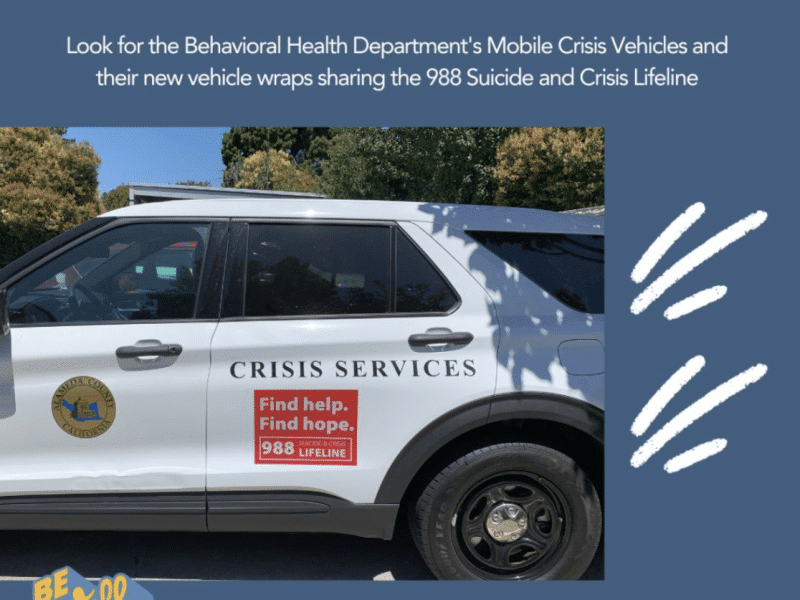
California counties say insurers are failing to cover mobile mental health crisis teams, leaving taxpayers with millions in unpaid bills.