Michigan Program Cuts Infant Mortality in Half With Cash Support for Expecting Mothers
“This program reduces the stress on mothers and families…That’s what we need for healthy parents and healthy children.”

Greetings, MindSite News readers!
In today’s Daily, Ukrainian mothers show their resilience by willing their children into this life; a social worker turned researcher offers guidance on helping children process grief; and Rx Kids, a Michigan-based program aiming to improve mortality rates for moms and babies, shows tremendous success.
But first, tap into a little joy as this salsa instructor mama sees her 8-year-old dance out a step that makes many adults stumble.
Rx Kids shows tremendous impact on neonatal mortality
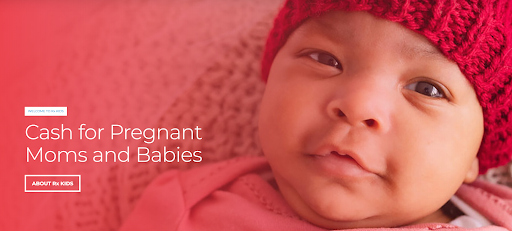
Since its launch in 2024, Rx Kids has helped to slash Flint, Michigan’s neonatal mortality rate nearly in half, MLive reports. The program, founded and led by pediatrician Dr. Mona Hanna, best known for exposing the Flint Water Crisis, provides unrestricted cash support to pregnant mothers and babies. Expecting mothers receive $1,500 during pregnancy and families get $500 per month after birth for up to one year. The astounding results from the program came from a study, led by Dr. Hanna, which analyzed Michigan vital records from 2021-2025 and found that Flint’s neonatal mortality rate — previously more than double the state average at 10.2 deaths per 1,000 live births, compared to 4 per 1,000 statewide — dropped to 5.1 per 1,000 in 2025.
“If you had tried to convince me back in 2015 that this is where we would be and these are the results we could share, I would say we were looking for a miracle,” said Dr. Lawrence Reynolds, a pediatrician and former president of the Mott Children’s Health Center. “It decreases the stress on mothers and families. That’s what we need for healthy parents and healthy children.”
Heather Schmalz, a Flint mother who benefited from the program, testified that it helped in ways she hadn’t expected. “We thought we would use it for car seats and strollers, but we actually used it to pay down debt to just kind of get us out of a hole,” Schmalz said. “Rx Kids doesn’t (pay for) everything, but it has been a godsend, and we are so, so grateful.”
As further evidence of its positive impact becomes clear, program leaders are pressing forward to make Rx Kids part of a national movement to make vital resources directly available to families so that children born into poverty can access a healthy, stable adulthood.
(MindSite News earlier reported on a program named SEED in Stockton, California, which found that giving low-income families $500 a month for 18 months not only improved their job prospects and financial stability, but reduced their depression and anxiety. One participant, Tomás Vargas, who juggled two jobs, said the program’s most precious gift was time to bond with his children “and get to know them for the first time.”)
Despite war, mothers in Ukraine strive to bring forth new life
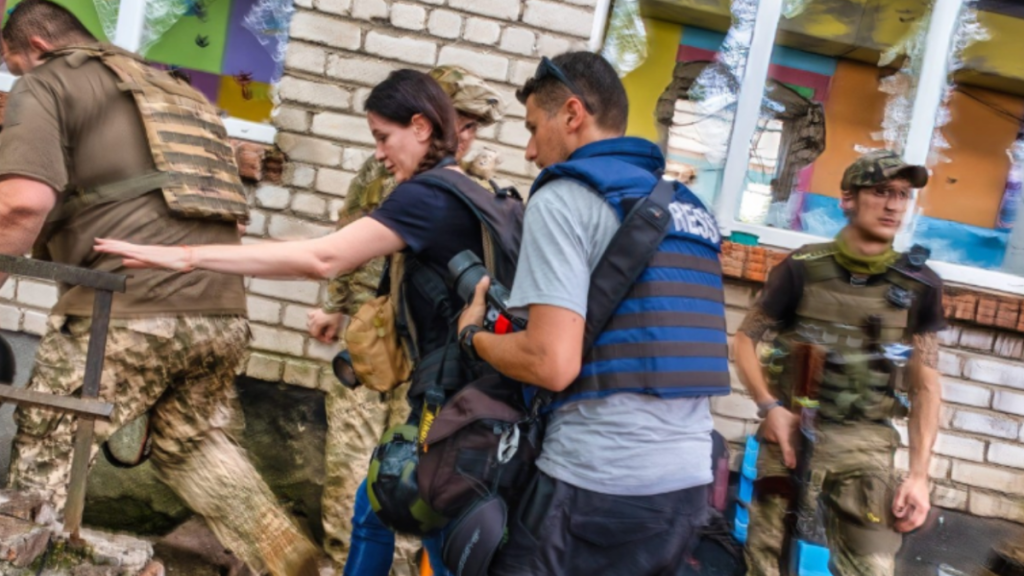
For years now, war has ravaged Ukraine, lending to widespread chronic stress, ongoing displacement and general uncertainty about the future, not to mention the death of more than 140,000 soldiers, most of them men. Still, life finds a way. Despite maternal mortality rising by more than a third between 2023 and 2024, after Russia launched an unprovoked full-scale invasion of the country, births persist. “We must bring new life,” army medic and recent mother Iryna Dolhopolova told the New York Times.
The toll of war is made clear in the efforts of Ukrainian mothers and physicians. Though nationwide statistics are currently unavailable, some hospitals still track numbers locally, and have reported a concerning trend: Premature births and miscarriages are on the rise.
According to data from a hospital in the frontline city of Sumy, 5.5% of births were preterm last year, nearly doubling from 2.9% in 2021, the year before the war entered its current stage. In another frontline city, more newborns are born underweight or with jaundice as mothers navigate high blood pressure, sleeplessness and general overwhelm from the fighting.
C-section births are also on the rise, determined as much by pauses in bombardment as medical necessity, since hospitals aren’t immune from attack. As of December 2025, more than 80 maternity and neonatal care hospitals in Ukraine had been damaged or destroyed, according to data from the United Nations. In some places, staff have been forced to move labor and delivery into basement bomb shelters. In other cities, there are no maternity wards remaining at all.
And still, mothers insist that the babies keep coming. Aliona Ponomarenko, who has the psychologically taxing job of clearing land mines, lost a much-desired pregnancy with her husband in 2022 and the pair planned to try again, but then he was killed in action. She decided to have a baby girl anyhow, Alisa — not fathered by the man she loved — born early at 30 weeks, weighing almost three and a half pounds. “I want a child,” Ponomarenko said.
Choosing motherhood in the middle of war is its own quiet refusal to let the war win: An insistence that the future still belongs to them and the children they battle to bring into it.
See also our recent stories from Ukraine by correspondent Cecilia Nowell: Ukrainian Vet Amputees Seek Healing With Yoga ‘To Feel the Connection With Themselves Again” and ‘When We Save One Medic, They Will Save 100 Lives.’
Grief doesn’t wait for kids to be ready — and neither should we
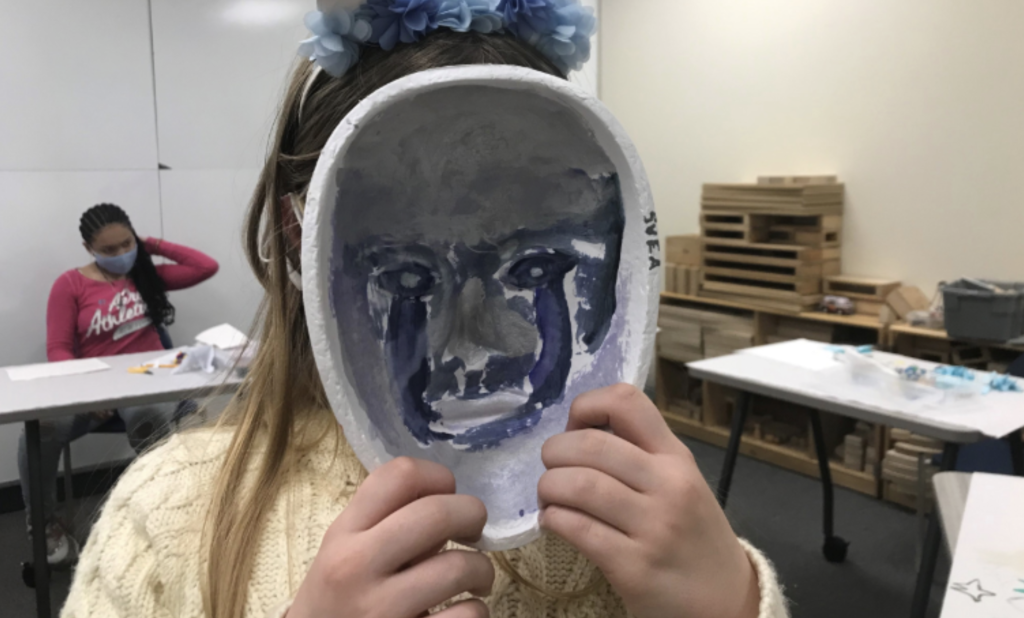
Death rarely offers a warning, and grief doesn’t wait for anyone to be ready — so adults have to imagine and practice how to show up for children when the worst blows come. Nearly 10% of children in the United States will lose a parent or sibling before their 18th birthday.The grief they carry is often overlooked by adults around them — usually because we don’t know what to do with our own pain, writes Keisha Wint, a social worker and professor at Binghamton University in a guest column for The Conversation.
“When I was a school social worker, a teary-eyed father once came to the school to tell his 4-year-old daughter’s teacher that the child’s mother had been in an accident. He did not speak to his child as she looked on but simply relayed pickup arrangements to the teacher, before he hurried to the hospital. I have never forgotten the sad, confused look on that young child’s face as her father left without looking in her direction,” Wint wrote.
Young children are especially vulnerable to having their grief overlooked or dismissed, in part because adults underestimate how much kids can understand about loss and death when given the chance. Grief isn’t only a response to death, either — moving, divorce or even disruptions like the pandemic can trigger the same complex emotions in children, though families and educators don’t always recognize it as grief when it shows up that way.
Too often, grown-ups avoid tough topics altogether to spare children (and themselves) pain — but that just leaves kids alone to carry complex emotions. It’s critical for adults to stay age-appropriately honest and open to the possibility that a child’s grief may not look the way they expect, Wint says. It might show up as regression — thumb-sucking, toileting accidents — or as stomachaches, insomnia or emotional outbursts. The response that works best, Wint argues, is care and support, not reactive discipline.
Moreover, a single death rarely stays contained. Some can trigger a cascade of losses in income, childcare and even health insurance in what scholars call the “bereavement multiplier.” Schools are often expected to help absorb that impact, but Wint has found that teachers, already stretched thin with their academic responsibilities, feel ill-equipped to provide the right support. School districts would do well to provide training to prepare teachers on how to navigate such challenges when they arrive.
Most of all, Wint’s guidance is to be warm and direct: use simple, honest language to discuss whatever happened, not euphemisms — especially in the case of death. “He’s in a better place” or “she went to sleep” can confuse and frighten children, who are often more concrete thinkers. It may also help to introduce the concept of death early, before any person has died, through something as natural as a plant or insect’s life cycle. “Silence in the face of loss and grief can be harmful,” Wint writes, “and lies can erode trust and stability at a time when both are most needed.”
The name “MindSite News” is used with the express permission of Mindsight Institute, an educational organization offering online learning and in-person workshops in the field of mental health and wellbeing. MindSite News and Mindsight Institute are separate, unaffiliated entities that are aligned in making science accessible and promoting mental health globally.

Author