
The Trauma Surgeon Who Aims to Heal Gun Violence
Dr. Selwyn Rogers explores the gun violence epidemic as a public health crisis, plus Phoenix’s street medicine restrictions and Tennessee’s youth prisons.
Welcome Back MindSiters,
This month, we chat with a trauma surgeon on the South Side of Chicago about what gun violence can tell us about the mental health of society. We also explore why it’s becoming harder to practice street medicine in Phoenix. And finally, we look at the state that’s building more youth prisons, even as other states close theirs.
Let’s get into it…
Healing the Gun Violence Epidemic
Just a few weeks ago, an annual picnic held by the former residents of the Robert Taylor Homes ended in a volley of gunfire.
What started as an end-of-summer celebration at Washington Park on Chicago’s South Side turned into chaos around 11:30 p.m. as shots rang out and sent 200 people scrambling. Minutes later, shooting victims started appearing at the University of Chicago hospital across the street.
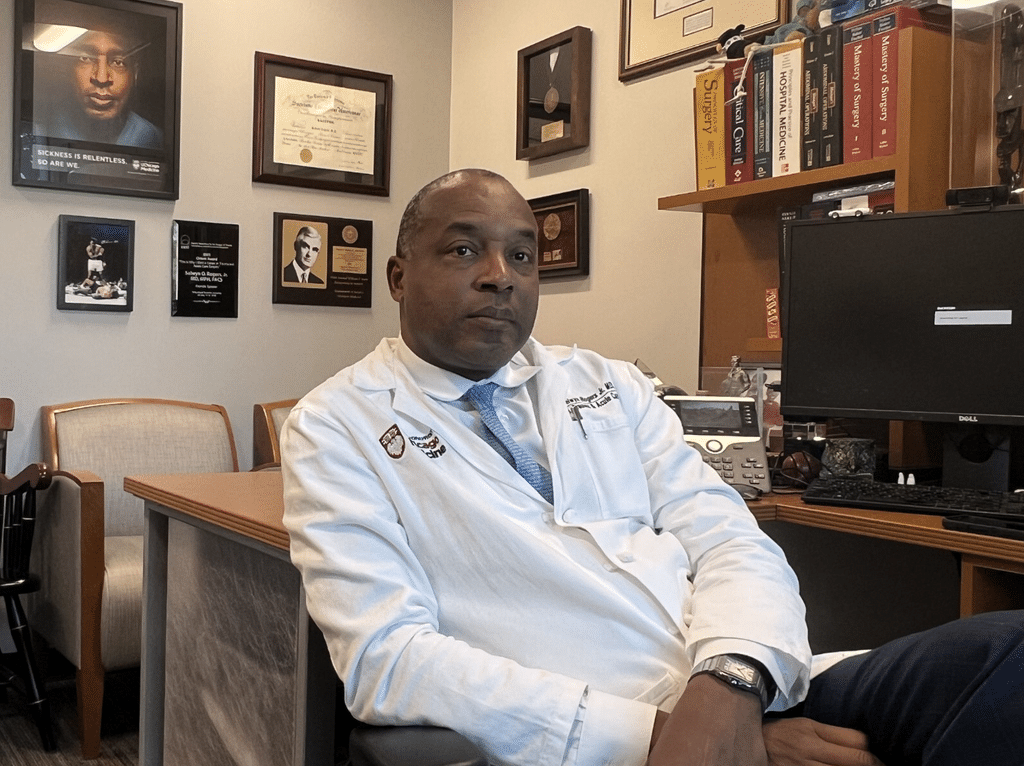
Ready to receive them that night was surgeon Dr. Selwyn Rogers and his corps of trauma specialists.
“Only one patient died that night, partly through the grace of God, but also our skill, expertise, and the fact that most of the patients didn’t have immediately life-threatening wounds. All it takes is one bullet in the right place and you die,” Dr. Rogers told me in an interview at his office.
A decade ago, this mass shooting would’ve almost certainly ended much worse: more injuries, lost limbs or even more fatalities. Until 2018, the South Side, a neighborhood of roughly 1 million people – nearly 80% of whom are Black or Latino – had no level 1 adult trauma center.
That’s when Dr. Rogers was poached to take over the facility. He reflects on his time at the facility in his new book “Healing the Gun Violence Epidemic.”
Read the interview with Dr. Rogers here.
Street Medicine Woes in Phoenix
During the summer, Perla Púebla and her street healthcare team can hit the streets of Phoenix as early as 5 a.m., moving in sync with the unhoused community to avoid the heat, which can climb beyond 115 degrees.
The team, which includes a nurse practitioner, medical coordinator and behavior therapist, spend their days at encampments, resource centers and other locations frequented by the unhoused. They offer medical check-ups, water and naloxone — the life-saving opioid overdose reversal medication. While not everyone is always willing to accept their help, the team can care for wounds, administer IV drops, prescribe and dispense medicine for those who do all from the shade of their van.
Street medicine teams offer healthcare and social services to people experiencing homelessness on their own terms, and they may be more important than ever as more local governments enact policies that criminalize homelessness, according to Shelterforce, an independent newsroom that reports on housing. Chicago officially launched a street psychiatry team last month.
Earlier this year, Phoenix passed an ordinance restricting food distribution and medical care in parks without a permit. The law, which took effect in June, allows only two permits per park each month and bans needle exchanges.
While nonprofits have been fighting against the law in court with mixed results, Púebla and her team have continued to see their patients outside of the parks.
To read the Shelterforce story on street medicine in Phoenix, click here.
Why is Tennessee building more youth prisons?
As states across the country shutter youth prisons amidst a decline in juvenile crime, one state is building two more.
Tennessee’s Department of Children’s Services has budgeted $360 million for the facilities, which would have 256 beds, and are scheduled to open in 2028 and 2029, according to reporting by ProPublica and WPLN.
Officials said the state doesn’t have enough space for teens who have committed crimes and end up holding them overnight in temporary places including an office building, spaces that aren’t suited to providing mental health services. Advocates say the push doesn’t line up with the needs of kids.
“The argument that’s made is that (juvenile crime is) worse than ever, right? Or the kids are out of control,” Josh Rovner, a senior research analyst with the Sentencing Project, told the outlets. “The data doesn’t back that up.”
In a 2024 lawsuit, advocates said the state isn’t properly utilizing its current bed space and puts children in high security facilities without considering their need for mental health treatment and other services. The department responded that it has sometimes placed children in facilities based on capacity, but denied it improperly held them in the highest-security facilities.
The state says the new prisons will provide care that addresses the trauma youth have experienced, including behavioral treatment tailored to their unique needs. They will also include dedicated spaces for education, job training and recreation, with rooms for mental health staff to work in and “calming rooms” for the kids.
Youth advocates and their experts say the proposed facilities are too big to provide good care for young people.
“These institutions are not humane places,” said Daniel Macallair, the executive director of the Center on Juvenile and Criminal Justice. “They’re not rehabilitative. They never have been.”
To read the Propublica/WPLN story about the new facilities, click here.
Until next month,
Josh McGhee
The name “MindSite News” is used with the express permission of Mindsight Institute, an educational organization offering online learning and in-person workshops in the field of mental health and wellbeing. MindSite News and Mindsight Institute are separate, unaffiliated entities that are aligned in making science accessible and promoting mental health globally.


Author

Related Articles

The ‘Free’ Drug Rehab that Stranded Oklahomans in California
California drug rehab recruiters allegedly lured Oklahomans into treatment, with some patients left without adequate care or a way home.
Parents Rethink How to Raise Boys Who Will Stand Up for Women
Parents can raise boys to respect consent, challenge peer pressure, and stand up against sexual assault and harmful masculinity.

Youth Well-Being Has Plummeted Since Its Height in 2010
Fewer than half of Americans are thriving, with young adults suffering the most.